No method to Netanyahu’s madness

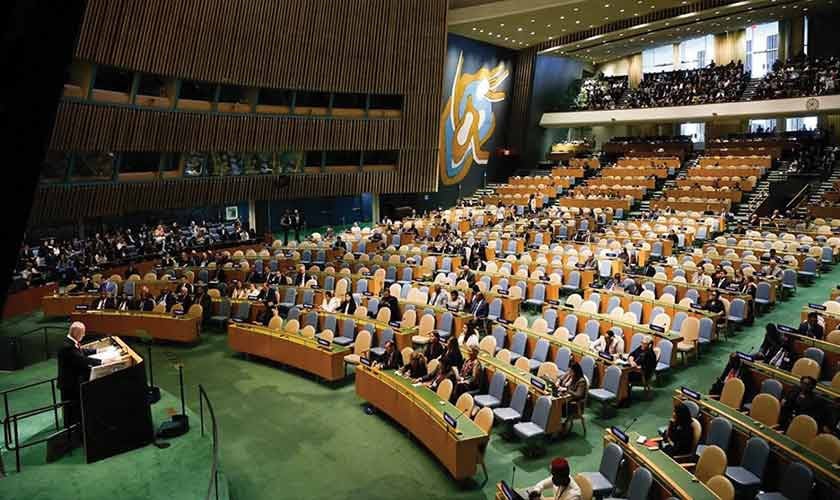
The United Nations 80th General Assembly should have been the stage to discuss the future of peace in the age of artificial intelligence. Sadly, it turned out to be one of the most divisive sessions, dominated by Palestine rather than Israel. The gathering proved that Palestine cannot be brushed aside as an idea, even if you have a world power at your back.

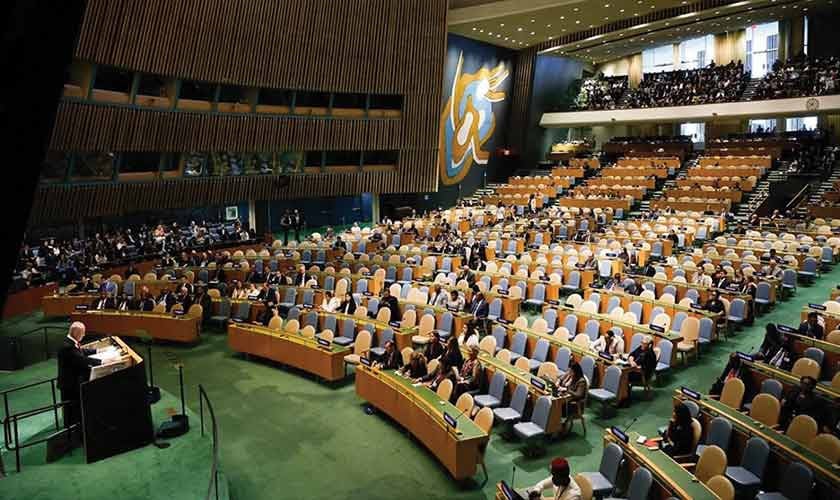
Not many member states were eager to listen to Israeli Prime Minister Benjamin Netanyahu at the United Nations General Assembly in New York on September 26—especially Hamas, the enemy he has been obsessed with for the last two years. Netanyahu tried his best to address Hamas directly amid a boycott of his speech. However, the biased Western media counted the boycotters in dozens, even as Netanyahu spoke to an almost empty United Nations General Assembly Hall after diplomats from Arab and Muslim countries walked out, along with counterparts from several African and some European countries.

The Israeli leader claimed that his intelligence had hacked cell phones across Gaza and used them to play his speech. Despite this dramatic claim, he had nothing new to tell the world or Hamas. He only demanded—for the umpteenth time—the release of the remaining hostages.

Israel claims to be one of the world’s biggest technological forces in terms of military use and is fully backed by the mightier United States. We have seen some of their gimmicks—exploding pagers, for instance. So why, despite their military muscle and technical superiority, have they failed to secure the release of the remaining hostages? How can they achieve the even more ambitious target of eliminating Hamas?

Of the 48 hostages left in Gaza, Netanyahu says 20 may still be alive. Despite focusing on a 41-kilometre stretch of land for two years, his high-tech drones and well-armed ground forces have been unable to secure their release. The Prime Minister has vowed that he will not rest until all hostages have been brought home.

In a notable gesture, the lapel of Netanyahu’s suit bore a large white badge displaying a QR code. He encouraged people to scan it, which leads to a website about the Hamas attacks on October 7, 2023. This appears to be an attempt to promote the perception that he remains obsessed with achieving the target he set himself around 730 days ago. However, the world remains confused about his ultimate objective: finishing Hamas, killing all Palestinians, or creating Greater Israel.

The gimmickry continued in New York. According to Netanyahu’s office, a public diplomacy campaign was organized in New York City, featuring billboards and trucks displaying the message: “Remember October 7” in Times Square and around the UN building.

Meanwhile, public support is shifting. According to Pew Research Center’s April 2025 report, support for Israel among Americans has dropped significantly since the start of the Gaza war. Despite all the political maneuvering, Netanyahu stood exposed at the world’s biggest forum, more isolated than ever. His policy inflexibility has forced some of his past allies to abandon him, and a growing number of Western countries feel compelled to recognize Palestinian statehood.

Countries like the United Kingdom, Canada, Australia, Portugal, and France have taken belated steps to recognize Palestine, much to Netanyahu’s displeasure. A few days before his appearance, on September 12, a vote took place in the UN General Assembly Hall. Out of 193 UN member states, 142 voted in favor of a declaration on the peaceful settlement of the question of Palestine and the implementation of the two-state solution with Israel amid resounding applause.

The “New York Declaration” was the outcome of an international conference held in July at UN Headquarters, organized by France and Saudi Arabia. Ten nations, including Israel and the United States, opposed the declaration. This clearly shows how limited support Tel Aviv now enjoys. The other eight countries opposing were Argentina, Hungary, Micronesia, Nauru, Palau, Papua New Guinea, Paraguay, and Tonga. Twelve countries abstained from the vote.

Netanyahu’s diminishing support is not just about countries; it reflects a more fundamental change in American public opinion. Pew’s April 2025 report highlights that only 54 percent of Americans now say the Israeli-Palestinian war is relevant to them—a drop of 11 points from 65 percent in January 2024. Those who believe the war is significant to US national interests have declined from 75 percent to 66 percent over the same period.

The United States, Israel’s staunchest ally, is showing signs of fatigue. Former President Donald Trump stated that any attempt by Israel to annex parts of the West Bank would be a red line for him.

Despite all these signals, Netanyahu has yet to grasp the message Western nations sent through the rising recognition of Palestinian statehood: enough is enough. Israel cannot have an indefinite license to kill. There is a limit—and it has been crossed.

His speech, full of spin and allegations of anti-Semitism, went largely unheard. He is now isolated, and the sooner he realizes this, the better it may be for him—and for world peace.

According to Gaza’s Health Ministry, since October 7, 2023, over 65,000 Palestinians have been killed. The question now remains: how much more killing is needed?

Netanyahu’s speech lacked a roadmap. For those rooting for world peace, that is the most alarming element of all.
https://www.thenews.com.pk/tns/detail/1348318-no-method-to-netanyahus-madness
Karachi Biennale 2027: Noor Ahmed to curate fifth edition

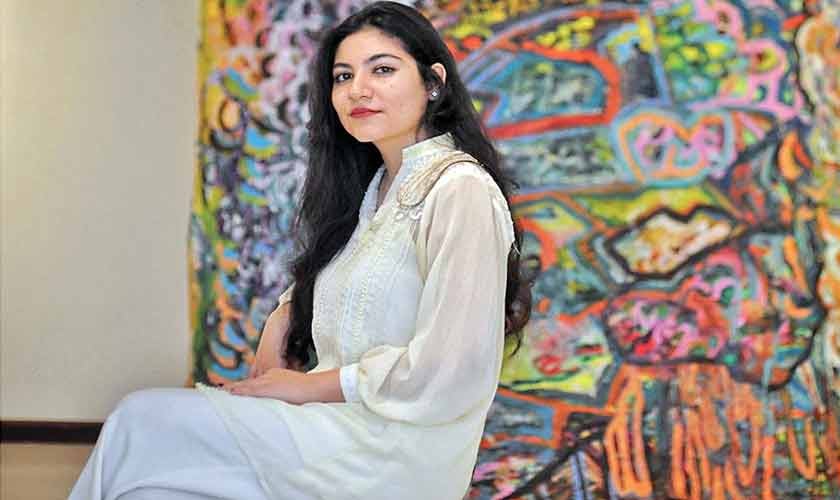
The Karachi Biennale is set to return in January 2027 for its fifth edition, this time led by curator Noor Ahmed. Since its launch in 2017, the Karachi Biennale has grown into Pakistan’s largest international contemporary art event, transforming the city through exhibitions, public art projects, and education programmes that bring contemporary art to diverse audiences.

For KB27, the Biennale will once again move beyond traditional gallery walls, spreading across Karachi’s schools, parks, and public spaces. The programme will feature commissioned works, site-specific projects, artist residencies, workshops, initiatives for schools and communities, and a series of public talks. The Trust aims to explore new ways of engaging audiences and to document the outcomes for future editions.

Noor Ahmed is an exciting choice as curator. She has collaborated on significant projects, including co-curating *River Landscapes*, a transnational initiative connecting South Asia and Europe through a shared glossary of water. Additionally, she served as Project Director and Lead Curator of the Digital Curation of Lahore and Taxila Museums, Pakistan’s largest museum digitisation programme.

Her relationship with the Biennale dates back to 2019, when she served as Assistant Curator for KB19 and helped deliver exhibitions across Karachi’s public parks, zoo, and botanical gardens.

The Biennale has always sought to expand access to contemporary art, with each edition advancing this mission. Previously curated by Amin Gulgee in 2017, Muhammad Zeeshan in 2019, Faisal Anwar in 2022, and Waheeda Baloch in 2024, the event has steadily strengthened its infrastructure for commissions, exhibition delivery, and education, while deepening public participation across the city.

With Noor Ahmed guiding KB27, the Biennale is poised to continue this growth. The programme will introduce new voices, test fresh formats, and reaffirm Karachi’s role as a hub of contemporary cultural exchange.

Details of the full programme, along with submission deadlines and ticketing information, will be released by the Trust ahead of the January 2027 opening. Stay tuned for updates!
https://www.thenews.com.pk/tns/detail/1348546-karachi-biennale-2027-noor-ahmed-to-curate-fifth-edition

Japan’s Elderly Forced to Pay 20% of Medical Costs from October

At a recycling warehouse in Niiza, Saitama Prefecture, 77-year-old Januma refurbishes used washing machines. He receives a pension of around 200,000 yen a month, supplemented by about 100,000 yen from his part-time work, giving him an income of roughly 300,000 yen in total. Yet even with this, he worries about the growing burden of healthcare costs.

“So far it hasn’t been too heavy, but I know it’ll keep increasing as I get older and go to the hospital more often. It’s inevitable,” he said while continuing to work.

The higher payments affect about 3.1 million people nationwide. Until now, most people aged 75 and over paid 10% of their medical bills, but since October 2022, those with certain income levels have been required to pay 20%. A temporary relief measure capped the increase at 3,000 yen per month, but this limit was abolished on October 1st, fully implementing the 20% co-payment for outpatient visits.

For instance, someone with 50,000 yen in monthly medical costs previously paid 8,000 yen, but now pays 10,000 yen, a rise of 2,000 yen.

For Januma, whose favorite pastime is karaoke with friends, the impact feels personal. “If medical costs keep rising, there’s a chance I might have to give up going to karaoke,” he said. “That would be really sad because singing is my main joy in life.”

At local clinics, confusion was seen on October 1st as notices were posted informing patients that consideration measures for the 20% co-payment have ended and that personal payment amounts may rise.

A 75-year-old woman visiting a clinic for persistent coughing said she had just learned her fees would increase that day. Her payment of 430 yen for a visit seemed small, but it was double what she paid before the reform.

“It may not sound like much, but I go to the hospital many times a month. It adds up to around 5,000 or 6,000 yen. It’s quite tough,” she said.

Doctors are also worried that rising costs could cause patients to avoid necessary care.

“With prices rising everywhere, patients are anxious. Some skip tests or choose cheaper medicines to cut costs. We’re already seeing diabetic or hypertensive patients who’ve run out of essential prescriptions,” said Ito, a physician.

Behind the reform lies a generational issue: roughly 40% of medical costs for those aged 75 and over are paid by the working-age population. As the baby-boom generation moves into the late-elderly bracket, this burden is increasing.

To ease the strain on younger generations, a portion of seniors with higher income levels were asked to shoulder more.

Nomura, a policy analyst, said, “It’s important that we review waste in the healthcare system. We all have to share the responsibility fairly, but we also need to reduce unnecessary treatments and optimize costs.”

In Tokyo’s Itabashi Ward, at the Takashimadaira housing complex, an 83-year-old man said his total monthly spending is about 250,000 yen. Rent and service fees for his assisted living apartment cost 150,000 yen, food expenses are 40,000 yen, and social expenses total 50,000 yen. Medical costs are around 5,000 yen a month but will now rise.

“I’ll probably have to withdraw from my savings. I can’t really cut back on other things—I still want to enjoy life while I can,” he said.

Others are choosing small sacrifices.

“We try not to be extravagant,” said one woman. “My husband loves eel, but now it’s just for special occasions. If we have to cut somewhere, it’ll be food. There’s no other way but to save.”

Experts emphasize that the key lies in extending healthy life expectancy.

“If seniors can stay active in society and continue social connections—whether through hobbies, volunteer work, or group activities—it helps maintain health and reduce long-term medical costs,” said one gerontology specialist.

At a shopping street, an elderly woman affected by the new rule was seen buying discounted groceries during a senior sale.

“I waited an hour in line to save money. The free local bus also helps, so I’m cutting costs wherever I can,” she said.

For many like her, saving on daily necessities has become essential to offset rising medical expenses.

The discussion now extends beyond healthcare to the entire social welfare system, as Japan faces the challenge of sustaining support for a rapidly aging population while ensuring that seniors can still live with dignity and enjoyment.
https://newsonjapan.com/article/147157.php

No method to Netanyahu’s madness

The United Nations 80th General Assembly should have been a stage to discuss the future of peace in the age of artificial intelligence. Sadly, it turned out to be one of the most divisive sessions, dominated by Palestine rather than Israel. This gathering proved that Palestine cannot be brushed aside as an idea, even when backed by a world power.

Not many member states were eager to listen to Israeli Prime Minister Benjamin Netanyahu at the United Nations General Assembly in New York on September 26 — not least Hamas, the enemy he has been obsessed with for the last two years. Netanyahu tried his best to address Hamas directly, despite a boycott of his speech.

The biased Western media counted the boycotters in dozens, even as Netanyahu spoke to an almost empty General Assembly Hall. Diplomats from Arab and Muslim countries walked out, joined by counterparts from several African and some European nations. The Israeli leader claimed that his intelligence agencies had hacked cell phones across Gaza and used them to broadcast his speech. However, he offered nothing new to the world or to Hamas. He only demanded, for the umpteenth time, the immediate release of the remaining hostages.

Israel claims to be one of the world’s leading technological powers, especially in military applications. It enjoys full backing from the mightier United States. We have seen some of their high-tech gimmicks—exploding pagers, for instance. So why, despite this military muscle and technical superiority, have they failed to secure the release of the remaining hostages? And how can they hope to achieve the even more ambitious goal of eliminating Hamas?

Of the 48 hostages left in Gaza, Netanyahu says 20 may still be alive. Despite focusing on the narrow 41-kilometre stretch of land for two years, his high-tech drones and well-armed ground forces have been unable to rescue them. Netanyahu has vowed that he will not rest until all hostages have been brought home.

During his address, the Israeli leader wore a large white badge on his lapel displaying a QR code. He encouraged the audience to scan it, linking to a website about the Hamas attacks on October 7, 2023. This seemed to be an attempt to promote the perception that he remains obsessed with the objective he set nearly 730 days ago.

However, the world remains confused about his ultimate goals: Is it finishing Hamas, killing all Palestinians, or creating Greater Israel? The gimmickry continued in New York. Netanyahu’s office organized a public diplomacy campaign in the city, including billboards and trucks displaying the message: “Remember October 7” in Times Square and near the UN building.

Meanwhile, support for Israel among Americans has dropped significantly since the start of the Gaza war. According to Pew Research Center’s April 2025 report, Netanyahu appeared more isolated than ever at the world’s biggest forum. His policy inflexibility has alienated some former allies. A growing number of Western countries feel compelled to recognize Palestinian statehood.

Countries such as the United Kingdom, Canada, Australia, Portugal, and France have made this belated decision, much to Netanyahu’s displeasure.

Just days before his appearance, on September 12, a vote took place at the UN General Assembly. Out of 193 member states, 142 voted in favor of a declaration calling for the peaceful settlement of the Palestinian question and the implementation of a two-state solution with Israel. The “New York Declaration” was a result of an international conference held at UN Headquarters in July, organized by France and Saudi Arabia.

Ten nations, including Israel and the United States, opposed the declaration. The other eight opposing countries were Argentina, Hungary, Micronesia, Nauru, Palau, Papua New Guinea, Paraguay, and Tonga. Twelve nations abstained from the vote. This outcome clearly shows the limited support Tel Aviv currently enjoys.

Netanyahu’s diminishing support is not limited to countries—it reflects a fundamental shift in American public opinion. The Pew Research Center’s report highlights that only 54 percent of Americans now say the Israeli-Palestinian war is relevant to them, marking an 11-point drop since January 2024. Moreover, those who believe the conflict is significant to U.S. national interests have decreased from 75 to 66 percent.

The United States, Israel’s staunchest ally, is showing signs of fatigue. Former President Donald Trump declared that any Israeli attempt to annex parts of the West Bank would be a red line for him. Despite these signals, Netanyahu has yet to grasp the message Western nations are sending through long-overdue recognition of Palestinian statehood: enough is enough. Israel cannot have an indefinite license to kill; there are limits—and those limits have been crossed.

His speech, filled with spin and allegations of anti-Semitism, went largely unheard. Netanyahu is increasingly isolated, and the sooner he realizes this, the better it may be—for him and for world peace.

According to Gaza’s Health Ministry, since October 7, 2023, over 65,000 Palestinians have been killed. The pressing question remains: How much more killing is needed?

Above all, Netanyahu’s speech lacked a clear roadmap. For those rooting for peace, that absence was the most alarming element of all.
https://www.thenews.com.pk/tns/detail/1348318-no-method-to-netanyahus-madness

Has Mohammed Shami played his last game for Team India?

**Has Mohammed Shami Played His Last Game for Team India?**
*By Gaurav Tripathi | Oct 05, 2025, 10:14 AM*

Indian cricket legend Sunil Gavaskar has shared his thoughts on the future of fast bowler Mohammed Shami following the latter’s exclusion from India’s white-ball squads for the upcoming series against Australia.

### The Injury Struggle and Its Impact

Mohammed Shami, 35, has been battling injuries since the 2023 ODI World Cup. Despite overcoming a year-long fitness struggle, he has been unable to regain his peak form. Gavaskar noted that for a fast bowler like Shami, recovering from such injuries is especially challenging.

“In Mohammed Shami’s case, it’ll be a real uphill climb for him. It’s going to be very, very tough,” Gavaskar told *India Today*. He also acknowledged Shami’s valuable contribution to Indian cricket over the years.

Shami last represented India in the Champions Trophy earlier this year but has since found it hard to secure a spot in the national team.

### Declining Form and Limited Opportunities

The 2025 IPL season was disappointing for Shami as he struggled to make an impact with Sunrisers Hyderabad. Consequently, he was left out of key tours and tournaments, including the England tour, the T20 Asia Cup 2025, and the West Indies Test series.

His domestic performances have also been underwhelming, notably in the Duleep Trophy where he picked up only one wicket in 34 overs while representing East Zone.

### Selectors’ Long-Term Vision

In recent squad announcements, India’s selection committee has made significant changes ahead of the Australia tour. Shami, along with Ravindra Jadeja, has been omitted to make room for younger talents like Prasidh Krishna and Washington Sundar.

This move signals a clear long-term strategy focusing on building a core team for the 2027 World Cup. Shami’s exclusion appears to be part of this broader vision to develop fresh talent and invest in the future.

### A Look Back at Shami’s Career

Mohammed Shami made his international debut in 2013 and quickly established himself as a vital member of the Indian bowling attack across all formats.

– **ODIs:** 64 matches, 116 wickets at an average of 25.71
– **Tests:** 64 matches, 229 wickets at an average of 27.71, including six five-wicket hauls
– **T20Is:** 27 wickets at an average of 28

Shami’s experience and skill have been invaluable to Team India, but with continuing fitness concerns and emerging young talent, his international future remains uncertain.

As India gears up for future challenges, the story of Mohammed Shami’s international career may be approaching its final chapter. Fans and experts alike await further developments as the team evolves towards the 2027 World Cup.
https://www.newsbytesapp.com/news/sports/has-mohammed-shami-s-india-career-ended/story

US Treasury Department mulls minting USD 1 Trump coin

The Treasury Department is considering producing a one-dollar coin featuring US President Donald Trump to commemorate the 250th anniversary of US independence next year, a spokesperson said, according to Politico.

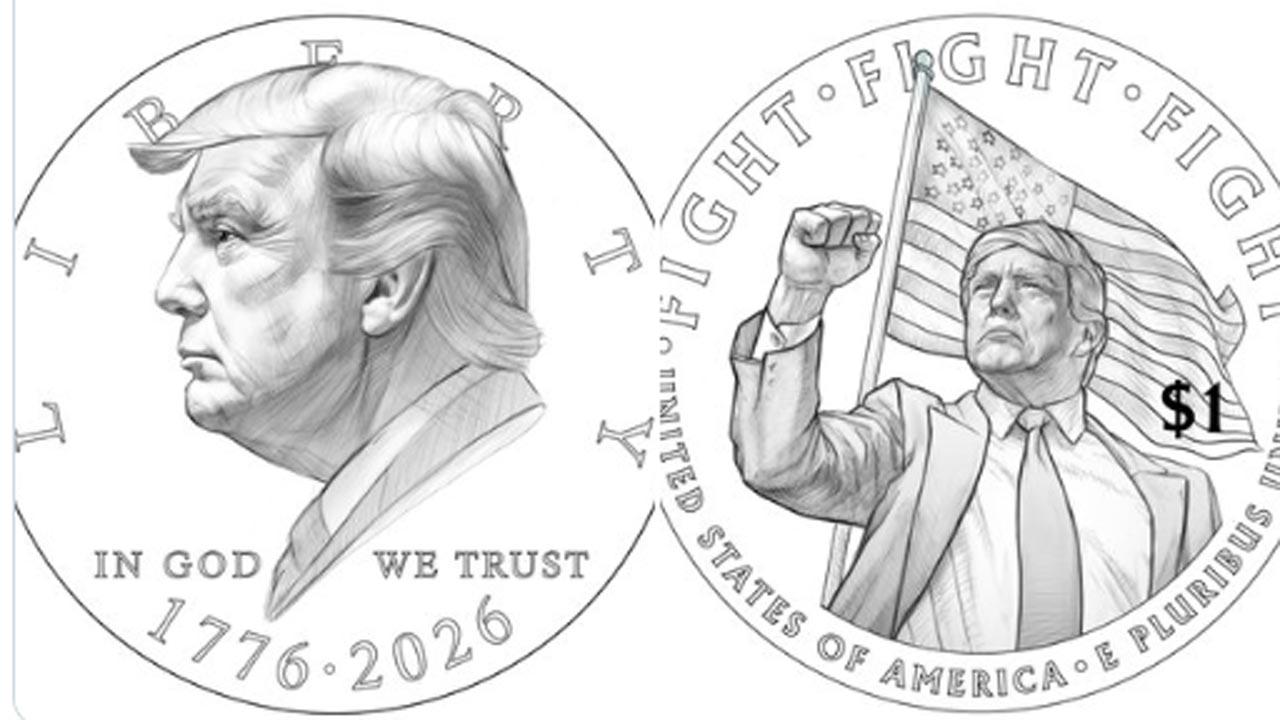
The draft design of the coin, overseen by the Office of the US Treasurer Brandon Beach, features Trump’s profile on one side. The opposite side depicts Trump with a clenched fist in front of an American flag alongside the words “FIGHT, FIGHT, FIGHT,” as reported by Politico.

“Despite the radical left’s forced shutdown of our government, the facts are clear: Under the historic leadership of President Donald J. Trump, our nation is entering its 250th anniversary stronger, more prosperous, and better than ever before,” a Treasury Department spokesperson said in a statement.

“While a final USD 1 coin design has not yet been selected to commemorate the United States’ semiquincentennial, this first draft reflects well the enduring spirit of our country and democracy, even in the face of immense obstacles,” the spokesperson added.

Congress passed bipartisan legislation in 2020, signed by Trump during his first term, authorizing the Treasury Secretary to issue one-dollar coins during the 2026 calendar year. The design of these coins must be “emblematic of the United States semiquincentennial,” according to Politico.

It is notable that living people are rarely featured on US currency. Congress has imposed various restrictions on the Treasury’s ability to feature living individuals, including living presidents, on money. It remains unclear whether the latest Trump coin envisioned by the Treasury Department would comply with these laws.

When asked about the coin on Friday, White House Press Secretary Karoline Leavitt told reporters she was unsure whether Trump was aware of the effort to put his likeness on a coin. “I’m not sure if he’s seen it but I’m sure he’ll love it,” she said, according to Politico.

*This story has been sourced from a third-party syndicated feed. Mid-day accepts no responsibility or liability for the dependability, trustworthiness, reliability, or accuracy of the content. Mid-day management and mid-day.com reserve the sole right to alter, delete, or remove (without notice) content at their absolute discretion for any reason whatsoever.*
https://www.mid-day.com/news/world-news/article/us-treasury-department-mulls-minting-usd-1-trump-coin-23597277

Writer-Director Subodh Khanolkar Enjoys The Success Of His Debut Marathi Film ‘Dashavtaar’

The Marathi thriller *Dashavtaar* has already crossed the ₹25-crore mark and continues to rake in more. Remarkably, it is the only Marathi film to have a first show at 7:30 AM at more than two theatres in Mumbai, followed by a last show at 11:30 PM. The film is proving to be tough competition for Bollywood releases and has been applauded by critics for the strong social message it delivers.

This film marks the debut of tele-serial director-producer Subodh Khanolkar in the commercial film space as a writer-director. Was he nervous about this transition? “Little nervous, yes… but apprehensive, no,” says Subodh quite vehemently.

### Joining the ‘Elite Class’ of Success

Today, with the bumper success of *Dashavtaar*, Subodh joins an ‘elite class’ of filmmakers. Did he expect such success? “Not at all,” he admits. “Having said that, I have to accept that for any filmmaker, commercial success is important. One wants their film to be a hit. It is only when the film — especially one with a mega budget like this — is commercially successful that one can think of making another one.”

### A Story Close to the Heart

The story of the film is very close to Subodh’s heart. His ancestral home in Kelus is more than 100 years old. Nearly three years ago, on his way back from Kelus after celebrating the centenary of the house in a grand way, Subodh shared his emotions with his wife Anvita.

“I was so enamoured and overwhelmed by the whole experience that I wanted to recreate the ambiance of Konkan in my next venture,” he informs. “Anvita loved the idea. Back in Mumbai, I discussed this with my partners at Ocean Film Company. They too liked the idea. After some brainstorming, it was decided that I should write the story and screenplay… and I started working on it.”

Subodh worked diligently on the script, and once it was ready, he decided to direct the film as well.

### The Social Message: Intentional or Not?

Did he start writing the script with the social message in mind? “No,” he confesses. “When I set out to write the script, it was a story of a father-son duo with *Dashaavtar* as the underlying factor. A story of emotions, a story of the relationship between father and son with all its layers.”

Subodh acknowledges that as the story unfolded, many other layers emerged during research and development. “Nothing was intentional, not even the social message. I had not intended the final message to be ‘in your face’ as many feel. It is always an alert social mind that starts putting social context into the story. And that’s what happened with me.”

### Appealing to All Generations

A lot of youngsters have been attracted to the film. However, Subodh denies having kept them as a target audience while writing or directing. “It was a simple storytelling process when I began. I wanted to make an engaging film that would appeal to all age groups — a film that an entire family can watch together.”

### Casting Highlights

Dilip Prabhavalkar’s performance as Babuli is being widely praised. “For me, it had to be Dilip Kaka as the protagonist. I believed that he would be the only one to do justice to the character. His chameleon-like capacity to become the character that he plays was his unique selling point. I would have temporarily scrapped the project if he had not agreed to play Babuli,” Subodh asserts.

The surprise package in casting comes in the form of Vijay Kenkare and Mahesh Manjrekar. “I wanted someone who doesn’t have a negative image to play the antagonist and someone unpredictable to play the police inspector. That’s the reason I chose Kenkare to play the villain and Manjrekar to play the inspector.”

Both Kenkare and Manjrekar are brilliant and successful directors themselves. How was it directing them?

“Very easy. Neither of them interfered with the process. On the contrary, they were extremely helpful and cooperative. Manjrekar especially went out of his way to ensure that I got exactly what I had visualised.”

### Being Compared to *Kantara*

Subodh is aware of comparisons between *Dashavtaar* and the blockbuster *Kantara*. “I know. I guess the regional flavour, the folk art, and a few locations triggered that.”

The main location representing the forest deity, Katolba, was discovered by the team in the forests of Vaingani near Vengurla. The banyan tree with many branch roots and a sheltered center made for an ideal locale. Art Director Sanjiv Rane created the Katolba in resin as per sketches by Ocean Film Company’s graphic designers, explains Subodh.

### Lessons Learned and Takeaways

With all the comparisons and inevitable criticism that come with commercial success, Subodh’s takeaway from the film is insightful.

“This is my first film as a writer-director. I had the license to make mistakes, and I have learned a lot in the process. The positive side is that it has given me confidence about the medium. And the biggest lesson I learned is to pre-plan extensively to save time,” Subodh concludes.

*By Shruti Pandit*
https://www.freepressjournal.in/weekend/writer-director-subodh-khanolkar-enjoys-the-success-of-his-debut-marathi-film-dashavtaar

Tropical Storm Priscilla forms in the Pacific Ocean off the coast of Mexico

MIAMI (AP) — Tropical Storm Priscilla formed in the Pacific Ocean off the coast of Mexico on Saturday, according to the Miami-based National Hurricane Center.

Priscilla is a large tropical storm, with tropical storm-force winds extending as far as 140 miles (220 kilometers) from its center. The storm’s maximum sustained winds reached 45 mph (75 kph). At the time of the report, Priscilla was located about 285 miles (455 kilometers) southwest of Manzanillo and was moving northwest at 3 mph (6 kph).

A tropical storm watch has been issued for part of the southwestern coast of Mexico, from Punta San Telmo to Punta Mita. Tropical storm conditions are possible in this area on Sunday and Monday.

Priscilla is forecast to reach hurricane status by Sunday night or early Monday and is expected to move generally parallel to the coast over the coming days.

Meanwhile, another tropical storm in the Pacific, Octave, is meandering far from shore with no landfall forecasted. There are no coastal watches or warnings in effect for Octave. The storm’s maximum sustained winds have strengthened slightly to 65 mph (100 kph).

The Associated Press.
https://ca.news.yahoo.com/tropical-storm-priscilla-forms-pacific-211418782.html

PBA golden season opens with one less surprise

The long and winding 50th season of the PBA tips off this Sunday with the opening of the centerpiece Philippine Cup at the Smart Araneta Coliseum.

As the new season begins, there will be many burning questions seeking answers. Fans and analysts alike are eager to see how teams will perform and which players will rise to the occasion.

However, there may be one question that is already settled.

**READ:** [PBA: June Mar Fajardo grateful as record 9th MVP looms](#)

June Mar Fajardo is…
https://sports.inquirer.net/642979/pba-golden-season-opens-with-one-less-surprise

Swords and sarangis

The first of October is marked as Music Day in many parts of the world; another day, June 21, is also observed, with a slightly different emphasis—a celebration of music’s many forms and its capacity to bring disparate traditions into conversational harmony. Yet, if music can unite, it does not, by itself, inoculate a society against violence. Celebrating sound and rhythm is no guarantee of moral restraint.

That paradox is painfully evident in Pakistan. After the country was widely branded as a sponsor of, or at least a haven for, extremism, successive governments sought to cultivate a softer image. Soft power became a remedy in speech and policy: embassies were urged to host cultural events; diplomats extolled the nation’s literary and musical heritage; fashion shows and art exhibitions were staged abroad to suggest a modern, outward-looking society.

Under the administration of Shaukat Aziz in the early 2000s, such displays of liberal openness were pursued with enthusiasm—a conspicuous diplomacy that sought to counterbalance a darker international narrative. But optics and policy do not always track one another. The presence of concerts, galleries, and catwalks does not automatically negate the political choices that lead to violence. Culture can coexist with brutality; sometimes it even flourishes alongside it.

Israel, a society rich in music, theatre, and visual arts, has nevertheless employed indiscriminate force in ways that many have condemned. Equally, Japan in the 1930s and 1940s, steeped in aesthetic traditions and religious values often associated with pacifism, pursued an expansionist military policy that wrought enormous suffering across East Asia. Nor should we forget the colossal human toll recorded in China’s historical memory of the Japanese invasion.

These are awkward truths, but they are instructive. Art and culture do not automatically immunize a polity against violence. Art is not a prophylactic. It is an expression of a people; and like any human practice, it can coexist with contradictory impulses.

A society’s musical culture may be lush and diverse while its politics are hard-edged and uncompromising. Artists and musicians can and do protest violence, yet their songs seldom, on their own, alter the course of state action.

Part of the reason for this disconnect is that culture and policy inhabit different registers of power. Music, painting, and dance shape hearts and imaginations; statecraft organizes resources, defines enemies, and makes war possible. Soft power—the ability to attract and persuade through culture—has real value, but it is subsidiary to the hard instruments of policy: the legal framework, the security apparatus, the economy, and the structure of political incentives.

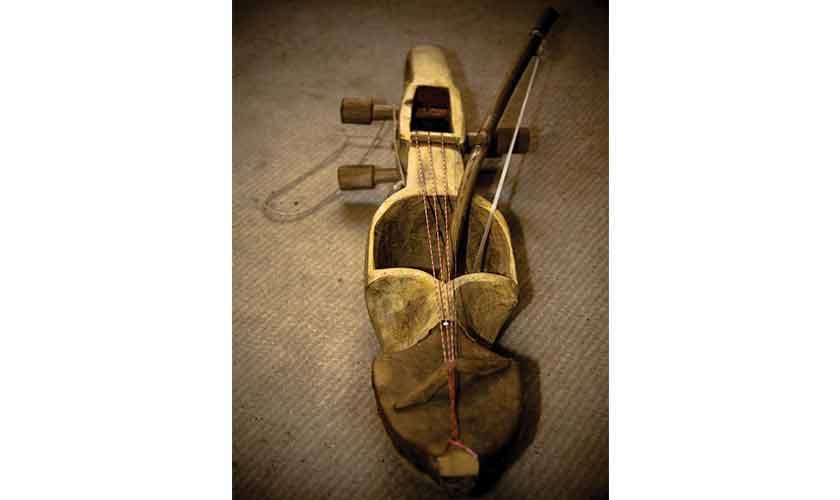
You can fill an embassy with sarangis and sitars, but if the policy calculus in the capital favors militarized responses, the public display of culture will look like tokenism. Wars and ballads, swords and sarangis, have always coexisted in human history. The task for cultural policymakers and civic leaders is not to pretend otherwise, but to shape the balance.

In Pakistan, the elevation of martial themes in popular culture is striking. Patriotic anthems and taranas that extol bravery, sacrifice, and territorial defense have long commanded greater official recognition than songs of love or pleas for peace. Epic literature and praise of warrior virtues have classical antecedents—from the Iliad and the Mahabharata to the Shahnameh. Modern states draw on these narratives, consciously or otherwise, to frame national identity.

In such a cultural economy, a vocalist who sings to celebrate the nation’s might may be lauded as a custodian of public morale, while a singer who pleads for reconciliation is dismissed as sentimental or naive. That does not mean that songs of peace do not exist or lack potency. Throughout history, poetry and music have articulated dissent and conscience—from the laments of the troubadours to the protest songs of the twentieth century.

But the institutional esteem afforded to different genres matters: where martial music is publicly rewarded, its messages multiply; where songs of reconciliation are marginalized, they struggle to be heard beyond sympathetic circles.

Also, there is a more ambivalent truth about human temperament. Courage and tenderness are not mutually exclusive; they often run in parallel. Communities cultivate both the capacity to defend and the capacity to heal. Expecting one to annihilate the other is wishful thinking.

Wars and ballads, swords and sarangis, have always coexisted in human history. The task for cultural policymakers and civic leaders is not to pretend otherwise, but to shape the balance.

So, what might a more honest engagement with culture and security look like?

First, cultural policy must be more than window-dressing. Investing in arts education, ensuring public funding for diverse cultural practices, and embedding critical artistic voices within civic life can slowly shift the norms.

Second, artists must be accorded not only space to perform but also platforms where their critique can meet policy debate—forums where poets, musicians, and filmmakers speak to lawmakers, educators, and security planners.

Third, civil society should resist binary thinking that casts culture as either naive or complicit; instead, it should recognize art’s capacity to unsettle, heal, and imagine alternatives, even while structural change proceeds through other channels.

Music will not end aggression, but it can change the vocabulary of public life; it can keep alternative imaginaries alive. For that reason alone, it is worth the sustained attention of policy as well as public affection.

Swords and sarangis will coexist for the foreseeable future. The hope should be that the sarangi’s song grows louder—not because it will stop every bullet, but because it will have more chance of shaping the world into which those bullets are fired.
https://www.thenews.com.pk/tns/detail/1348305-swords-and-sarangis

Exit mobile version
Sitemap Index