
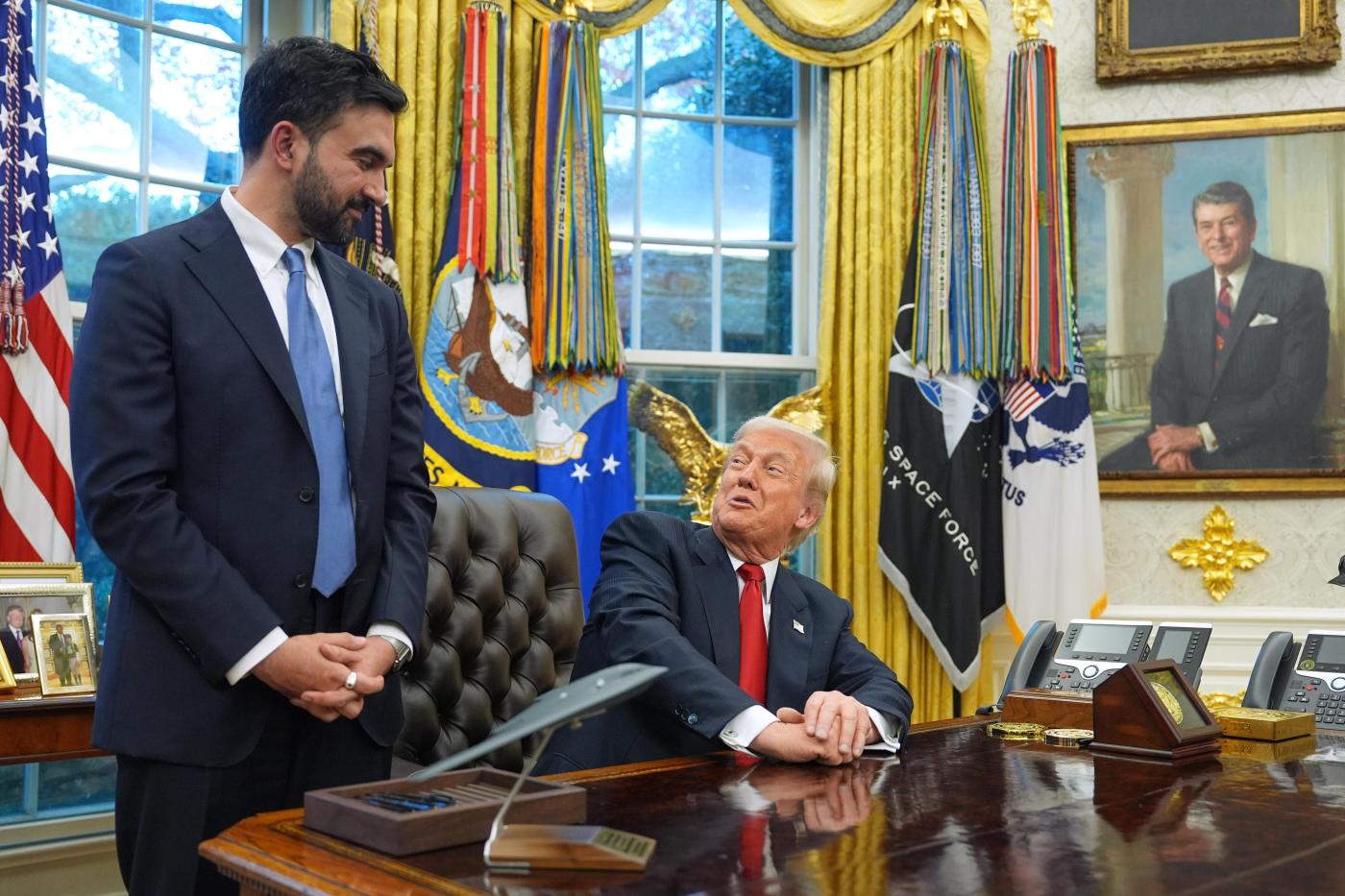
WASHINGTON New York City Mayor-elect Zohran Mamdani didn’t back down in an interview that aired Sunday from past criticism that President Donald Trump acted like a despot and a fascist after a surprisingly friendly White House meeting between the two men. The newly elected democratic socialist and the Republican president have fiercely criticized each other in the past. Trump called Mamdani a “100% Communist Lunatic” in a social media post following the incoming mayor’s election victory, and Mamdani has said Trump was attacking democracy. Yet the two political foils emerged smiling after the meeting Friday and spoke of shared goals. Pressed about his past criticism during a “Meet the Press” interview conducted Saturday, Mamdani said his views remained unchanged. “Everything that I’ve said in the past, I continue to believe,” Mamdani said. “And that’s the thing that I think is important in our politics, is that we don’t shy away from where we have disagreements, but we understand what it is that brings us to that table, because I’m not coming into the Oval Office to make a point or make a stand. I’m coming in there to deliver for New Yorkers.” Trump had brushed aside Mamdani’s criticisms Friday and even jumped in on his defense several times. When a reporter asked if Mamdani stood by his comments that Trump is a fascist, Trump interjected before Mamdani could fully answer the question. “That’s OK. You can just say yes. OK?” Trump said. “It’s easier. It’s easier than explaining it. I don’t mind.” Asked about the fascist criticism on “Meet the Press,” Mamdani said, “That’s something that I’ve said in the past. I say it today. ” Kevin Hassett, director of the National Economic Council, said on CNN’s “State of the Union” talk show that Trump wants to work with everybody who cares about the future of the American people. “We’re at times disagreeing about policies,” Hassett said, “but I think that the objective of making life better for everybody is something that a lot of people share on the Democratic and Republican side.” Though far apart politically, the White House meeting offered potential political benefits for both men. The incoming mayor was able to meet one-on-one with the president, and Trump got to to talk about affordability, an issue that is increasingly important to voters.
https://www.chicagotribune.com/2025/11/23/mamdani-trump-criticism/
Author: admin

“A batter like Shreyas Iyer is needed” – Mohammad Kaif picks his No. 4 for IND vs SA 2025 ODI series
With Shreyas Iyer ruled out of India’s ODI series against South Africa due to a rib injury, former cricketer Mohammad Kaif has named his choice to bat at No. 4. Kaif reckoned that Dhruv Jurel should slot in, claiming that he can mould his game according to the situation. Ad Jurel, who has played only Test and T20I cricket for India, received his first ODI call-up during the recent tour of Australia but didn’t get a game. He is one of the three wicketkeepers selected in the squad to face the Proteas in the upcoming three-ODI series, and the youngster could make his 50-over international debut. Reflecting on India’s choice for No. 4, Kaif pointed out that the 24-year-old can stabilize the innings if wickets fall early and can also bat throughout the innings should the situation demand. With Iyer finding enormous success at No. 4 for India in ODIs, Kaif believes Jurel must adopt a similar approach. He said in the latest video on his YouTube channel ‘Mohammad Kaif’: Ad Trending “Dhruv Jurel should bat at number four because he has an organized technique. He can stabilise the innings if wickets fall early. He can mould his game according to the situation. Jurel also has the potential to finish the game well. A batter like Shreyas Iyer is needed at number four. Iyer helped Virat Kohli quite a bit, especially in the 2023 World Cup. Kohli used to play his natural game, taking singles and doubles along with the odd boundary. Iyer used to dominate in the middle overs due to which India were in an advantageous position most of the time. I think Jurel has to take an approach similar to Iyer.” Ad Kaif also warned that India’s seam-bowling department is weak, opining that all-rounder Hardik Pandya is the missing link. “I don’t see Tilak Varma and Ruturaj Gaikwad getting an opportunity in the first game. KL Rahul will play at five. Then there is Nitish Kumar Reddy, Washington Sundar and Ravindra Jadeja. So, there is batting till No. 8. Spin department is complete Sundar, Jadeja, Kuldeep. But if Arshdeep Singh and Harshit Rana make it to the eleven, who is the third seamer? I don’t consider Reddy as the third seamer, he can be the fourth. Reddy can bowl 3-5 overs but the first-change bowler is equally important. So, Hardik Pandya is that missing link,” he added. Ad Along with Iyer and Shubman Gill, Pandya is also nursing an injury, thus remaining unavailable for the ODI series. The selectors have also rested Mohammed Siraj and Jasprit Bumrah, with KL Rahul set to lead India in the series. “Dhruv Jurel is ahead of Rishabh Pant” Mohammad Kaif In the same video, Kaif claimed that Jurel is ahead of Pant as far as ODIs go, given that the latter is returning to the setup after a long time. Pointing out the left-hander’s mediocre white-ball record, Kaif said: Ad “I think Dhruv Jurel is ahead of Rishabh Pant in the pecking order if you consider the playing eleven. He is playing well in Tests, scoring hundreds and is a compact batter. Pant is returning for 2-3 years. I remember Pant scoring a hundred in 2022 in England but plenty of players came after that. His form dipped and couldn’t quite click as a white-ball player. He is not that good in white-ball cricket averaging 33 in ODIs. Sanju Samson, on the other hand, averages 56 in ODIs.” Ad Kaif continued that Nitish Kumar Reddy has the opportunity to show his potential as a finisher in Pandya’s absence. “There is a void at number six, seven where Hardik Pandya bats. So, a player like Nitish Kumar Reddy needs to prove he can be that finisher. Ravindra Jadeja is not an ODI finisher. KL Rahul does well but cannot score as briskly as Pandya. Someone like Shivam Dube can do well. It’s good Pant is getting an opportunity but I’m surprised Samson is not there despite having a good record,” he concluded. India lost their last ODI series; hence, they will be keen to beat South Africa. × Feedback Why did you not like this content? Clickbait / Misleading Factually Incorrect Hateful or Abusive Baseless Opinion Too Many Ads Other Was this article helpful? Thank You for feedback Follow IPL Auction 2025 Live Updates, News & Biddings at Sportskeeda. Get the fastest updates on Mega-Auction and cricket news Edited by Parag Jain.
https://www.sportskeeda.com/cricket/news-a-batter-like-shreyas-iyer-needed-mohammad-kaif-picks-no-4-ind-vs-sa-2025-odi-series


What Congress Has Left to Do This Year
The restarted Senate is moving forward with certain crypto initiatives, but how much time is left compared to how much work is left, really? You’re reading State of Crypto, a CoinDesk newsletter looking at the intersection of cryptocurrency and government. Click here to sign up for future editions. The narrative Now that Congress is back from the government shutdown, all eyes are on how it will proceed on crypto issues. There are a few components to this: Mike Selig’s nomination to run the Commodity Futures Trading Commission, market structure legislation and other crypto matters. Why it matters Time is starting to run out for the crypto industry to lock in its wins from the 2024 election. While the GENIUS Act was a strong start for crypto businesses, and the Securities and Exchange Commission and CFTC are continuing their efforts to create new rules for the industry, the market structure bill is still far from completion. Congress has less than 40 days left this year and just a handful of months next year before it disperses for the midterm elections. Breaking it down The Senate Agriculture Committee voted 13-11 to advance CFTC Chair nominee Mike Selig’s name to the full Senate for a floor vote; if he secures a majority of votes, he should get sworn in shortly after. This may happen in the coming weeks. Selig said crypto is an important issue for the CFTC to look into, speaking to specific issues like onchain markets and the role of intermediaries, among other things. “The CFTC has a critical mission to protect these markets,” he said at his hearing on Wednesday. “This is a real opportunity to develop a framework that can allow for software developers to thrive, for new exchanges to crop up that are going to protect investors and have the types of controls that you would expect in an exchange and make sure that we have the right disclosure requirements that we have typically in our financial markets.” The Senate Banking Committee also advanced the nomination of Federal Deposit Insurance Corporation Acting Chair Travis Hill to be the regulator’s fully confirmed chair to the Senate, among other nominees. But the main event market structure legislation remains largely in the same public position it was in last week. As noted last week, the Agriculture Committee’s new draft includes a few provisions that may prove controversial, including one touching on conflicts of interest. This discussion draft will clearly see updates before the committee can hold a markup and vote. The Trump family’s various crypto businesses are unlikely to leave Democrats’ focus either Senators Elizabeth Warren and Jack Reed asked Treasury Secretary Scott Bessent and Attorney General for information about allegations that the Trump-linked World Liberty Financial sold some of its tokens to “illicit actors,” including in sanctioned regions. The Banking Committee may be closer to a markup while the committee hasn’t published a revised draft bill in a while, negotiations do appear to be ongoing between Republicans and Democrats. Sen. Tim Scott, who chairs the Banking Committee, said Democrats had been “stalling” the bill’s progress in an interview with Fox News’ Maria Bartiromo earlier this week. “The Democrats have been stalling and stalling and stalling because they don’t want President Trump to make America the crypto capital of the world,” he said. “They don’t want to give them the win. It’s not just for President Trump. It’s for the American people, single moms like the one that raised me.” Still, he said the bill might still get to the Senate floor in early 2026. “Next month, we believe we can mark up in both committees and get this to the floor of the Senate early next year, so that President Trump will sign the legislation making America the crypto capital of the World, protecting consumers while increasing the likelihood of America being the most dominant economic power for the next 100 years,” Scott said. Congress has a limited amount of time left in the year to get anything done lawmakers will be out of session next week for Thanksgiving, and will have just a few weeks in December before Christmas and New Year’s. It’s the Thanksgiving holiday in the U. S. Congress will be back next week. If you’ve got thoughts or questions on what I should discuss next week or any other feedback you’d like to share, feel free to email me at [email protected] or find me on Bluesky @nikhileshde. bsky. social. You can also join the group conversation on Telegram. See ya’ll next week!.
https://bitcoinethereumnews.com/tech/what-congress-has-left-to-do-this-year/
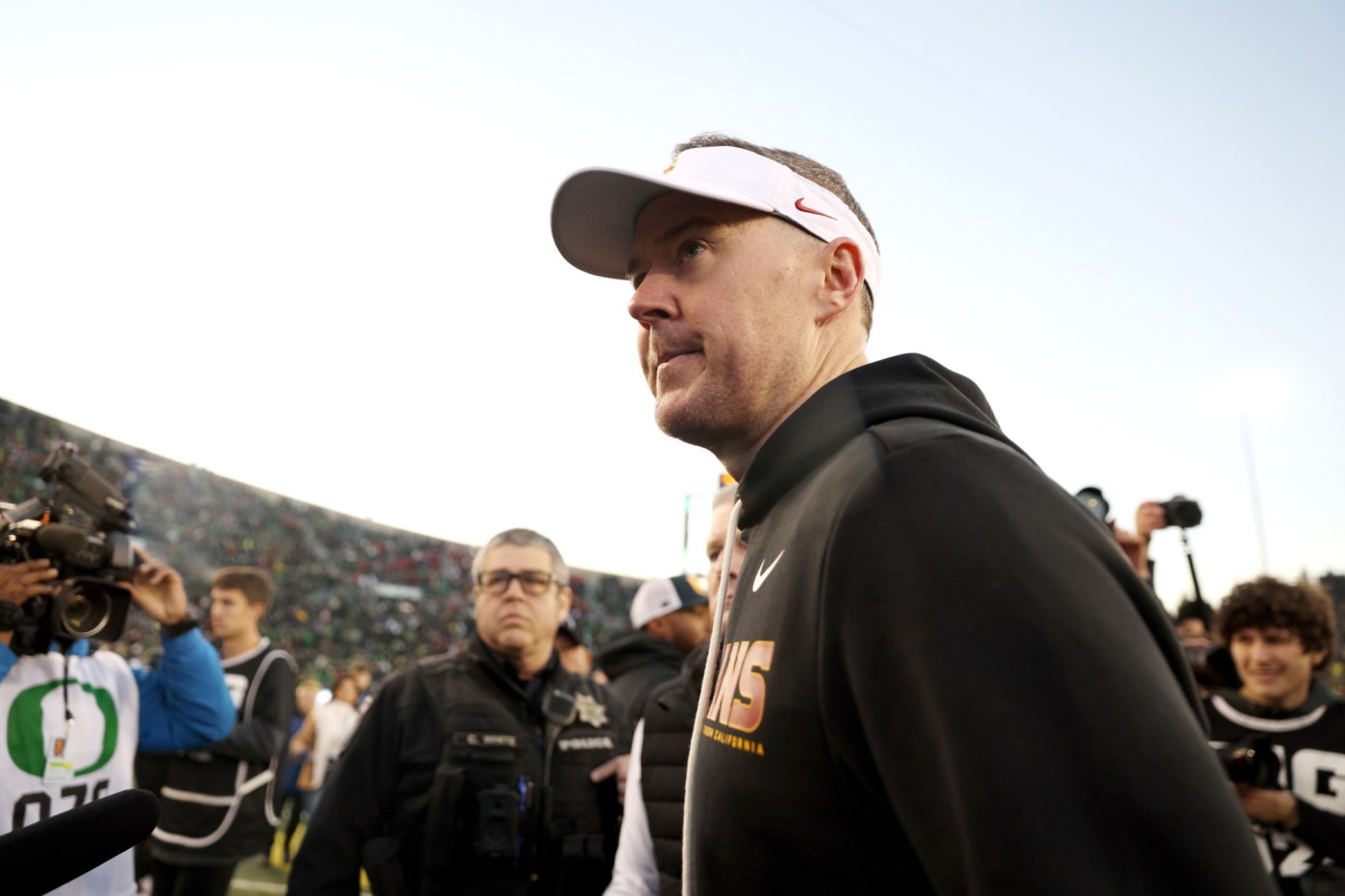
Lincoln Riley remains optimistic about USC’s future despite loss at Oregon
USC head coach Lincoln Riley, quarterback Jayden Maiava and defensive lineman Devan Thompkins squeezed into a white, canopy-style tent for the postgame press conference after the Trojans’ fourth straight loss to Oregon. The opaque, plastic walls of the tent offered little protection from the chilled Eugene air. A bright, cardinal-red backdrop gave the makeshift room a false warmth. The weak, rosy glow of the room could not be felt. “Great battle out there two football teams really going at it,” Riley said, launching into his opening statement. For weeks, Riley has subtly smiled when talking about what could be on the horizon for the Trojans: A big-time game against Oregon. A College Football Playoff bid. Much-awaited progress in USC’s rebuild. USC (8-3 overall, 6-2 Big Ten) had the chance to do something special. Has special come and gone? Riley thinks not. “We’re right there,” he told reporters after the loss. “That’s just how I feel. Two good teams going at it. We’re just gonna keep getting better, and we’re just gonna get better and better as time goes on. We got a good team, that’s what (this game) tells me.” The Trojans took a continuously-depleting roster into Eugene to compete with the Ducks, who were No. 7 in the most recent CFP rankings. The offensive line was reshuffled yet again when Elijah Paige was ruled “out” and Kilian O’Connor left the game due to injury. The coaches called on J’Onre Reed, who was also not fully healthy, to take his place. They never planned for backup rushers King Miller and Bryan Jackson to be in this position. The blitzing safety duo of Bishop Fitzgerald and Kamari Ramsey wasn’t healthy enough to play, leaving Christian Pierce and talented-but-inexperienced Kennedy Urlacher to fend off Oregon’s offense. All were baptized by fire in the 42-27 loss. “They fought,” Riley said of Pierce and Urlacher, in particular. “They’re two fighters. They tackle the ball. They’re violent. They’re contact seekers. A couple plays that we want back from a communication standpoint. But for both those guys, in that moment, against a good offense like that, they both made a lot of plays.” It’s highly unlikely that USC makes the playoff after losing to Oregon. From many perspectives, that is a failure. The fact that Riley is 6-13 against ranked opponents and 0-5 against top-10 teams doesn’t make the shortcoming any easier to swallow. Riley appears to remain focused on long-term plans. His top-ranked 2026 recruiting class remains in tact ahead of the early signing period, which begins on Dec. 3. There’s also still one game remaining on the regular season schedule against UCLA. “We don’t make our plans contingent on how things go,” Riley said. “How we play is just how we play. This is USC. The standard here is incredibly high. It’s incredibly high in our locker room, so we’ll start preparing for UCLA on the plane and we’ll get ready for that one and then figure it out after that.” ESPN experts in a post Sunday morning project USC to play BYU in the Alamo Bowl on Dec. 30. The Cougars, despite being 10-1, may need to win the Big 12 Championship game to get in the CFP. It’s up to the Trojans to decide if they want to move out of the cold, postgame tent and return to the big stage. “No matter what happens, I believe that we’re still just playing to win,” Thompkins said. “Playoffs or not, we’re just playing to win. Coming into this game, that was the mindset, and going into next week still.”.
https://www.pasadenastarnews.com/2025/11/23/lincoln-riley-remains-optimistic-about-uscs-future-despite-loss-at-oregon/
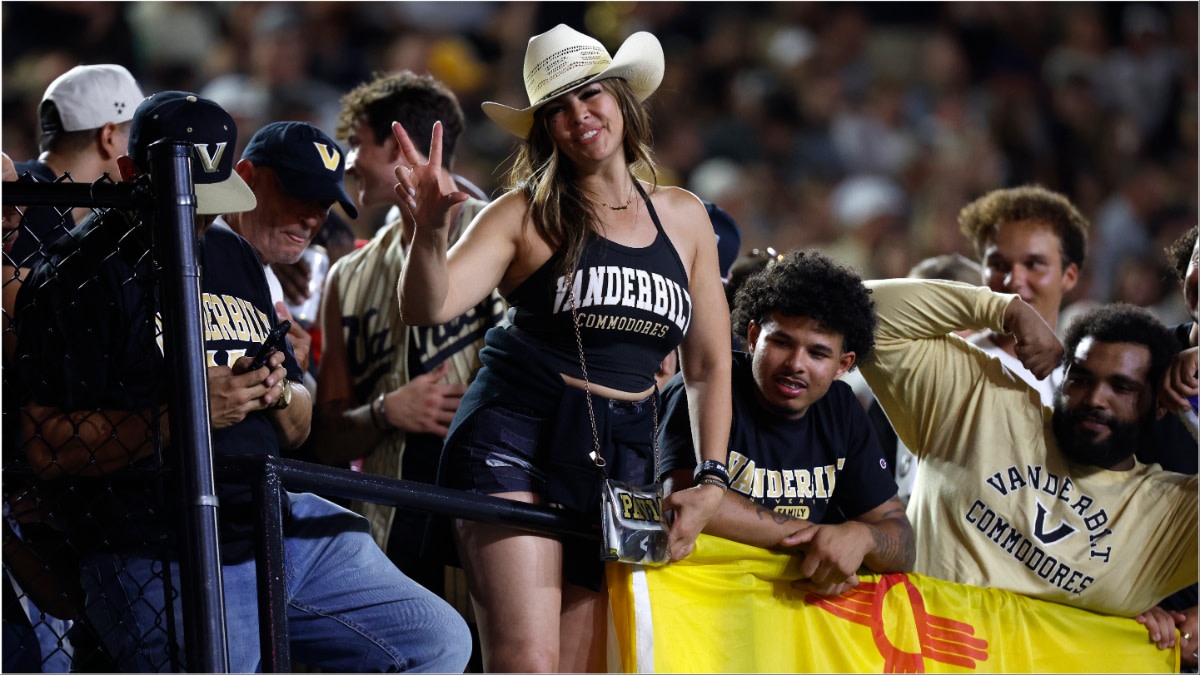
Diego Pavia’s Mom Antoinette Padilla Goes Viral — Fans Aren’t Unhappy About It
Showing her after every play. Not complaining,” wrote one fan on X. People created memes and jokes that spread on social media. Some focused on the heavy airtime the ESPN cameras gave Padilla. Twitter, make it happen.” “My goal is, I would like to marry a nurse one day,” Von told Cubelic, according to AL. com. “I don’t even know if I’d do it. I don’t want to end up being like his stepdad or something.” Padilla is a nurse, AL. com reported. It’s not clear whether the date occurred. “My mom, she’s hard-hat, lunch-pail.”.
https://www.complex.com/sports/a/jessica-mcbride/diego-pavia-mom-mother-antoinette-padilla-goes-viral-theo-von-date-bet


New projects set to transform top end of Manhattan end office market
A wave of new development is poised to transform and enlarge the top end of Manhattan’s office market, even as many older and underperforming buildings undergo conversion to apartments. The new projects are in various stages of development. Some are already in early stages of construction, others with signed anchor tenants are poised to go vertical, and yet others are awaiting the magic cocktails of anchor tenants and financing to proceed. JLL’s New York chairman and president Peter Riguardi, a prolific dealmaker in his own right, put the picture together for Realty Check. Thanks to supply-and-demand cohesion, at least four projects are sure things in the wake of JPMorgan Chase’s construction of its new headquarters skyscraper. “There’s the Citadel tower nearby,” Riguardi said the Vornado-Rudin-en Griffin project known as 350 Park Ave. to break ground early next year. Two of Griffin’s Citadel companies will be anchor tenants. “Related is going to build 70 Hudson Yards for Deloitte,” he said a lease negotiated by JLL. And BXP, formerly known as Boston Properties, is teeing up 343 Madison Ave., where it has a tentative deal with CV Starr to be the anchor tenant. Extel, meanwhile, has started work on 570 Fifth Ave., another jumbo where Ikea will have its flagship store and where Extell chief Gary Barnett is close to a deal with law firm Simpson Thacher & Bartlett anchor the project’s 1 million square-foot office portion. Things get a little less certain after those, Riguardi said. “There are number of properties with lots of discussions going on but not underway yet,” he said. Most prominent among them is 175 Park Ave., for which Riguardi is the leasing agent. The cloudbuster on East 42nd Street to be developed by RXR and TF Cornerstone would consume the Grand Hyatt Hotel and rise to nearly 1, 600 feet. Tweaks are still being made to the design by architectural firm SOM. Also in play are a potential Vornado supertall on the now vacant site of the former Pennsylvania Hotel, where JLL is also the leasing agent, and a smaller, unspecified SL Green project at the former Brooks Brothers store location at 346 Madison Ave. Beyond those are major sites with giant question marks over them. Larry Silverstein and American Express are negotiating, under a veil of extreme secrecy, a possible deal for a new tower at Two World Trade Center. Even more mysterious is the fate of the former Roosevelt Hotel, where owner Pakistan International Airlines is evaluating options. Office demand is so strong, “Everyone’s trying to figure out a way to find a development site,” Riguardi said. All the projects, whether in construction or proposed, will require leases “in excess of $200 per square foot,” Riguardi said “due to land costs, hard and soft development costs, high interest rates and the builders’ desired yields,” he said. Lever House has hit 100% occupancy, owners Brookfield Properties and Waterman Interests announced. The leasing milestone coincides with completion of a $100 million renovation and restoration of the Midcentury masterpiece. The iconic, boutique-scale property at 390 Park Ave. had a troubled history after Lever parent Unilever moved to Connecticut in 1997 and before Brookfield and Waterman acquired it near-empty in May 2020. After the new landlords conducted extensive improvements under the watchful eye of the Landmarks Preservation Commission, the building flooded with light due to the small tower’s narrow form on the avenue is now home to hedge funds, private equity firms and what the landlords call “distinguished family offices.” Expansions are nibbling away at what remaining available space there is at SL Green’s 245 Park Ave. In the latest deal, longtime financial tenant EQT Partners added 38, 358 square feet in an expansion lease, bringing the firm’s total commitment to 114, 562 square feet and the building’s occupancy to 95. 7%. The asking rent was $190 per square foot. It was swift growth for EQT, which became a tenant only in December 2024. The 1. 8 million square-foot tower is undergoing what SL Green leasing head Steven Durels called a “transformative redevelopment” that includes a new plaza, storefronts and lobby overseen by KPF Architects. There are also a large new wellness center and a terra cotta overclad of the facade. SL Green took control of 245 Park, which is now about 90% leased, in 2022.
https://nypost.com/2025/11/23/business/new-projects-set-to-transform-top-end-of-manhattan-end-office-market/
“I am scared to sleep alone” – Star India opener makes a huge revelation about her fear
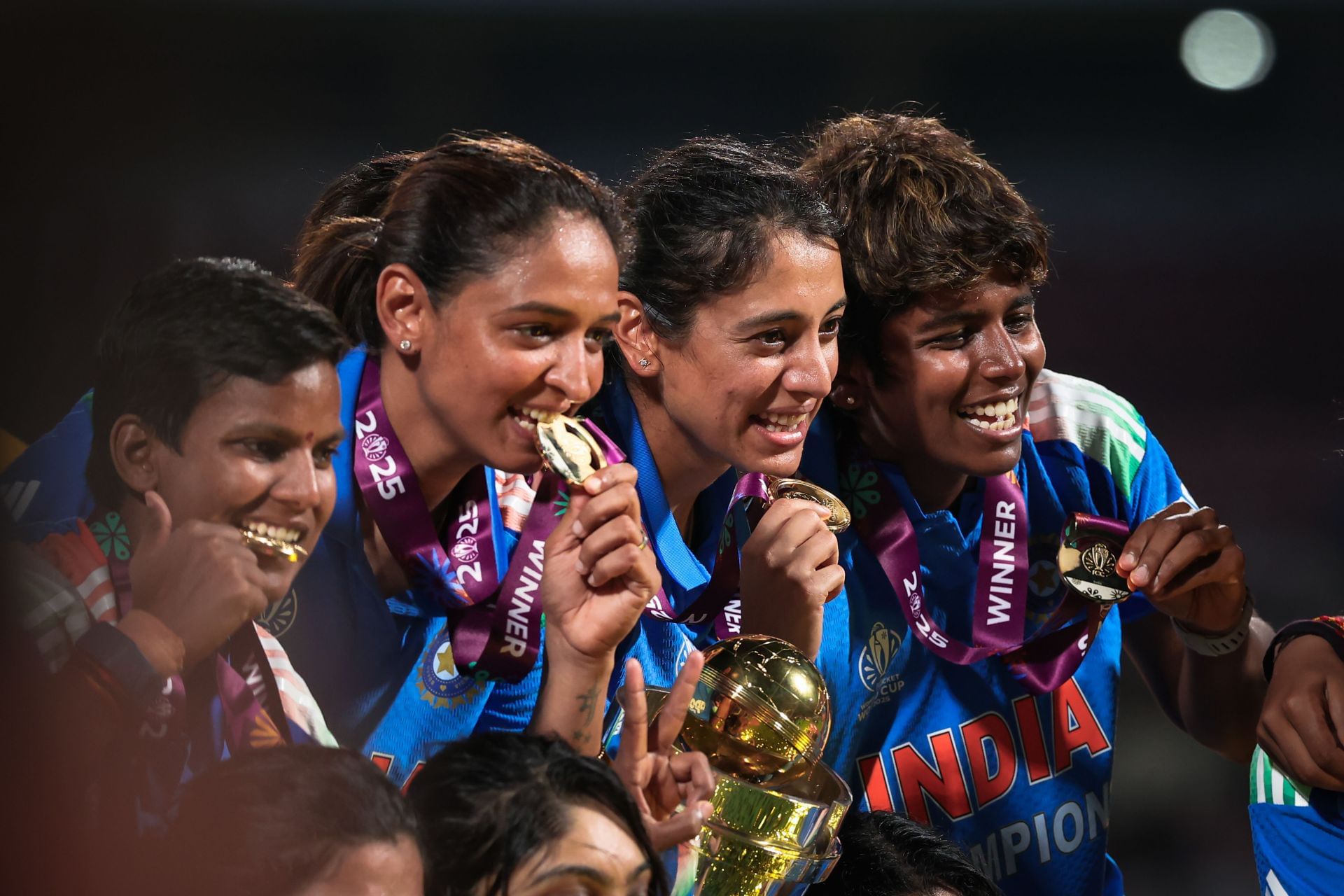
Star India opener Smriti Mandhana made a huge revelation about her fear. She revealed that she was scared to sleep alone. Smriti was part of the Indian team that won the World Cup 2025. Ad She revealed that she needed someone with her in her room to get sound sleep. Smriti would often get hold of her India teammate and close friend Jemimah Rodrigues. “I am scared to sleep alone. I need someone in the room. Even on tour I manage to get someone. I try to grab someone. I have good friends. Jemmi gets very scared. But yeah, I need nice sound sleep,” she said on ‘The Long Off Show’. Ad Trending Smriti also revealed what she would do on bad days and her mindset to make a strong comeback. She stated that she would set harder goals for herself than being negative. The left-hander expressed how it felt when India were knocked out of the 2024 T20 World Cup in the group stage. “When bad days come I like to write a lot. The moment I start thinking how to get better, the point I fail, it fades away. I set a bigger or harder goal than thinking bad. I think what is my plan of action ahead. The 2024 World Cup was a very big setback. Before that I was in he form of my life. We could not qualify. Everyone was extremely quiet.” Ad She made up in the World Cup 2025, ending as India’s highest run-getter. Smriti made 434 runs from nine matches with a century and a half-century. She delivered on the big stage in a crucial tournament as India won their maiden ICC trophy in Women’s cricket. Smriti Mandhana reveals advice from ex-India star before World Cup 2025 Smriti Mandhana revealed an advice she received from ex-India star Yuvraj Singh before the World Cup 2025. Yuvraj Singh asked her and the team not to play the tournament with the expectations in mind, but rather only play the match as a normal game of cricket. Ad “I was at an event where Yuvraj Singh was also there. He said dont play by the expectations, just play the game. I really liked what he said. It is not just expectations from people but even expectations that we have from ourselves as players. You start thinking of doing a lot when the World Cup comes. When you just do the job and leave, then the magic happens,” she said. Ad Further, when asked about three names she had the best conversation with or learnt the most from. Smriti named Sri Lanka legend Kumar Sangakkara, Australia star Meg Lanning, and former skipper MS Dhoni. She revealed that she even idolised Sangakkara growing up, being a left-handed batter herself. “Sangakkara Sir was my idol growing up. Whenever I speak to him I have amazing conversations around batting. I was feeling out of touch with my batting. I texted him and he was very happy to help. I had a good 20-30 minute chat with him. One is him. Second is Meg Lanning. I remember watching her batting and thinking I need to bat like that. I wanted to dominate how she dominated. The third person is Dhoni. I remember doing a shoot with him. We were on bike for the shoot and he was on another bike. On the bike I was asking him questions.” NOTE: ‘This interview was recorded before Smriti Mandhana’s father was hospitalized’ × Feedback Why did you not like this content? Clickbait / Misleading Factually Incorrect Hateful or Abusive Baseless Opinion Too Many Ads Other Was this article helpful? Thank You for feedback Looking for fast live cricket scores? Download CricRocket and get fast score updates, top-notch commentary in-depth match stats & much more! 🚀☄️ Edited by Rishab Vm.
https://www.sportskeeda.com/cricket/news-i-scared-sleep-alone-star-india-opener-makes-huge-revelation-fear

Here’s Why You’ll Never See Michael B. Jordan Join TikTok
Michael B. Jordan may be one of Hollywood’s most recognizable stars, but the Sinners actor is drawing a firm line when it comes to the world of ultra-public digital sharing. At a time when celebrities regularly use TikTok and Snapchat to boost visibility, Jordan is choosing not to participate-and he’s very clear about why. In a recent interview with Vanity Fair, Jordan explained that his decision to stay off TikTok is intentional, rooted in protecting the parts of his life that don’t involve cameras or audiences. “Man, I’m born in ’87,” he said, noting that he sits between two eras of social interaction. “I’m this bridge between knowing what it was like without social media, but then also understanding the impact that it has today.” Jordan’s career has spanned more than 20 years, beginning with breakout roles on The Wire and Friday Night Lights. He earned widespread acclaim in Fruitvale Station, reached global stardom in Black Panther, and solidified his franchise status through the Creed trilogy-directing the third installment in 2023. Most recently, he starred in Sinners and is currently directing a reboot of The Thomas Crown Affair for Amazon Studios. The actor explained that participating in TikTok requires a constant flow of personal content-something he deliberately avoids. Jordan made it clear that performing belongs on set, not in his downtime. “That’s a balance I’m always trying to find-just trying to be genuinely me,” he said. Jordan also emphasized that he refuses to treat his personal moments as extensions of his job. “I’m not trying to act in all elements of my life. That’s the day job, you know?” he said. His perspective aligns with how peers recently described him at the 39th American Cinematheque Awards, where Jordan was honored with the American Cinematheque Award.
https://www.complex.com/pop-culture/a/bernadette-giacomazzo/heres-why-youll-never-see-michael-b-jordan-join-tiktok

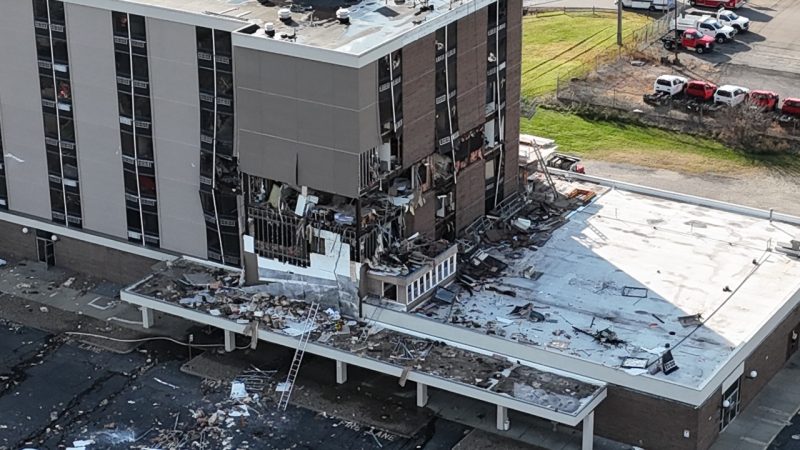
Several injured after explosion at Ohio senior living apartments
Thankfully, no fatalities were reported.
https://ktla.com/news/nationworld/several-injured-after-explosion-at-ohio-senior-living-apartments/

3 teams that should target Gerald Coetzee at IPL 2026 auction ft. RCB
Gujarat Titans (GT) released South African fast bowler Gerald Coetzee from their squad ahead of the IPL 2026 auction. Apart from the Proteas pacer, the 2022 winners also released Mahipal Lomror, Karim Janat, Dasun Shanaka, and Kulwant Khejroliya, while Sherfane Rutherford was traded to Mumbai Indians (MI). Coetzee played only four matches for GT in IPL 2025. The right-arm pacer claimed two wickets at a strike rate of 36. In his overall IPL career, the 25-year-old has featured in 14 matches and has claimed 15 wickets at an average of 31. 46, with the aid of one four-fer. The South Africa pace bowler was purchased by the Gujarat franchise at the IPL 2025 mega auction for ₹2. 40 crore. In this feature, we look at three teams that can target Coetzee at the IPL 2026 mini-auction. #1 Delhi Capitals Delhi Capitals (DC) have retained pacers Mitchell Starc, Dushmantha Chameera and T Natarajan ahead of the IPL 2026 auction. Starc came up with some fantastic performances in the 2025 edition. However, Natarajan looked completely out of rhythm in the few deliveries that he bowled. Chameera too was expensive, going at over 11 runs per over. DC were heavily dependent on Starc to deliver the good in the bowling department. They ended up paying the price for some rather poor bowling efforts during the competition. Thus, despite starting the season with four wins, the Delhi franchise failed to reach the playoffs. DC can look at Coetzee as a potential bowling partner for Starc. The Proteas cricketer is also a handy lower order batter and could provide support to someone like Ashutosh Sharma in the end overs. Delhi have a purse of ₹21. 80 crore and five overseas slots remaining for the IPL 2026 auction. They have good enough reasons to target Coetzee. #2 Chennai Super Kings Five-time champions Chennai Super Kings (CSK), somewhat surprisingly, released Sri Lanka fast bowler Matheesha Pathirana ahead of the IPL 2026 auction. The right-arm pacer did have an underwhelming IPL 2025 season, claiming 13 wickets in 12 matches at an economy rate of over 10. Many experts and fans, though, expected CSK to back him, given his game-changing ability. Chennai do have the likes of Khaleel Ahmed, Anshul Kamboj, Mukesh Choudhary as well as all-rounder Jamie Overton as pace bowling options for the next season. However, they would want a frontline overseas fast bowler in the squad in case they are unable (or don’t want to) to buy back Pathirana at the IPL 2026 mini-auction next month. Coetzee could be among the overseas bowlers on their list. He has come up with some impressive performances with the ball for South Africa and has won them matches with the bat as well. He has the potential to be groomed by CSK into a match-winner. CSK have a huge purse of ₹43. 40 crore and four overseas slots left for the auction. Coetzee can fit into their squad as an overseas buy. #3 Royal Challengers Bengaluru On expected lines, defending champions Royal Challengers Bengaluru (RCB) have retained the core of their IPL 2025 squad. If we look at their fast bowling options for the upcoming season, they have proven performers while Josh Hazlewood and Bhuvneshwar Kumar. Left-arm pacer Yash Dayal too has done well for the franchise in the last couple of seasons. RCB, however, released South African fast bowler Lungi Ngidi ahead of the IPL 2026 auction. They could look at Ngidi’s Proteas teammate as a replacement. Bengaluru need a backup overseas pacer considering that their No. 1 match-winner with the ball, Hazlewood, is also prone to injuries and fitness issues. Coetzee is a feisty character and can fit well into the RCB camp. Following retentions and releases, Bengaluru have a limited purse of ₹16. 40 crore for the IPL 2026 auction, and two overseas slots lot. They can look to target South Africa’s Coetzee as a potential cover for Hazlewood in case the latter gets injured again.
https://www.sportskeeda.com/cricket/3-teams-target-gerald-coetzee-ipl-2026-auction-ft-rcb