

Analyst’s Disclosure: I/we have no stock, option or similar derivative position in any of the companies mentioned, and no plans to initiate any such positions within the next 72 hours. I wrote this article myself, and it expresses my own opinions. I am not receiving compensation for it (other than from Seeking Alpha). I have no business relationship with any company whose stock is mentioned in this article. Seeking Alpha’s Disclosure: Past performance is no guarantee of future results. No recommendation or advice is being given as to whether any investment is suitable for a particular investor. Any views or opinions expressed above may not reflect those of Seeking Alpha as a whole. Seeking Alpha is not a licensed securities dealer, broker or US investment adviser or investment bank. Our analysts are third party authors that include both professional investors and individual investors who may not be licensed or certified by any institute or regulatory body.
https://seekingalpha.com/article/4846856-schd-stop-calling-it-a-value-fund-its-a-quality-momentum-strategy?source=feed_all_articles
Month: November 2025


USC vs. Oregon projected starting lineup and depth chart for Week 13 | 2025 college football season
The No. 15 USC Trojans will square off against the No. 7 Oregon Ducks in Week 13 of the 2025 college football season on Saturday. The game will kick off at 3: 30 p. m. ET from Autzen Stadium in Eugene, Oregon. Ahead of the USC vs. Oregon game, here’s a look at the projected lineups for both teams. Thanks for the submission! USC vs. Oregon projected starting lineup for Week 13 70% Win (110-25-1) 70% Win (110-25-1) 70% Win (110-25-1) Unlock Free tips from our Experts Get Picks Now USC projected starting lineup Here’s a look at USC’s projected starters on offense vs. Oregon: Here’s a look at USC’s projected starters on defense vs. Oregon: Here’s a look at USC’s projected starters on special teams vs. Oregon: Oregon projected starting lineup Here’s a look at Oregon’s projected starters on offense vs. USC: Here’s a look at Oregon’s projected starters on defense vs. USC: Here’s a look at Oregon’s projected starters on special teams vs. USC: USC vs. Oregon depth chart for Week 13 USC depth chart Here’s a look at USC’s depth chart for its offense: Here’s a look at USC’s depth chart for its defense: Here’s a look at USC’s depth chart for its special teams: Oregon depth chart Here’s a look at Oregon’s depth chart for its offense: Here’s a look at Oregon’s depth chart for its defense: Here’s a look at Oregon’s depth chart for its special teams: How to watch the USC vs. Oregon game? TV channel and live stream details for Week 13 clash The USC vs Oregon clash will be broadcast live on CBS, with Brad Nessler (play-by-play), Gary Danielson (analyst) and Jenny Dell (sideline reporter) on the call. Fans can also live stream the game on Paramount+ or Fubo. Also Read: Tony Pauline’s NFL Mock Draft 1. 0: Arch Manning to NFC North contenders, Garrett Nussmeier swooped by AFC North team, Drew Allar heads to NFC West.
https://www.sportskeeda.com/college-football/usc-vs-oregon-projected-starting-lineup-depth-chart-week-13-2025-college-football-season
I quit JPMorgan and took a 70% pay cut. It was a scary decision, but I finally feel meaningfully busy, not calendar busy.
This as-told-to essay is based on a conversation with Meet Semlani, a 33-year-old startup cofounder based in India. It’s been edited for length and clarity. I was two years into my time at JPMorgan when I realized how disillusioned I’d become with my life. It felt robotic. I was following the motto “30 VP,” a phrase I’d heard at the company. It means the goal is to reach vice president status by the age of 30. I’d seen my seniors have these glamorous investment banking careers, so that’s what I thought I was supposed to do. At 26, every day felt the same. I’d be in the office by 9 a. m., go to the same meetings, do the same actions, and leave at 7p. m. During that time, I lost friends and relationships. On a whim, I signed up for a 10-day silent meditation retreat with the intention of taking a digital detox, and came back with the clarity that it was time to quit. My time at JPMorgan shaped my career, but quitting helped me redefine success and eventually raise over $6 million for my startup. I was chasing a goal that wasn’t mine at JP Morgan I started working at JPMorgan in 2015 as an intern on a US visa. Later, I moved back to India and became an associate within the asset management department. I was focused on climbing the corporate ladder. At the same time, I felt like every conversation with coworkers was about having kids, buying a house, paying loans, and planning for the future. But I didn’t see a future for myself at JPMorgan. I had just grown accustomed to the status, validation, and money it provided. I wanted to make a real impact and keep learning, but I was afraid to quit. I had associated my identity with working at JP Morgan If I went to an event and said I worked at JPMorgan, it meant something. People seemed more curious about me when they learned where I worked. I liked the validation and didn’t want to give it up. The idea of leaving a good salary was also a hesitation. I got used to buying the best gadgets and going to nice restaurants. I definitely experienced some lifestyle creep, and I wasn’t sure how I’d maintain my habits without that salary. I knew I needed a break from work I had no idea what to expect going into the meditation retreat. There were no screens, no talking, just breathing. The first few days felt depressing, but when I really settled into the meditation, it gave me space to question everything. I asked myself, “Do I really want to live like this? Is this how I want to be known?” The answer was no. I questioned what’s the worst that could happen if I left JPMorgan, and kept coming back to the idea that, no matter what happens, at least I’m not dead. When I returned home, I felt a sense of calm and a knowingness that I was ready to let go of my job. I didn’t know what was next for me, but I knew it was time to forge a new identity. The day I returned to work, I told my manager I was thinking about quitting. I ultimately stayed a few more months, until February 2018, to hand over my work as smoothly as possible and ensure the team wouldn’t be negatively impacted. I took a 70% pay cut to work for a startup that fulfilled me I was living with my parents rent-free at the time, but I still had some expenses. That’s when I began looking into startups. I applied to some jobs and ultimately got hired as a customer service associate at a startup. I really resonated with its mission of helping international students go abroad through scholarships, loans, or grants, because of my shared experience as an international student, which motivated me to take a 70% pay cut from JPMorgan. I had to scale down on a lot of things I was doing before, like eating out at nice restaurants and traveling, which was tough. There were even moments where I considered going back to JPMorgan because of it, but I’m so glad I stayed. The learning and access I had in a startup environment were unbeatable Being able to grab coffee with the CEO, share ideas, and see decisions happen in real time changed me. It was a real startup hustle, and I was actually building things, not just attending meetings. I felt meaningfully busy, not just calendar busy. That’s when it clicked for me that success isn’t only about money or titles. If I focused on becoming truly competent and useful, the success and money would eventually find their way. In late 2019, the startup was having fundraising issues, and I was asked to leave. It came as a bit of a shock, and I felt like I hit a professional roadblock. I thought about going back to a secure role at a place like JPMorgan, but I realized I wouldn’t fit into a structured setup again. The pandemic hit shortly after, and oddly, it gave me time to explore ideas. I decided to go all in on my startup idea as a cofounder. Leaving JP Morgan helped me redefine success The early days of fundraising and building were hard. There was a point in time about six months in where I went to bed crying every day, thinking, “When will this end?” But I’d wake up the next morning and remember that this is what I signed up for. This is what I wanted to do. Since then, our startup has raised over $6 million from global investors and we’ve built Tartan into a leading data-infrastructure platform. I still feel like JPMorgan was an integral part of my career. It shaped me into becoming disciplined and structured. Sometimes I think about what my life would be like if I stayed there. I’d probably be a managing director with a corner office, but that’s not what success looks like to me anymore. These days, success isn’t about title, big paychecks, or nice things. It’s not even about chasing a goal 10 years down the line. It’s about what keeps me going every day. If I’m waking up in the morning smiling and going to sleep smiling, I think I’m good. Do you have a story to share about taking a risky or unconventional career pivot? If so, please reach out to this reporter at tmartinelli@businessinsider. com.
https://www.businessinsider.com/quitting-jpmorgan-risky-move-helped-launch-startup-redefine-success-2025-11
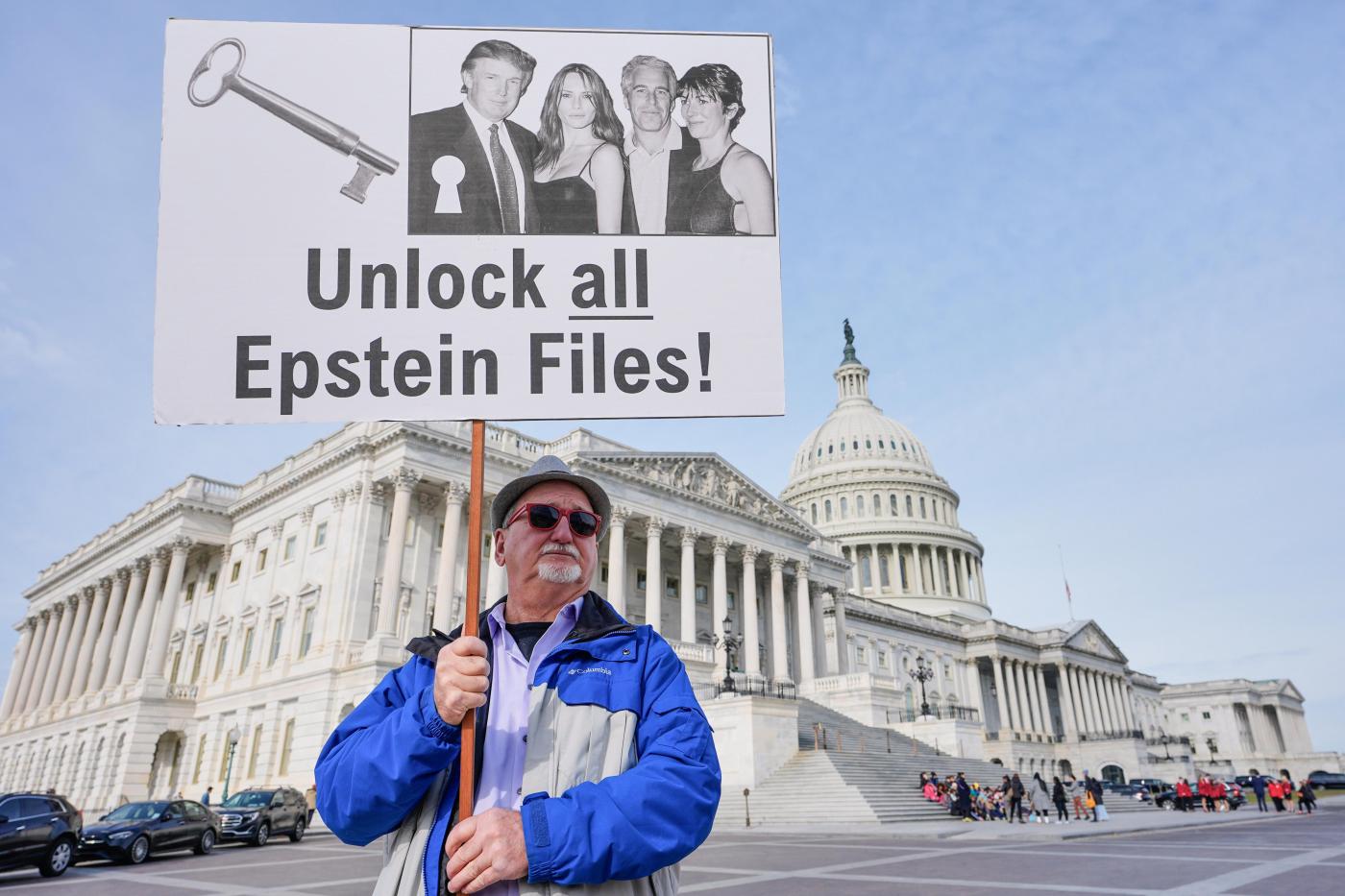
Brooks: The Epstein story? Count me out.
Never before have I been so uncertain about the future. Think of all the giant issues that confront us: artificial intelligence, potential financial bubbles, the decline of democracy, the rise of global authoritarianism, the collapse of reading scores and general literacy, China’s sudden scientific and technological dominance, Russian advances in Ukraine. I could go on and on. So what has America’s political class decided to obsess about over the last several months? Jeffrey Epstein. This is a guy who has been dead for six years and who last was in touch with Donald Trump 21 years ago, Trump has said. Why is Epstein the top issue in American life right now? Well, in an age in which more and more people get their news from short videos, if you’re in politics, the media or online, it pays to focus on topics that are salacious, are easy to understand and allow you to offer self-confident opinions with no actual knowledge. QAnon mentality But the most important reason the Epstein story tops our national agenda is that the QAnon mentality has taken over America. The QAnon mentality is based on the assumption that the American elite is totally evil and that American institutions are totally corrupt. If there is a pizzeria on Connecticut Avenue in Northwest D. C., it must be because Hillary Clinton is running a child abuse sex ring in the basement. The Epstein case is precious to the QAnon types because here, in fact, was a part of the American elite that really was running a sex abuse ring. So, of course, they leap to the conclusion that Epstein was a typical member of the American establishment, not an outlier. It’s grooming and sex trafficking all the way down. (A previous generation of John Birch Society conspiracists were not content to claim Alger Hiss was a communist spy, which he was. They also had to insist that President Dwight Eisenhower was a paid Soviet agent.) Another feature of the QAnon mentality is the conviction that if investigators fail to find evidence to support their febrile imagining, then that is proof that they, too, are part of the cover-up. If the FBI and Justice Department conclude that there was no Epstein client list and there is no evidence that Epstein blackmailed people (as they did conclude), then let’s throw out the rule of law and throw investigations’ raw information onto the internet and let a social media mob sort things out. What could go wrong? Conspiracy thinking is always present at the fringes of society. It goes mainstream only when politicians and other leaders make it so. That’s what Donald Trump, Marjorie Taylor Greene, Nancy Mace, Robert Kennedy Jr. and others have been doing. Who stole the 2020 election? A vast conspiracy! Who runs America? The deep state! We don’t actually have to practice the art of democracy; if we can just reveal the hidden conspiracy, our enemies will be destroyed. I can kind of understand why Machiavellian Republicans would spew conspiracy theories. Those theories stoke cynicism, which serves Republican ends: The government can never be trusted; politicians are all liars. Cynicism causes people to check out of politics. Or, to be more precise, it causes them to care only about politics when they can destroy something. As The Economist noted in an editorial in 2019, “Cynical politicians denigrate institutions, then vandalize them.” It’s a straight line from Candace Owens to Russell Vought. What I don’t understand is why some Democrats are hopping on this bandwagon. They may believe that the Epstein file release will somehow hurt Trump. But they are undermining public trust and sowing public cynicism in ways that make the entire progressive project impossible. They are contributing to a public atmosphere in which right-wing populism naturally thrives. What ‘Epstein class’? I have been especially startled to see Ro Khanna, a House Democrat and one of the most impressive politicians in America, use the phrase “the Epstein class” in his public statements. In an interview with my colleague David Leonhardt this week, Khanna explained that he had gotten the phrase from voters who asked him if he was on the side of “forgotten Americans” or “the Epstein class.” Khanna tried to describe the mentality of the people he encountered: “I realized how much the abuse by rich and powerful men of young girls and the sense of a rape island that Epstein had set up for people embodied the corruption of government. And then many of them saw Donald Trump as fighting this corrupt government.” I know a thing or two about the American elite, ahem, and if you’ve read my work, you may be sick of my assaults on the educated elites for being insular, self-indulgent and smug. But the phrase “the Epstein class” is inaccurate, unfair and irresponsible. Say what you will about our financial, educational, nonprofit and political elites, but they are not mass rapists. That said, I completely understand the challenges Democratic leaders like Khanna are now facing. First, how can you get working-class voters to even listen to your policy ideas unless you first recognize the anger they feel by expressing that same anger? Second, if Trump’s core story is that “the elites betrayed you,” what core story can Democrats tell to register what has happened over the past few decades? These are genuine challenges. If I were a Democratic politician, I might try telling the truth, which in my version would go something like this: The elites didn’t betray you, but they did ignore you. They didn’t mean to harm you. But they didn’t see you in the 1970s as deindustrialization took your jobs; in the ensuing decades as your families and communities broke apart; during all those decades when high immigration levels made you feel like a stranger in your own land. But over the last decade you have made yourself seen. Now the question is: Who is actually going to work with you on your problems? Which party is actually going to help you improve your health outcomes or your kids’ educational outcomes? Which party is actually going to help you achieve the American dream? Will Trump’s war on scientific research or any of the other stuff he’s doing actually do anything to help American workers? If I were a Democratic politician (this role-playing is kind of fun) I’d add that America can’t get itself back on track if the culture is awash in distrust, cynicism, catastrophizing lies and conspiracymongering. No governing majority will ever form if we’re locked in a permanent class war. I’d try to recognize that no political moment is forever. Right now, the dark passions are ascendant. But after one cultural moment, voters tend to hunger for its opposite, which in this case means leaders who project integrity, unity, honesty and hope. The smart play, I’d say, is to rebut conspiracymongering, not abet it. When the giant issues like AI and Chinese dominance come crashing down on us, we will look back on the Epstein moment and ask: “What the hell were we thinking?” David Brooks is a New York Times columnist.
https://www.mercurynews.com/2025/11/22/brooks-the-epstein-story-count-me-out/


EXCLUSIVE: Jeffrey Epstein Was ‘Confident’ He Would Get a Presidential Pardon From Trump — and Lashed Out Behind Bars With ‘Threats’ When He Was Denied Freedom, Famed Author Claims
Nov. 21 2025, Published 6:40 p.m. ET A cocky Jeffrey Epstein was sure his friend and pal Donald Trump would grant him a pardon from his sex crimes and set him free, RadarOnline.com can reveal. When he didn’t, the pedophile became enraged, and allegedly “threatened” some of his past victims. Epstein and Trump were once good friends. The two ran in elite Manhattan social circles from the 80s into the 2000s. The sex offender’s home in Palm Beach was also a short drive from Trump’s Mar-a-Lago club, where he was a frequent guest. A resurfaced video from 1992 shows the two men at the club, laughing and pointing out women on the dance floor. So when Epstein was arrested in July 2019 on sex-trafficking charges, investigative reporter and biographer Andrew Lownie said the financier was confident his buddy Trump would use his presidential power as a “get out of jail free” card. “The two had been pretty close; they hadn’t totally parted company,” Lownie shared. “Whether Epstein was justified in thinking this… he kind of thought that he had everyone sewn up, and that Trump would pardon him.” Conflicting Breakup Stories But after the arrest, Trump quickly cut ties with Epstein, telling reporters at the time, “I was not a fan. I had a falling out with him a long time ago.” This came as a shock to the wealthy businessman, who was known to splash large amounts of money on lavish dinner parties for his friends – sometimes with allegedly nefarious outcomes. Lownie said Epstein wasn’t used to being told “no.” “He’d always been able to get out of any of the problems he faced, with smart lawyers and a bit of money and his connections,” Lownie argued, adding that Epstein did not take the rejection well. “When he was told that wouldn’t happen, I was told he made all sorts of threats,” Lownie claimed. “He threatened some of the victims. He threatened Sarah Ferguson. “He could be pretty intimidating.” Epstein Dumped Trump Author Michael Wolff, who exposed Trump in his book Fire and Fury, said Epstein and Trump were practically the same, until they weren’t. “Epstein knew him, really, I think, better than most,” Wolff stated. “I mean, this was a true BFF situation: two playboys very much styling themselves as playboys in that (Hugh) Hefner sense, who palled around for the better part of 15 years.” However, Wolff reports the friendship fell apart in 2004, after the future president “went around Epstein’s back and bid $40million” for the Maison de L’Amitie, an estate neighboring Mar-a-Lago, when he knew the sex creep had eyes on the property. “He was really, really, really pissed,” Wolff claimed Epstein had expressed to him. Trump’s Version of Events Trump has a different memory of events, insisting he was the one to cut ties. Earlier this year, Trump claimed he had Epstein booted from Mar-a-Lago after learning his employees were being “stolen” from his spa. He explained: “People that work in the spa, I have a great spa, one of the best spas in the world at Mar-a-Lago, and people were taken out of the spa, hired by (Epstein). In other words, gone. And other people would come and complain, ‘This guy is taking people from the spa.’ I didn’t know that.” The politician continued: “And then when I heard about it, I told him. I said, ‘Listen, we don’t want you taking our people.’ Whether it was a spa or not a spa, I don’t want him taking people. And he was fine. “Then, not too long after that, he did it again, and I said, ‘out of here.'”
https://radaronline.com/p/jeffrey-epstein-pardon-president-trump/


It’s Not Too Early To Think About 2026
Yes, 2025 isn’t over yet, but that doesn’t mean we shouldn’t start thinking about 2026. Read Full Article ».
https://www.realclearmarkets.com/2025/11/22/its_not_too_early_to_think_about_2026_1149050.html


First next-generation Starship booster damaged in testing
MUNICH The first booster in the new generation of Starship vehicles suffered significant damage during a Nov. 21 test, adding to doubts about the vehicle’s development schedule. The Super Heavy booster, designated Booster 18, was at a test site near SpaceX’s Starbase, Texas, facilities in the early morning hours when the lower section of the booster appeared to burst, according to independent video. The booster remained standing, but images taken later showed part of the structure had ruptured. “Booster 18 suffered an anomaly during gas system pressure testing that we were conducting in advance of structural proof testing,” SpaceX said in a statement later in the day. Unlike a June incident at the same test site, when a Starship upper stage exploded during preparations for a static-fire test, no propellant had been loaded and no engines were installed. The booster was undergoing tests to confirm it could handle pressures and loads. The company provided no additional details, other than noting no personnel were injured. “The teams need time to investigate before we are confident of the cause,” it said. Booster 18 is the first Super Heavy built for version 3 of Starship. Changes from version 2 include an upgraded fuel transfer line similar in size to a Falcon 9 booster, an integrated hot-staging ring that remains attached to the top of the booster, the use of three instead of four grid fins for reentry and upgraded Raptor engines. Those upgrades, alongside improvements to Starship’s upper stage, are essential to SpaceX’s plans to bring the vehicle into service for launching larger Starlink satellites and supporting NASA’s Artemis lunar lander program. Before the anomaly, the company was optimistic it would begin launching version 3 soon. “We’re now super-focused on the version 3 rocket that will launch early next year,” Kiko Dontchev, vice president of launch at SpaceX, said at the Economist Space Summit on Nov. 5. “That’s really going to be our production rocket.” Multiple Starship V3 vehicles were in production, he said then, with a booster heading to the pad “in days to weeks” for testing. “I’m very hopeful we’re going to fly early next year, maybe as early as January.” He acknowledged that Starship remains a development vehicle with a “nontraditional approach” to testing. “As long as we fail in a way that never hurts anyone or has an issue where it drastically sets us back, it’s OK to learn through testing,” he said. All 11 integrated Starship/Super Heavy flights “have been iterative successes in the sense that we’ve learned a ton.” The incident could increase pressure on NASA to revise its Artemis lunar landing plans. SpaceX is under contract to provide a Starship-based lunar lander for Artemis 3, officially scheduled for 2027. Even before this setback, it was clear the company was significantly behind schedule, potentially by years. NASA Acting Administrator Sean Duffy announced Oct. 20 he would “open up” the Artemis 3 lander contract, requesting acceleration plans from both SpaceX and Blue Origin, which holds a lander contract for Artemis 5. SpaceX said Oct. 30 it had offered NASA a “simplified” architecture for Artemis 3 that could accelerate the schedule, but it released no technical details. The company argued that Starship, despite delays, remained the fastest way to return humans to the lunar surface. SpaceX said its next major milestones for Starship V3 include placing one ship in orbit for extended testing, followed by launching another to dock with it and demonstrate in-space propellant transfer, an essential technology for the overall Starship architecture. “The exact timing will be driven by how upcoming flight tests debuting the new Starship V3 architecture progress, but both of these tests are targeted to take place in 2026,” the company said then.
https://spacenews.com/first-next-generation-starship-booster-damaged-in-testing/


2025 F1 Las Vegas GP Qualifying: Winners and Losers
The 2025 F1 Las Vegas GP qualifying was an intriguing affair where the wet tire made an appearance and was ironically a better option compared to the generic intermediate that has become the norm. The low-grip, low-temperature conditions were made worse when it rained, and it became even more slippery. Through all of this emerged Lando Norris, who once nailed everything as best as he could with the conditions on offer to secure pole position. The British driver was expecting a not-so-good race this time around, as the F1 Las Vegas GP had not been a happy hunting ground for McLaren. Looking at the conditions and the way the car worked, it’s safe to say that the driver would be happy to start the race at the front and try and shut the door on his title rivals. With that being said, the F1 Las Vegas GP qualifying is now done and dusted, and everyone gets ready for the race. Who would be happy with where they find themselves in the pecking order, and who would be a bit disappointed? Let’s take a look. 2025 F1 Las Vegas GP Winner Lando Norris Cometh the hour, cometh the champion? Well, it seems that way, as Lando Norris has slowly and steadily made it a habit to finish the most important weekends at the top of the timesheets. The F1 Las Vegas GP qualifying was just another one of those. The British driver is starting to perform like a driver worthy of winning the championship. Loser Oscar Piastri While Lando Norris continues to surge, his teammate Oscar Piastri is going through the exact opposite cycle, where the momentum has been sapped out of his title run. The Australian is a strong driver, but it does appear that he lacks that final tenth, which makes Lando lethal. The uphill task became even more improbable for Piastri after the F1 Las Vegas GP qualifying. Winner Carlos Sainz Carlos Sainz was questioned about the situation at Ferrari earlier in the weekend, and the Spaniard wisely opted not to say anything about that. In an outcome that would make his smile wider, Sainz qualified ahead of not one but both drivers from his former team. Once it was announced last season that Sainz would be dropped by Ferrari for Lewis Hamilton, there was a sense that the driver had an uphill task in front of him. A top 3 qualifying for the F1 Las Vegas GP just shows that things are moving in the right direction for him. Loser Lewis Hamilton Ferrari might not have a good car for these conditions, and the operations might not be the best within that team, but you cannot qualify in P20 and find it acceptable. It had not been too long when Ferrari boss John Elkann told drivers to focus on their driving and talk less. Unfortunately for Hamilton, the performance is just not acceptable. For a large part of the season, adapting to Ferrari was one of the things that was often used as a get-out-of-jail ticket for a lack of results. In the 22nd race of the season, those excuses are starting to wear thin. Winner Pierre Gasly Gasly can’t wait for 2026, it seems, but at the same time the French driver continues to serve reminders to anyone who has forgotten how good he is. The Alpine was semi-competitive this weekend, and the French driver found the lap time good enough to secure a Q3 slot. Loser Kimi Antonelli The F1 Las Vegas GP was ideally an opportunity for Kimi Antonelli to potentially put himself in contention for his first-ever win. Mercedes is expected to be strong here, and looking at what George Russell was accomplishing in the car, a strong result was on offer. Unfortunately, Kimi Antonelli messed up his qualifying in the F1 Las Vegas GP and would now start the race near the back of the grid. It’s just not ideal for the Italian, who came into the weekend with a load of momentum on his side.
https://www.sportskeeda.com/f1/2025-f1-las-vegas-gp-winners-losers

This Solana Proposal Could Remove 22M SOL, Tightening Token Supply
TLDR: Solana may reduce roughly 22M SOL emissions, lowering future sell pressure. Doubling disinflation accelerates the 1. 5% terminal inflation target for OL. Tighter supply could strengthen staking incentives and long-term investor confidence. Solana aims to become one of the most economically disciplined crypto networks. Solana developers have proposed a major change to the network’s tokenomics. The plan aims to double the disinflation rate, reaching the 1. 5% terminal inflation target twice as fast. This adjustment could remove roughly 22 million SOL from future emissions, cutting potential market sell pressure. The proposal signals a strategic shift toward tighter supply discipline for one of crypto’s fastest networks. Solana’s Emission Adjustment and Market Impact The new proposal directly affects Solana’s inflation curve. By accelerating the disinflation rate, new SOL tokens will enter circulation at a slower pace. Analysts tracking on-chain data note that this could materially reduce supply growth over the next few years. The adjustment is expected to tighten Solana’s token distribution faster than most major blockchain networks. Developers suggest the change will strengthen long-term scarcity. Fewer tokens in circulation may reduce sell-side pressure from staking rewards and validator incentives. Data from CryptosRus indicates that roughly 22 million SOL of emissions could be removed under this proposal. The impact would extend across both retail and institutional holders participating in staking and network operations. The acceleration could influence trading dynamics across exchanges. A reduced emission schedule may shift investor behavior toward longer-term holding strategies. Exchanges could see a relative decrease in SOL supply available for active trading. This supply tightening aligns with broader trends favoring disciplined tokenomics in high-activity blockchains. The proposal also emphasizes network sustainability. By slowing emissions, Solana aims to ensure economic incentives remain balanced for validators and users. The network’s staking returns may become more predictable over time. This shift could support long-term confidence in Solana’s economic framework. Technical and Strategic Implications for SOL The change may affect staking and validator economics directly. Validators might face lower issuance rewards initially but gain from scarcity-driven valuation support. On-chain metrics suggest that staking participation could rise as token scarcity becomes more apparent. Crypto data platforms highlight that Solana is already one of the fastest-growing networks in terms of activity and transaction throughput. Market participants may view this adjustment as a formalization of Solana’s long-term strategy. Scarcity-focused tokenomics often appeal to holders seeking reduced inflation risk. The network’s acceleration plan positions SOL among cryptos with increasingly disciplined supply schedules. Observers point to the scale of potential emissions reduction as a notable market development. Investor behavior may also adapt to the reduced issuance timeline. As supply tightens, early adopters could prioritize staking to secure returns. Exchanges and trading desks might adjust liquidity strategies to account for lower new token inflows. The proposal underlines Solana’s approach to balancing network activity with economic discipline. Developers plan to implement the change following community review. The proposal is currently under discussion on Solana’s governance channels. Stakeholder participation will determine the timeline and final execution. The outcome could significantly shape OL’s market trajectory over the coming years.
https://blockonomi.com/this-solana-proposal-could-remove-22m-sol-tightening-token-supply/


Hart and Poznansky: Antisemitism has no place in healthcare
A grieving student arrived at medical school on the anniversary of the Oct. 7 massacre to find several classmates celebrating the atrocities by chalking names of “Hamas martyrs” across the sidewalk. A Jewish patient disclosed social media posts of her newly assigned physician denying that rapes had been committed by Hamas. A genetic counselor received death threats from peers when petitioning to remove a controversial speaker from the national conference roster. We are distressed: this was the collective refrain among Jewish healthcare providers, administrators, faculty, students, and patients recently gathered in Boston for a symposium entitled Addressing Antisemitism in Healthcare: Awareness, Action & Advocacy. The resounding take-away was that prevention and treatment require allyship. Firsthand accounts shared at the symposium echoed national and local surveys revealing a high percentage of Jewish practitioners who feel “ostracized,” “gaslit,” and “unsafe” in the current practice environment. When prolonged, these emotions result in hypervigilance, creating a chronic state of fear, tension and dis-ease. The Jewish story carries deep intergenerational trauma; ignoring and invalidating present-day experiences, as discussed by Dr. Miri Bar-Halpern, compounds the injury for Jewish patients and practitioners. Dr. Mark Zeidel, Physician-in-Chief at BIDMC, delivered a keynote on the history of antisemitism in medicine. As recently as the 1970s, medical schools and hospitals enforced Jewish quotas, deliberately limiting Jews in medicine and science, and effectively denying equitable care to Jewish patients. Despite progress and accomplishments over the last few decades, Jewish practitioners fear returning to that no-so-distant past. Troubling signs of that possibility prevail. Dr. Peter Hotez, a world-class vaccine researcher, addressed the conflation of antiscience beliefs with antisemitism. He recounted hateful and threatening encounters with conspiracy theorists who denied the validity of vaccines and implicated Jews to justify their unfounded suspicions. Students shared stories of classmates hiding their Jewish identity, and those labeled as Zionists (i. e. believing in Israel’s right to exist as a Jewish state) summarily reviled as “evil” and “genocidal.” Political buttons on white coats and protests within earshot of patients functionally aggravate the experience of trauma for Jewish patients. Soraya Deen, Founder and CEO of Muslim Women Speakers, called for people to stop conflating support for Palestinians with harmful antisemitic beliefs. “.(H)istorical narratives that inaccurately portray Jews as villains have. erode(d) communal relationships, making Jews convenient scapegoats amid geopolitical grievances. This silence and complicity must end,” said Deen. Hamas, as Deen described, is a terrorist organization mandated to kill every Jew worldwide. Taking up their mantle, she reinforced, is not pro-Palestinian, it is anti-Jew and is especially dangerous in healthcare. Rodrigo Monterrey, Senior Director of Belonging and Health Equity at Tufts Medicine, aptly described how every marginalized group requires outside partners to help lift them up. As Monterrey stated, “the burden of fixing a problem should not be solely on the people who are experiencing the problem, but also on those perpetrating and witnessing it.” Leaders, including Monterrey, from healthcare systems with Jewish Employee Resource or affinity groups (J-ERGs), like Mass General Brigham and Tufts Medical Center, presented institutional improvements that these entities facilitate. The willingness of leadership from hospital and academic medical centers to authorize and work closely with such groups sends a clear message of support to Jewish staff and, likely, to Jewish patients. Myrieme Churchill, Founding CEO of Parents 4 Peace (P4P), posited antisemitism as a public health problem, integrally connected to radicalization of young people. Churchill and her P4P colleagues, who include reformed Jihadists and former neo-Nazis, explained that antisemitism serves as the gateway to many forms of hate. Antisemitism has roots in extremes on both the right and the left and metastasizes into the spaces in between as long as mainstreaming and normalization of antisemitism continues. While antisemitic activity in our healthcare systems may be leveled by a vocal minority, messages from Churchill, Deen, and Monterrey, along with the introduction of JERGs, reinforce the value of courageous leadership, strong ally activists, and robust institutional responses designed to end antisemitism. Medicine is a hallowed profession. Team effort and psychological safety are foundational for providing evidence-based and equitable care. Medical errors happen when crucial contributing factors are ignored. Physicians pledge to “first do no harm.” Avoidance of harm is not passive it is active and conscious. Medical training is meant to foster the ability to hold compassion for people from diverse backgrounds and treat every single patient with dignity and respect. Freedom of expression is our right as citizens, but our professional commitment in healthcare calls us to a more discerning standard to not inflict pain, wittingly or unwittingly. Protocols to eradicate antisemitism in healthcare require: (1) building allyship and raising ally voices; (2) advancing research to delineate scope and impact; (3) incorporating antisemitism education into anti-bias training; (4) ensuring safe reporting systems; and (5) holding institutions accountable to the same standards they uphold for all protected groups. Our oath demands that we care for one another patients as well as peers. Antisemitism is not a Jewish problem alone and our ability to combat it effectively is a test of our collective moral health. Jacqueline A. Hart, MD is a Boston-based physician, Board member of JCRC Greater Boston & JFS Metrowest. Mark C. Poznansky MD, PhD; is a Boston-based physician-scientist.
https://www.bostonherald.com/2025/11/22/hart-and-poznansky-antisemitism-has-no-place-in-healthcare/