Polkadot System Chains Upgrade Passes as DOT Tests Lower Bollinger Band Support at $2.88

**Polkadot (DOT) Price Analysis and Market Update**

**Quick Take**
– DOT trading at $2.88, down 2.7% in the last 24 hours
– Unanimous system chains upgrade referendum signals strong community backing
– Price currently testing lower Bollinger Band support at $2.83
– Follows Bitcoin’s weakness amid broader risk-off market sentiment

### Market Events Driving Polkadot Price Movement

This week’s most significant development for Polkadot was the unanimous passage of a referendum to upgrade all system chains and schedule the Asset Hub Migration. This technical advancement highlights robust community consensus and positions the network for enhanced functionality. Despite the current price weakness, this provides a positive fundamental backdrop for DOT.

Polkadot is also set to participate in Hong Kong Fintech Week from November 3-7. This event adds a further layer of institutional exposure, showcasing the network’s interoperability solutions to a global audience, which may prove beneficial for Polkadot’s medium-term outlook.

Conversely, the failure of the Staking Dashboard funding referendum reflects some community friction over resource allocation. However, this had minimal impact on the market.

In the absence of significant breaking news catalysts, DOT’s price action is primarily influenced by technical factors and broader cryptocurrency market sentiment. The token currently faces selling pressure, tracking Bitcoin and other major cryptocurrencies as risk-off sentiment dominates trading decisions.

### DOT Technical Analysis: Testing Critical Support Zone

**Price Action Context**
DOT price currently sits below all major moving averages, trading at $2.88 compared to the 20-day SMA at $3.01 and the 50-day SMA at $3.59. This positioning signals sustained bearish pressure, with the token down approximately 26% from its 52-week high of $5.31.

The price movement indicates that Polkadot is closely following Bitcoin’s weakness rather than exhibiting independent strength. Trading volume on Binance’s spot market reached $14.4 million over 24 hours, reflecting moderate institutional interest but lacking the momentum needed to trigger a sustained reversal.

**Key Technical Indicators**
– The Relative Strength Index (RSI) stands at 38.18, in neutral territory but approaching oversold conditions, which could signal potential for a technical bounce.
– The MACD histogram shows a slight bullish divergence at 0.0218, suggesting weakening selling pressure despite the overall negative MACD value of -0.1722.
– Most importantly, the %B indicator at 0.1532 shows DOT price near the lower Bollinger Band at $2.83, a level that has historically provided support in previous corrections.

### Critical Price Levels for Polkadot Traders

**Immediate Levels (Next 24-48 Hours):**
– **Resistance:** $3.01 (20-day moving average and psychological resistance)
– **Support:** $2.83 (lower Bollinger Band and recent 24-hour low)

**Potential Breakout/Breakdown Scenarios:**
– A break below the $2.83 support level could trigger further selling pressure, pushing the price toward the next major support zone at $2.77. Note that the 52-week low at $2.87 was recently breached.
– Conversely, a successful defense at $2.83 and a move above the $3.01 resistance could open the door for a rally toward the immediate resistance at $3.34.

### DOT Correlation Analysis

– **Bitcoin:** DOT’s price movements are closely correlated with Bitcoin’s bearish momentum, with both assets experiencing similar percentage declines in recent sessions.
– **Traditional Markets:** Risk-off sentiment spilling over from equity markets appears to be weighing on cryptocurrencies broadly.
– **Sector Peers:** Polkadot is currently underperforming some layer-1 competitors, indicating there may be specific selling pressure beyond the general market weakness.

### Trading Outlook: Polkadot Near-Term Prospects

**Bullish Case:**
If DOT can successfully defend the $2.83 lower Bollinger Band support, combined with positive momentum stemming from exposure during Hong Kong Fintech Week, a technical bounce toward $3.01 resistance is possible. Additionally, the unanimous referendum passage provides a supportive fundamental outlook for the medium-term.

**Bearish Case:**
Failure to hold current support levels amid continued Bitcoin weakness could see further declines toward the strong support zone around $2.77. Broader cryptocurrency market sentiment remains fragile, increasing the risk of additional downside.

**Risk Management:**
Traders are advised to consider tight stop-losses below $2.80, given the proximity to critical support. The daily Average True Range (ATR) of $0.23 suggests that position sizing should account for potential daily price swings of approximately 8% in either direction.

*Stay updated with the latest developments as Polkadot navigates a challenging market environment supported by strong community fundamentals.*
https://bitcoinethereumnews.com/tech/polkadot-system-chains-upgrade-passes-as-dot-tests-lower-bollinger-band-support-at-2-88/?utm_source=rss&utm_medium=rss&utm_campaign=polkadot-system-chains-upgrade-passes-as-dot-tests-lower-bollinger-band-support-at-2-88


Iran’s Bitcoin Mining Industry: Inside the World’s Fifth-Largest Operation Amid Sanctions and Energy Crisis

**Iran’s Crypto Boom Pushes Fragile Power Grid to the Breaking Point**

With 95% of mining operations running illegally and consuming enough power to light up entire cities, Iran’s cryptocurrency boom is placing significant strain on an already fragile power grid.

### A Nation Turning to Digital Currency

Iran’s interest in cryptocurrency exploded after 2017 when international sanctions cut off access to global banking systems. Unable to use traditional financial channels, the country turned to Bitcoin and other digital currencies as a way to bypass restrictions.

Today, Iran controls about 4.2% of the global Bitcoin mining power, ranking fifth worldwide behind the United States, Kazakhstan, Russia, and Canada. Although this is a drop from 7.5% in March 2021, it still represents a substantial mining operation.

The appeal is clear: electricity in Iran costs between $0.01 and $0.05 per kilowatt-hour, making it incredibly cheap to mine Bitcoin. With costs as low as $1,300 to mine one Bitcoin—which can sell for over $100,000—the profit margins are enormous.

Around 22% of Iran’s population now uses or owns cryptocurrency, totaling an estimated 10 million users. For many Iranians facing severe inflation—the rial lost 37% of its value against the dollar in 2024 alone—crypto offers a way to protect savings from collapse.

### The Illegal Mining Problem

Iranian officials report approximately 427,000 active crypto mining devices operating across the country. Shockingly, about 95% of these are illegal and run without proper authorization.

These underground operations consume roughly 2,000 megawatts of electricity—equivalent to the output of two nuclear reactors. Energy officials say crypto mining now accounts for 15-20% of the country’s electricity shortages.

Illegal miners hide their operations everywhere: abandoned homes, rural farms, underground tunnels, and even industrial facilities disguised as legitimate businesses.

During an internet outage related to conflict with Israel, power consumption dropped by 2,400 megawatts when over 900,000 illegal mining devices shut down, revealing the true scale of the problem.

Licensed miners face high electricity tariffs, making legal operations unprofitable and pushing most miners underground. Meanwhile, many operations linked to Iran’s Islamic Revolutionary Guard Corps (IRGC) reportedly use electricity for free, further straining the power grid.

In Tehran Province alone, authorities have dismantled 104 illegal mining farms and seized 1,465 machines—enough to power nearly 10,000 households. Across the country, over 250,000 illegal devices have been confiscated.

To combat the issue, the government now pays citizens approximately $24 to report illegal mining operations, effectively turning regular people into informants.

### Government Control and Crackdowns

Iran legalized cryptocurrency mining in 2019, viewing it as a way to generate revenue despite sanctions. However, the government imposed strict regulations: licensed miners must sell their Bitcoin directly to Iran’s Central Bank.

In December 2024, the Central Bank abruptly blocked all cryptocurrency-to-rial transactions on websites. By January 2025, these channels reopened but only through a controlled system requiring full access to user data. Then, in February 2025, Iran banned all cryptocurrency advertising both online and offline.

The government is walking a fine line. While crypto mining offers an economic lifeline and helps bypass sanctions, the massive power consumption threatens grid stability and sparks public anger during blackouts.

### Sanctions Evasion and International Response

In 2024, sanctioned countries and entities, including Iran, received $15.8 billion in cryptocurrency, accounting for 39% of all illicit crypto transactions worldwide. Networks aiding Iran in selling oil facilitated over $100 million in cryptocurrency transfers between 2023 and 2025; broader networks handled more than $600 million.

The U.S. Treasury’s Office of Foreign Assets Control (OFAC) has intensified crackdowns by sanctioning individuals and companies in China, Hong Kong, and the UAE connected to these operations.

Iran’s IRGC uses cryptocurrency to fund activities and support regional proxy groups. In 2022, the U.S. sanctioned two Iranians linked to the IRGC for using crypto exchanges to launder money from cyberattacks.

### The Nobitex Hack: Crypto Warfare

On June 18, 2025, Nobitex—Iran’s largest cryptocurrency exchange—suffered a massive hack. Pro-Israel hacker group Predatory Sparrow stole over $90 million in Bitcoin, Ethereum, Dogecoin, and other cryptocurrencies.

The attack was politically motivated. Rather than keeping the stolen assets, the hackers sent the cryptocurrency to inaccessible wallet addresses containing anti-IRGC messages, effectively destroying the funds as a political statement.

Nobitex handles over $11 billion in transactions, more than the next ten largest Iranian exchanges combined. Past investigations linked the exchange to sanctioned IRGC operatives and wallets associated with Hamas, Palestinian Islamic Jihad, and Houthi groups.

The hack occurred amid escalating tensions between Israel and Iran, highlighting how cryptocurrency infrastructure has become a target in modern geopolitical conflicts.

When U.S. forces struck Iranian nuclear facilities shortly after, Bitcoin’s global hashrate dropped 15%—the sharpest decline in three years—fueling speculation about disrupted Iranian mining operations.

### The Road Ahead

Iran’s cryptocurrency industry exists in a challenging space between economic necessity and practical constraints. Experts estimate Iran has mined between 60,000 and 200,000 Bitcoins since 2018, though exact figures remain uncertain due to the underground nature of 85% of operations.

As economic pressures mount and the rial continues losing value, more Iranians are turning to cryptocurrency. Crypto outflows from Iran surged to $4.18 billion in 2024—a 70% increase from the previous year—as people move money out of the country’s unstable currency.

The government faces competing priorities: crack down on mining to preserve the power grid or allow it to continue as an economic tool for sanctions evasion.

Meanwhile, international enforcement agencies are becoming increasingly sophisticated in tracking crypto transactions and disrupting Iranian financial networks.

Iran’s crypto story is a complex interplay of economics, politics, and technology, reflecting broader challenges faced by countries navigating sanctions and energy constraints in the digital age.
https://bitcoinethereumnews.com/bitcoin/irans-bitcoin-mining-industry-inside-the-worlds-fifth-largest-operation-amid-sanctions-and-energy-crisis/?utm_source=rss&utm_medium=rss&utm_campaign=irans-bitcoin-mining-industry-inside-the-worlds-fifth-largest-operation-amid-sanctions-and-energy-crisis

Bitcoin’s Realized Cap Rises $8B Amid Inflows, ETF Recovery Could Drive Price to $140K

Bitcoin’s Realized Cap Rise Signals Robust Demand as Price Climbs Above $110,000

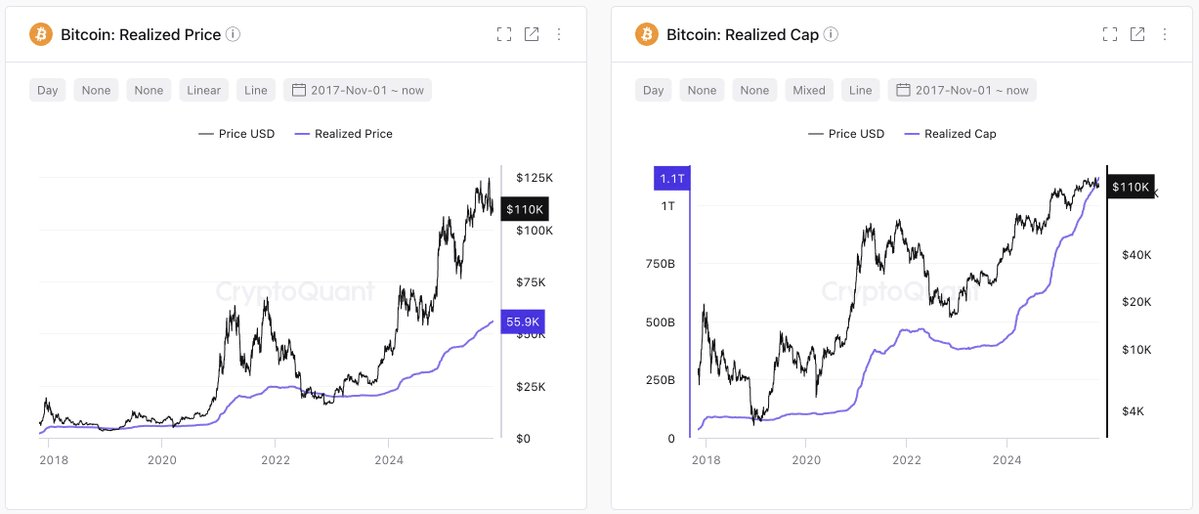
Bitcoin’s realized capitalization has surged by more than $8 billion over the past week, pushing the total value beyond $1.1 trillion. This rise corresponds with the cryptocurrency’s realized price surpassing $110,000, according to data from CryptoQuant. The realized cap measures the total dollar value of all Bitcoin coins based on their last moved price, providing insight into the overall investment held by holders.

This upward movement underscores resilient onchain inflows despite lingering negative sentiment following the recent $19 billion crypto market downturn. Key contributors to these inflows include Bitcoin treasury firms and exchange-traded funds (ETFs), which have remained significant accumulators. Ki Young Ju, founder and CEO of CryptoQuant, noted that demand has heavily relied on these entities, though their buying activity has recently slowed. This suggests that while onchain signals reveal strong underlying interest, broader price recovery may depend on the resumption of aggressive acquisitions.

How Are Bitcoin Miners Contributing to Network Growth?

Ki Young Ju describes the rising Bitcoin hash rate as a “clear long-term bullish signal” for Bitcoin’s evolution as a reliable store of value. Several major mining operations have scaled their fleets recently. For example, American Bitcoin—a firm linked to the Trump family—acquired 17,280 application-specific integrated circuits (ASICs) at a cost of approximately $314 million, as reported in August.

These expansions not only increase mining efficiency but also reflect strong confidence in Bitcoin’s future despite geopolitical and economic uncertainties. The increased hash rate strengthens the blockchain against potential attacks, supporting sustained network health. Data from CryptoQuant shows miners escalating their activity even as market sentiment remains in “Fear” territory, demonstrating operational resilience that could help stabilize prices.

Despite these positive onchain indicators, overall investor confidence remains subdued after the sharp market decline experienced at the start of October. However, external factors such as potential Federal Reserve interest rate cuts could trigger a market turnaround.

Frequently Asked Questions

What Role Do ETFs Play in Bitcoin’s Price Recovery?

ETFs have been major drivers of Bitcoin demand, significantly contributing to the recent $8 billion realized cap increase through consistent inflows. Although purchasing activity from ETFs has recently slowed, CryptoQuant highlights that a resurgence—potentially between $10 billion and $15 billion in inflows—could push Bitcoin’s price toward $140,000 in November, according to projections from Bitfinex analysts.

Will Bitcoin Reach $140,000 in November Based on Current Trends?

Yes. Bitcoin could climb to $140,000 by November if ETF inflows double and the Federal Reserve implements two interest rate cuts in the fourth quarter. Seasonal market strength in Q4 combined with easing monetary policy are key catalysts. However, risks such as tariffs and geopolitical tensions remain potential headwinds.

Key Takeaways

  • Strong Onchain Inflows: The $8 billion rise in realized cap highlights robust demand from treasury firms and ETFs, positioning Bitcoin’s realized price above $110,000.
  • Miner Expansion Signals Bullishness: Increases in hash rate, fueled by fleet upgrades like American Bitcoin’s $314 million ASIC purchase, reinforce long-term network growth.
  • Recovery Catalysts Ahead: Renewed ETF buying and Federal Reserve easing could propel Bitcoin to $140,000, making it crucial for investors to closely monitor these developments.

Conclusion

Bitcoin’s realized cap increase of more than $8 billion—driven by onchain inflows from ETFs and treasury firms, alongside miners expanding their hash rates—paints a picture of underlying strength despite recent market fears. As Ki Young Ju of CryptoQuant emphasizes, sustained demand from these channels will be vital for maintaining momentum.

Looking ahead, a potential resurgence in ETF activity combined with supportive Federal Reserve policies could propel Bitcoin toward $140,000 by November, presenting opportunities for informed investors amid this evolving landscape. Analyses from CryptoQuant and Bitfinex underline the importance of tracking institutional activity and macroeconomic shifts.

Given that Bitcoin’s realized price reflects the real investment locked in by holders, these trends suggest a solid foundation for a recovery in 2025. Market participants should stay vigilant on onchain metrics and policy announcements to capitalize on emerging bullish signals within the cryptocurrency space.

Bitcoin’s network continues to show resilience, with miners’ investments ensuring robust security. The dynamic between ETF flows and broader economic policies will likely determine the pace of recovery, making it essential to monitor these factors closely. As the year unfolds, these developments may redefine Bitcoin’s trajectory within the global financial ecosystem.

https://bitcoinethereumnews.com/bitcoin/bitcoins-realized-cap-rises-8b-amid-inflows-etf-recovery-could-drive-price-to-140k/?utm_source=rss&utm_medium=rss&utm_campaign=bitcoins-realized-cap-rises-8b-amid-inflows-etf-recovery-could-drive-price-to-140k

Evernorth’s $1 Billion+ XRP Purchase Marks Largest Single Institutional Acquisition for Digital Asset ⋆ ZyCrypto

**Evernorth Holdings Boosts XRP Holdings with Over $1 Billion Acquisition**

Ripple-backed digital asset firm Evernorth Holdings has made significant moves in the cryptocurrency market by acquiring a large stack of XRP tokens. These substantial purchases have positively influenced market sentiment, driven by new whale inflows into the asset.

This year, corporate crypto treasuries have notably increased their holdings as more companies seek to diversify their balance sheets. On-chain data reveals that Evernorth Holdings accumulated more than 388.7 million XRP, valued at over $1 billion, soon after unveiling its crypto treasury. This acquisition marks a significant milestone for the company, which officially launched on October 20.

**Plans for Nasdaq Listing and Strategic Collaborations**

Evernorth is considering listing as a publicly traded XRP company on Nasdaq, a move warmly welcomed by the crypto community. Asheesh Birla, Evernorth’s CEO, has pledged to deepen collaborations with XRP, including upcoming deals with Rippleworks and the SBI Group.

Birla, who stepped down from Ripple to lead Evernorth, is playing a pivotal role in strengthening the relationship between the two entities. Moreover, plans are underway to finalize a merger with Armada Acquisition Corp. II. Concurrently, the company aims to raise approximately $1 billion to fund additional crypto purchases.

**Backing from Leading Investors**

“We’re backed by a world-class group of investors and leaders, including SBI, Ripple, Arrington Capital, Pantera Capital, and Kraken — firms that share our conviction in XRP’s future,” Birla stated. He emphasized that XRP now enjoys clear regulatory standing in the United States, paving the way for large-scale adoption.

Birla described Evernorth as a trusted and transparent bridge to public markets at a time when institutional demand for cryptocurrency is surging.

**Market Context and XRP’s Resilience**

Previously, XRP faced negative pressure following lawsuits filed by the United States Securities and Exchange Commission (SEC) alleging the sale of unregistered securities. However, the prospect of a pro-crypto approach during former President Trump’s second term shifted market dynamics significantly. This change encouraged bullish investments as regulators began ushering in clearer rules.

Top cryptocurrencies, including Bitcoin (BTC), Ethereum (ETH), and XRP, recorded substantial growth within months. Notably, XRP briefly surpassed USDT as the third-largest cryptocurrency by market capitalization.

**Current Market Performance**

At the time of writing, XRP is trading at $2.63, up 10% over the past week. The wider market has remained relatively sideways, with traders exercising caution following a recent flash dip that erased previous gains.

Evernorth’s significant investment has energized short-term traders, who are also responding to previous analyst expectations of a price increase.

**Growing Institutional Interest in XRP**

XRP-based treasury firms are gaining momentum through a steady influx of traditional capital. Last week alone, institutional investments in XRP funds exceeded $84 million, signaling growing confidence in the asset’s long-term potential.

With Evernorth’s strong backing and strategic initiatives, XRP appears well-positioned to capitalize on increasing institutional demand and regulatory clarity, setting the stage for potential growth in the coming months.
https://bitcoinethereumnews.com/tech/evernorths-1-billion-xrp-purchase-marks-largest-single-institutional-acquisition-for-digital-asset-%e2%8b%86-zycrypto/?utm_source=rss&utm_medium=rss&utm_campaign=evernorths-1-billion-xrp-purchase-marks-largest-single-institutional-acquisition-for-digital-asset-%25e2%258b%2586-zycrypto

Strategy’s Bitcoin Buying Slows, Analysts See Potential for Renewed Momentum

MicroStrategy Holds Over 640,000 BTC, Representing About 3% of Global Supply, Supporting Sustained Growth Potential

MicroStrategy currently holds more than 640,000 Bitcoin (BTC), which accounts for approximately 3% of the total global supply. This substantial accumulation underscores the company’s commitment to Bitcoin as a core asset, supporting its long-term growth strategy. While recent quarters have seen a deceleration in Bitcoin purchases, this slowdown reflects market timing considerations rather than any fundamental flaws in MicroStrategy’s Bitcoin approach.

Shares of MicroStrategy have responded positively to recovery optimism, rising 5% recently. A notable development enhancing the company’s financial flexibility is the upgrade to a B- credit rating from S&P Global Ratings. According to TD Cowen analysis, this rating opens the doors to a $4.9 trillion global credit pool, potentially tripling funding capabilities for further Bitcoin acquisitions.

Explore how MicroStrategy’s Bitcoin engine, despite its current slowdown, remains primed for future growth. Analysts remain bullish on the company’s yield potential and enhanced credit access, particularly as Bitcoin stabilizes around $110,000, with key insights and projections available for 2025 investors.

### What Is MicroStrategy’s Current Bitcoin Accumulation Pace?

After two years of consistent increases, MicroStrategy’s Bitcoin accumulation has notably slowed. Recent quarterly data indicates a reduced pace of purchases as the company calibrates its market exposure.

In parallel, MicroStrategy’s market premium to net asset value (NAV) has tightened, dropping to 1.2x—its lowest level since early 2023. This coincides with Bitcoin’s stabilization near the $110,000 mark. Despite this cooling period, the company continues to leverage a framework designed to channel Wall Street capital directly into Bitcoin holdings. This approach offers investors a regulated exposure to Bitcoin that avoids the restrictions associated with spot ETFs.

### How Does MicroStrategy’s Credit Access Impact Its Bitcoin Strategy?

The recent B- rating from S&P Global Ratings marks a pivotal shift in MicroStrategy’s financial standing. This upgrade grants access to the vast $4.9 trillion global credit market, substantially enhancing the firm’s ability to secure funding for Bitcoin purchases.

TD Cowen analysts highlight that this development could enable MicroStrategy to potentially triple the scale of its Bitcoin acquisitions. The rating reflects the company’s maturing financial profile, successfully blending traditional credit mechanisms with cryptocurrency assets.

In addition to credit access improvements, MicroStrategy has introduced a Return-of-Capital (ROC) tax treatment for its preferred dividends. This strategy allows investors to defer taxes indefinitely and significantly increases appeal for institutional investors seeking yield-bearing Bitcoin investment opportunities.

While short-term Bitcoin purchase momentum may soften, this structural advantage positions MicroStrategy to resume aggressive Bitcoin accumulation by early 2026. Price targets have been adjusted to $535 per share to reflect tempered near-term expectations but preserve strong long-term growth outlooks.

Expert commentary emphasizes that rising Bitcoin prices combined with expanded capital market access will remain core drivers for MicroStrategy’s sustainable yield expansion, assuming stable market conditions.

### Frequently Asked Questions

**What Are the Latest Holdings in MicroStrategy’s Bitcoin Portfolio?**
MicroStrategy holds over 640,000 Bitcoin, representing about 3% of the total global supply. This portfolio, built through consistent capital raises, has delivered a year-to-date Bitcoin yield of approximately 26%. According to estimates by Mizuho Securities, the company is on track to meet its internal yield target of 30% if Bitcoin prices remain stable through 2025.

**Why Is MicroStrategy’s Stock Premium Declining Amid Bitcoin’s Price Stability?**
The company’s market premium to net asset value has compressed to 1.2x as Bitcoin consolidates near $110,000. Analysts, including those at Benchmark, interpret this as a natural normalization following rapid gains, marking a phase of subdued volatility in both stock and cryptocurrency markets. Many view this as an opportune entry point rather than a signal of weakness.

### Key Takeaways

– **Strategic Pause in Accumulation:** The slowdown in Bitcoin purchases is attributed primarily to market timing strategies rather than operational issues. MicroStrategy’s Bitcoin acquisition framework is designed for long-term capital conversion into crypto assets.

– **Bullish Analyst Projections:** Mizuho Securities forecasts Bitcoin reaching $150,000 by the end of 2025, implying a compound growth rate of 25% over three years, which supports MicroStrategy’s yield objectives.

– **Enhanced Funding Pathways:** The S&P B- rating unlocks significant credit access, facilitating larger-scale Bitcoin purchases. Tax-advantaged dividend treatments further enhance the appeal to institutional investors targeting yield-generating Bitcoin assets.

### Conclusion

MicroStrategy’s substantial Bitcoin holdings and improved access to credit markets position the firm for sustained growth despite a temporary slowdown in accumulation pace. With ongoing institutional support, favorable tax treatments, and expert bullish projections on Bitcoin prices, MicroStrategy remains a compelling player in the integration of traditional capital markets with cryptocurrency assets. Investors looking toward 2025 should consider the company’s strategic positioning and potential for expanded Bitcoin exposure backed by enhanced financial resources.
https://bitcoinethereumnews.com/bitcoin/strategys-bitcoin-buying-slows-analysts-see-potential-for-renewed-momentum/?utm_source=rss&utm_medium=rss&utm_campaign=strategys-bitcoin-buying-slows-analysts-see-potential-for-renewed-momentum

Ethereum Price Nears Key Support as Analysts Eye a Potential Rebound

Ethereum Struggles to Regain Bullish Momentum Amid Consolidation Phase

Ethereum continues to trade under pressure as the world’s second-largest cryptocurrency struggles to regain bullish momentum. After weeks of sideways action, ETH remains trapped in a consolidation range, sparking uncertainty among traders who await signs of a trend reversal.

At the time of writing, Ethereum trades around $3,846, hovering just above the crucial $3,802 support area. Market observers note that this level has become a focal point for both short-term traders and long-term investors, with many waiting to see if the asset can hold firm before the next decisive move.

### Testing a Crucial Technical Zone

Prominent crypto analyst Michaël van de Poppe shared his outlook on X, pointing out that Ethereum is currently testing its 20-week moving average — a technical region that has historically marked strong accumulation phases. He emphasized that ETH’s current setup offers a favorable risk-reward ratio for long-term portfolios, describing it as “a tremendous spot to be added to portfolios.”

According to van de Poppe, the confluence between the moving average and a higher timeframe support level may provide the foundation for Ethereum’s next rally. “Corrections don’t last forever,” he added, suggesting that the ongoing pullback could be nearing its conclusion.

If Ethereum manages to defend this zone, analysts believe the next resistance to watch will be near $4,150. A breakout above that threshold could signal renewed buying strength and a potential return toward the $4,300-$4,400 range.

### On-Chain Data Shows Investor Strain

Beyond the charts, blockchain data paints a mixed picture. The Net Unrealized Profit/Loss (NUPL) indicator — a metric used to gauge overall market profitability — has recently dipped into the capitulation zone. This range often appears when many holders are near breakeven or experiencing slight losses, typically preceding short-term rebounds as selling pressure begins to ease.

Such periods of capitulation tend to reset market expectations. Short-term holders, known for reacting quickly to price swings, often become reluctant to sell at a loss. Historically, this behavior creates conditions for brief relief rallies as traders push prices upward in search of quick recoveries before taking profits again.

If this pattern holds, Ethereum could experience another short-term bounce similar to those observed earlier in the month, where the asset briefly regained strength before returning to consolidation.

### Sentiment Hits Nine-Month Low

From a broader perspective, investor sentiment around Ethereum has turned notably bearish. Data from Santiment reveals that Ethereum’s weighted sentiment has fallen to its lowest level since February, reflecting increased caution and fatigue among market participants.

This decline in optimism mirrors the broader crypto landscape, where traders are becoming increasingly selective about new positions. Prolonged bearish sentiment can discourage fresh inflows, ultimately weighing on price stability.

However, such negative readings have also been known to act as contrarian signals — often preceding market recoveries once pessimism peaks.

### Rangebound Conditions Persist

For now, Ethereum appears rangebound between $3,802 and $4,154. Analysts suggest that until volatility returns or trading volume picks up, ETH may continue oscillating within this band.

A decisive close above $4,150 would be needed to confirm the start of a stronger upward move, while a drop below $3,800 could open the door to deeper losses.

Despite current headwinds, van de Poppe and several other market strategists maintain that Ethereum remains fundamentally strong, supported by ongoing developments in staking, scaling solutions, and institutional interest. Many believe that the current correction phase is part of a broader accumulation process rather than the beginning of a prolonged downturn.

### Outlook: Patience May Be Key

Ethereum’s long-term trajectory continues to depend on macroeconomic factors, investor sentiment, and broader market liquidity. As traders await stronger signals from the Federal Reserve and risk assets, ETH’s consolidation could serve as a necessary cooldown before its next significant move.

While short-term uncertainty prevails, technical confluence and historical data suggest that Ethereum may be approaching a point of stabilization — one that could set the stage for renewed upside once market confidence returns.

*The information provided in this article is for educational purposes only and does not constitute financial, investment, or trading advice. Coindoo.com does not endorse or recommend any specific investment strategy or cryptocurrency. Always conduct your own research and consult with a licensed financial advisor before making any investment decisions.*

**Author**
Alex is an experienced financial journalist and cryptocurrency enthusiast with over 8 years of experience covering the crypto, blockchain, and fintech industries. His insightful and thought-provoking articles provide readers with a clear picture of the latest developments and trends in the market. Alex’s approach allows him to break down complex ideas into accessible, in-depth content. Follow his publications to stay up-to-date with the most important trends and topics.
https://coindoo.com/market/ethereum-price-nears-key-support-as-analysts-eye-a-potential-rebound/

Bitcoin (BTC) Faces Downward Pressure Amid Long-Term Holder Distribution

Bitcoin’s (BTC) Recent Market Activity Signals a Challenging Phase

Bitcoin is currently facing a difficult period as it struggles to hold key cost-basis levels, according to data from Glassnode. Persistent selling pressure from long-term holders is impacting the cryptocurrency’s ability to sustain upward momentum, raising concerns about its near-term outlook.

### Market Struggles with Key Levels

Bitcoin’s price has been unable to maintain levels above the short-term holders’ cost basis of approximately $113,000. This threshold is critical as it often represents the balance between bullish and bearish momentum. The failure to reclaim and hold this level increases the risk of a deeper retracement towards the Active Investors’ Realized Price, which is around $88,000.

This struggle is further compounded by ongoing distribution from long-term holders, who are offloading roughly 104,000 BTC each month. This selling pattern echoes previous market cycles where significant long-term holder selling marked phases of demand exhaustion.

### Volatility and Options Market Dynamics

Following October’s market crash, implied volatility has cooled off, but the options market remains in a delicate position. Upcoming decisions from the Federal Reserve are expected to play a significant role in shaping market dynamics. A hawkish surprise from the Fed could spark renewed volatility, while a dovish stance might help sustain the current stability.

Implied volatility has eased, and skew has reset lower, signifying a shift away from extreme demand for downside protection toward a more balanced outlook. Traders appear cautiously optimistic: selective upside positioning at certain strike prices suggests expectations of a moderate rally rather than an aggressive breakout.

### Long-Term Holders and Market Sentiment

The continued distribution by long-term holders highlights a phase of demand exhaustion. The net position change for these holders has reached significant levels, reflecting widespread profit-taking amid weakening demand.

Historically, strong market expansions have followed when long-term holders transition from distribution to accumulation. Currently, the volume of Bitcoin transferring from long-term holders to exchanges has surged, indicating persistent sell-side pressure. This elevated activity mirrors past periods where heavy long-term holder spending suppressed price momentum.

### Outlook and Federal Reserve’s Influence

As Bitcoin navigates this period of recalibration, focus shifts to the Federal Reserve’s upcoming actions. Their decisions could substantially influence market volatility in the near term.

For now, the market’s relative calm remains conditional. Renewed volatility is possible depending on external economic developments and the behavior of long-term holders. Until these holders shift back toward accumulation, Bitcoin’s upside potential may remain constrained.

*Image source: Shutterstock*
https://Blockchain.News/news/bitcoin-btc-faces-downward-pressure-amid-long-term-holder-distribution

UAE’s Ultra-Rich Are Driving a Fierce Crypto Revolution in Private Banking

The traditional wealth management and private banking sectors—often cautious and skeptical when it comes to cryptocurrency investing—are facing increasing pressure to offer digital assets to wealthy clients. This demand is especially pronounced in crypto hotspots like Dubai, Switzerland, and Singapore.

### High Demand for Crypto in the UAE

Swiss software firm Avaloq, which serves numerous private banks and wealth managers, recently examined high-net-worth (HNW) investing attitudes in the UAE. Based on surveys conducted in February and March 2025 involving 3,851 investors and 456 wealth professionals, Avaloq found that demand for digital assets in the region is unusually high. Specifically, 39% of wealthy clients in the UAE hold cryptocurrency. However, only 20% of those crypto investors use a traditional wealth manager.

Known for its oil-rich ultra-high-net-worth family offices and a low-tax environment attractive to expats, the UAE is rapidly becoming one of the world’s hottest crypto hubs. Dubai, for instance, offers a clear regulatory framework through the Virtual Assets Regulatory Authority (VARA), established in 2022.

### Crypto Education Within Families

Notably, the younger generations of ultra-wealthy families are now educating their elders about crypto investments. For example, even well-known families like the Trumps are part of this trend.

Against this backdrop, Avaloq’s UAE snapshot revealed that 63% of investors have either switched wealth managers or are considering doing so. The primary reason? Their questions about cryptocurrency remain unanswered.

### Traditional Wealth Managers Playing Catch-Up

“As crypto has evolved as an asset class, there has been a growing need among private banking relationship managers to cater to clients who are basically not being served,” said Akash Anand, Head of Middle East and Africa at Avaloq, in an interview with CoinDesk. “Hence, there has been a rush among traditional wealth managers to get equipped to offer crypto.”

### The Roadblocks to Crypto Adoption

Why have traditional financial institutions been slow to serve these clients? The answer lies largely in the nature of cryptocurrency itself—it is highly volatile, and the underlying technology can be complicated to navigate.

In addition to crypto’s notorious price swings, managing wallets, private keys, and unfamiliar custody arrangements presents significant challenges for both managers and clients. Avaloq’s survey found that among UAE investors who do not hold cryptocurrency, the top reasons cited were:

– Market volatility (38%)
– Lack of knowledge (36%)
– Distrust in exchanges (32%)

### Meeting the Gap: Avaloq’s Solutions

Avaloq is capitalizing on the growing gap between client demand and the products offered by traditional institutions. Over the past several years, the company has successfully integrated crypto custody platforms within financial institutions, leveraging crypto safekeeping technology from Fireblocks and collaborating with firms such as BBVA and Zurich Cantonal Bank.

### A Changing Landscape for Wealth Managers

As investor appetite shifts toward greater digital asset exposure, financial institutions are beginning to take notice. According to Anand, there is “a healthy pipeline” of private banks and financial firms looking to either customize their core systems with Avaloq’s crypto custody technology or adopt its pre-configured platforms.

However, many opportunities across the wealth sector remain untapped. “Firms are looking to create a one-stop shop integrated with their existing e-banking systems,” said Anand, emphasizing the growing demand from investors.

### Crypto Millionaires on the Rise Globally

Global interest in digital assets is booming. The number of crypto millionaires worldwide surged to 241,700 in 2025—a 40% increase from the previous year—according to the Crypto Wealth Report 2025 by Henley & Partners. The report ranks Singapore, Hong Kong, the U.S., Switzerland, and the UAE as the top five destinations for digital asset investors.

### Digital Assets: A Serious Contender

Following the spectacular bull run of 2021 and subsequent market corrections, the digital asset sector has matured significantly. It has evolved into a serious investment class, increasingly dominated by institutional money.

“There have been some quite spectacular crashes involving certain crypto exchanges, and that has created a lot of trust issues,” Anand added. “Our research shows that there is an opportunity for banks and wealth managers to step in and provide that trust in the form of fully integrated, secure, and compliant custody.”

As the landscape evolves, traditional wealth managers who adapt to incorporate digital assets may find themselves well-positioned to serve an emerging generation of crypto-savvy clients.
https://bitcoinethereumnews.com/crypto/uaes-ultra-rich-are-driving-a-fierce-crypto-revolution-in-private-banking/?utm_source=rss&utm_medium=rss&utm_campaign=uaes-ultra-rich-are-driving-a-fierce-crypto-revolution-in-private-banking

Indian Court XRP Ruling May Complicate WazirX Hack Claims Process

**Madras High Court Mandates Bank Guarantee for WazirX User’s XRP Holdings Post-Hack**

The Madras High Court has delivered a landmark ruling affirming cryptocurrencies as possessable property under Indian law, a decision that could significantly impact how digital assets are treated following exchange hacks. This development comes in the wake of a major 2024 cyberattack on WazirX that resulted in a staggering $235 million loss, leaving the platform with insufficient tokens to meet all user liabilities.

### Significance of the Madras High Court Ruling on WazirX Cryptocurrency Claims

On Saturday, Justice N. Anand Venkatesh ordered WazirX’s operator, Zanmai Labs, to issue a bank guarantee worth approximately $11,800 to secure a specific user’s claim over 3,532 XRP tokens frozen after the hack. This ruling officially recognizes digital assets like XRP as property capable of being owned, possessed, and held in trust.

This important affirmation sets a precedent for handling user claims post-hack, particularly in cases involving frozen assets. It highlights the legal recognition of crypto holdings as trustable property and could influence how exchanges like WazirX manage liabilities, especially amid international restructuring efforts.

### Impact on WazirX Users Affected by the 2024 Hack

The 2024 cyberattack on WazirX compromised approximately $235 million worth of various cryptocurrencies. As a consequence, the exchange no longer holds enough tokens to cover all pending user claims. Since the incident, many affected users have faced prolonged uncertainty due to frozen assets intended to prevent further loss.

Justice Venkatesh’s order specifically targets a claimant whose XRP remains in Zanmai Labs’ custody, emphasizing the legal standing of such tokens. This introduces new legal considerations for WazirX, which operates under its Singaporean parent company Zettai Labs but has headquarters in India.

The ruling could complicate enforcement efforts within India and potentially conflict with Zettai’s court-approved restructuring plan under Singapore law dated October 13, 2024. According to legal experts cited by Bloomberg and Reuters, jurisdictional overlaps often delay dispute resolution in cross-border crypto cases.

### Broader Legal and Operational Implications

– **Local Enforcement:** Indian WazirX users may need to pursue local arbitration or court claims to access remedies, rather than relying solely on the Singaporean restructuring scheme.

– **Bank Guarantee as Interim Security:** The bank guarantee ordered by the court acts as a financial safeguard, ensuring the claimant’s rights are protected during ongoing proceedings.

– **WazirX’s Response:** Following the ruling, WazirX has reiterated its commitment to fair distribution and has resumed trading after a year-long halt. The court documents note that the hack severely depleted liquid tokens, prompting Zettai Labs to develop a structured repayment plan under Singapore Companies Act supervision.

– **Regulatory Impact:** With over 100 million crypto users in India as reported by the Reserve Bank of India and industry analyses like PwC, this ruling underscores the need for regulatory clarity. It enforces the view that exchanges must treat user assets as fiduciary obligations, aligned with global standards such as those from the Financial Action Task Force (FATF).

Fintech lawyer Aarav Gupta observes that WazirX’s recent zero-fee trading initiative aims to rebuild user trust, although full recovery remains uncertain. The case exemplifies evolving legal landscapes in India as courts adapt existing laws to accommodate blockchain assets.

### Frequently Asked Questions

**What does the Madras High Court ruling mean for claiming frozen XRP on WazirX after the hack?**
The ruling allows Indian users to pursue arbitration for frozen XRP holdings, legally recognizing them as trust-held property. Zanmai Labs must provide a bank guarantee of roughly $11,800 for 3,532 XRP tokens, securing claims during legal proceedings. This facilitates quicker resolution for affected users within India.

**How will WazirX’s Singapore restructuring plan interact with Indian court decisions on crypto hacks?**
While WazirX’s parent company, Zettai Labs, received approval for its restructuring plan in Singapore, Indian court orders such as this may require local compliance measures like bank guarantees. As a result, the interaction of jurisdictional frameworks could lead to hybrid solutions overseen by both Indian and Singaporean courts.

### Key Takeaways

– **Cryptocurrency as Legal Property:** The Madras High Court has formally recognized digital assets like XRP as possessable and held in trust, bolstering user rights in hack cases.

– **Bank Guarantee Requirement:** Zanmai Labs must secure claims with financial guarantees to prevent further delays in recovery.

– **Impact on Restructuring Efforts:** Indian court decisions may extend the timeline or alter the enforcement of WazirX’s Singapore-approved repayment scheme. Users should stay informed and file claims promptly.

### Conclusion

The Madras High Court’s ruling on WazirX marks a pivotal advancement in the recognition of cryptocurrency under Indian law. By affirming digital assets as trustable property and mandating bank guarantees to secure user claims, the court has set a precedent that could influence how crypto exchanges and users navigate the complex aftermath of hacks.

As WazirX works through its international restructuring, affected users—particularly those in India—may experience changes in how claims are addressed, with greater emphasis on legal protections and fiduciary responsibilities. This case highlights the growing need for clear regulatory frameworks in the expanding Indian crypto market and signals a maturing judicial approach to blockchain-related disputes.

Stay tuned for more updates on cryptocurrency regulations and WazirX’s ongoing developments.

*Published by [Your Website Name]*
*Date: [Insert Date]*
https://bitcoinethereumnews.com/tech/indian-court-xrp-ruling-may-complicate-wazirx-hack-claims-process/?utm_source=rss&utm_medium=rss&utm_campaign=indian-court-xrp-ruling-may-complicate-wazirx-hack-claims-process

Cryptocurrency is as ‘property’ under Indian law, rules Madras High Court

**Madras High Court Confirms Cryptocurrencies Can Be Owned and Held in Trust**

In a landmark ruling that could reshape the future of cryptocurrency in India, the Madras High Court has declared that cryptocurrencies qualify as property under Indian law. Delivered by Justice N. Anand Venkatesh, the decision affirms that cryptocurrencies can be owned, held in trust, and protected as legal property — a major step in clarifying the legal status of digital assets in the country.

### Cryptocurrency in India Now Recognised as Property

The case originated from a petition by an investor whose 3,532.30 XRP coins were frozen following a cyberattack on WazirX, one of India’s largest cryptocurrency exchanges. In July 2024, WazirX suffered a $234 million hack involving Ethereum and ERC-20 tokens. Although the investor’s XRP holdings were not part of the stolen assets, WazirX sought to redistribute all users’ funds under its so-called “socialisation of losses” plan.

Justice Venkatesh firmly rejected this proposal, ruling that each investor’s digital holdings are individual property and cannot be diluted or redistributed to cover exchange losses. He emphasised that cryptocurrencies, while intangible, possess all the essential attributes of property: they are identifiable, transferable, and exclusively controlled through private keys.

> “It is not a tangible property nor is it a currency,” the judge observed. “However, it is a property, which is capable of being enjoyed and possessed in a beneficial form.”

This interpretation grants digital asset holders stronger legal standing, ensuring that their cryptocurrencies are recognised as assets protected under Indian law.

### Jurisdiction and Investor Protection

The Court also settled important questions regarding jurisdiction, dismissing WazirX’s argument that Singaporean arbitration rules applied due to its parent company, Zettai Pte Ltd, being based in Singapore.

Justice Venkatesh cited the Supreme Court’s earlier decision in *PASL Wind Solutions Pvt Ltd v. GE Power Conversion India Pvt Ltd* (2021), noting that Indian courts have authority over assets located within India. Because the investor’s transactions originated from Chennai and involved an Indian bank account, the Court confirmed the case fell squarely under Indian jurisdiction.

The Court further highlighted that Zanmai Labs Pvt Ltd, which operates WazirX in India, is registered with the Financial Intelligence Unit (FIU), unlike its foreign parent company or Binance. This distinction reinforces that Indian exchanges operating domestically are subject to Indian oversight and accountability—particularly in protecting user assets and maintaining transparent custodial practices.

### Strengthening Web3 Governance

Justice Venkatesh’s ruling went beyond individual relief, calling for higher standards of corporate governance within the Web3 and cryptocurrency sectors. He urged exchanges to:

– Maintain separate client funds
– Conduct independent audits
– Uphold robust KYC and anti-money laundering controls

The Court noted these measures are vital for building trust in the digital economy and protecting consumers from future mishandling of assets.

Legal experts have hailed the judgment as a milestone in developing “crypto-jurisprudence” in India. Vikram Subburaj, CEO of Indian exchange Giottus, described it as a foundational moment that signals to all market participants — exchanges, users, and regulators — that the digital asset space will be held to strong standards of governance and protection.

### A Foundation for India’s Crypto Future

The Court’s ruling not only protects the rights of individual investors but also strengthens the broader regulatory framework surrounding digital assets. By recognising cryptocurrency as property, the judgment fills a crucial legal gap in a country where tax enforcement on crypto remains strict, but investor protections have lagged.

As Justice Venkatesh wrote, courts now serve as the “central stage where the future of digital value is debated.” Through this ruling, the Madras High Court has provided India with a clearer understanding of ownership, responsibility, and trust in the age of decentralisation.

With cryptocurrency in India now firmly recognised as property under Indian law, this decision marks a turning point for the country’s digital asset ecosystem—affirming that crypto holdings are not merely speculative instruments but protected assets under the law.
https://coinjournal.net/news/cryptocurrency-is-as-property-under-indian-law-rules-madras-high-court/

Exit mobile version
Sitemap Index