AGs James, Tong other sue Linda McMahon and her department

**New York and Connecticut Attorneys General Lead Lawsuit Against Department of Education Over New PSLF Rule**

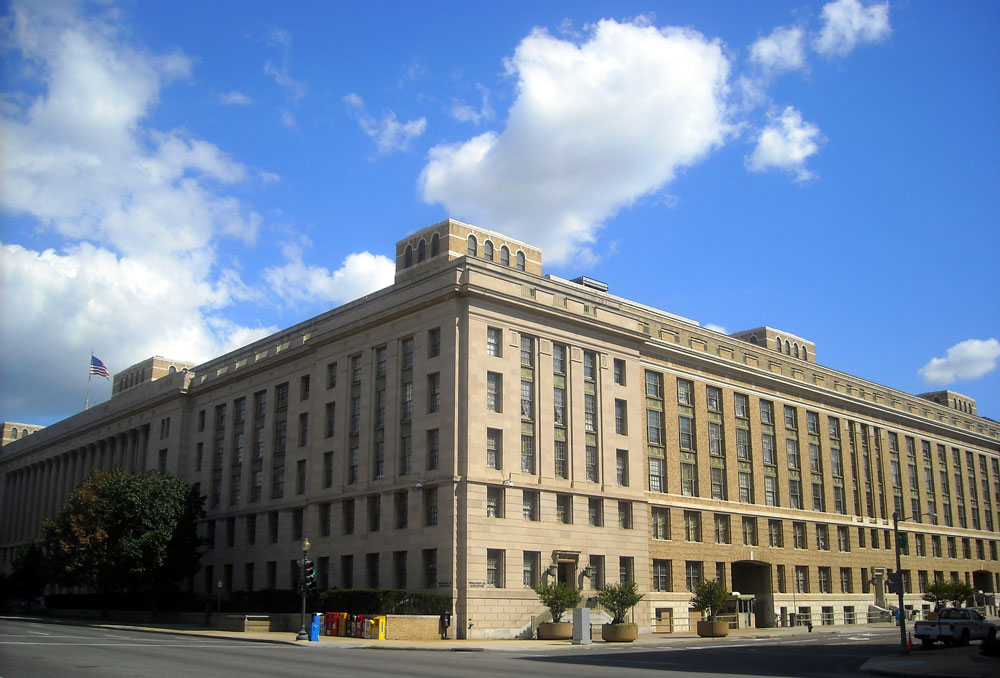
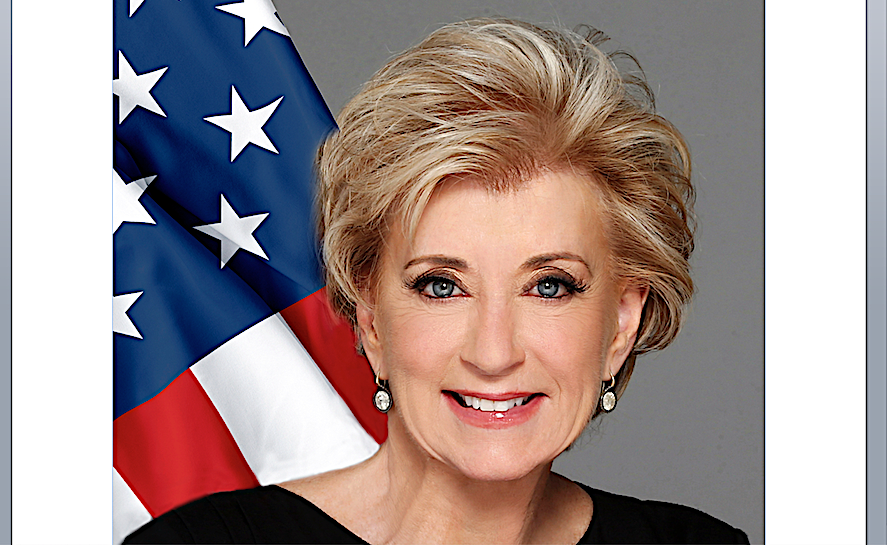
New York Attorney General Letitia James, Connecticut Attorney General William Tong, and 20 other state attorneys general have filed a lawsuit in the U.S. District Court for the District of Massachusetts against the U.S. Department of Education and Linda McMahon, in her official capacity as Secretary of the Department of Education.

Linda McMahon, former CEO of World Wrestling Entertainment (WWE) in Stamford, is named in the suit concerning a new federal rule restricting eligibility for the Public Service Loan Forgiveness (PSLF) program. The PSLF program allows government and nonprofit employees to have their federal student loans forgiven after ten years of qualifying service.

The lawsuit alleges that the Department of Education’s new rule unlawfully limits eligibility by disqualifying entire state governments, hospitals, schools, and nonprofit organizations if the government unilaterally determines they have engaged in activities disfavored by the previous administration. These activities reportedly include support for immigrants, gender-affirming health care, or diversity programs.

According to the attorneys general, this rule is not only unlawful but also politically motivated. They argue the rule intends to punish states and organizations that the administration opposes.

The PSLF program was established by Congress in 2007. Attorney General James emphasized its importance, saying, “Public Service Loan Forgiveness was created as a promise to teachers, nurses, firefighters, and social workers that their service to our communities would be honored.”

She added, “Instead, this administration has created a political loyalty test disguised as a regulation. It is unjust and unlawful to cut off loan forgiveness for hardworking Americans based on ideology. I will not let our federal government punish New York’s public servants for doing their jobs or standing up for our values.”

The Department of Education finalized the controversial new rule on October 31, with the rule scheduled to take effect in July of next year.

James and the other attorneys general warn that entire classes of public workers—including teachers, health professionals, and legal aid attorneys representing immigrants—could suddenly lose PSLF eligibility despite fulfilling all program requirements.

Highlighting current tensions, James pointed out that earlier this year, the U.S. Department of Justice sued New York over its “Protect Our Courts Act.” This state law ensures that immigration enforcement does not deter individuals from seeking justice in state courts. Under the new PSLF rule, the attorneys general contend that the administration could deem the “Protect Our Courts Act” as having a “substantial illegal purpose” and use that as grounds to deny loan forgiveness to thousands of New York public employees.

The lawsuit underscores that the new rule is flatly illegal. The PSLF law guarantees forgiveness for anyone who works full-time in qualifying public service. It does not grant the Department of Education authority to impose ideological tests or selectively target state policies or social programs while exempting federal agencies from similar scrutiny.

The group of attorneys general is asking the federal court to declare the new rule unlawful, vacate it, and bar the Department of Education from enforcing or implementing it. They stand united in their commitment to protect the promise of loan forgiveness for public servants nationwide.
https://westfaironline.com/fairfield/ags-james-tong-other-sue-linda-mcmahon-and-her-department/

STAT+: Is Canada about to lose measles-elimination status?

Get your daily dose of health and medicine every weekday with STAT’s free newsletter, Morning Rounds. Sign up here to stay informed.

On Friday, two federal judges ruled that the Trump administration must continue to fund SNAP throughout the government shutdown. This decision ensures that benefits will not be interrupted during this challenging time.

Do you receive SNAP benefits? How are you holding up a few days into November? We’d love to hear from you. Reach out at snapeditor@statnews.com.

https://www.statnews.com/2025/11/03/health-news-measles-in-canada-fda-tidmarsh-leave/?utm_campaign=rss

‘Bowing down to him’: Supreme Court faces ‘awkward’ predicament in new Trump case

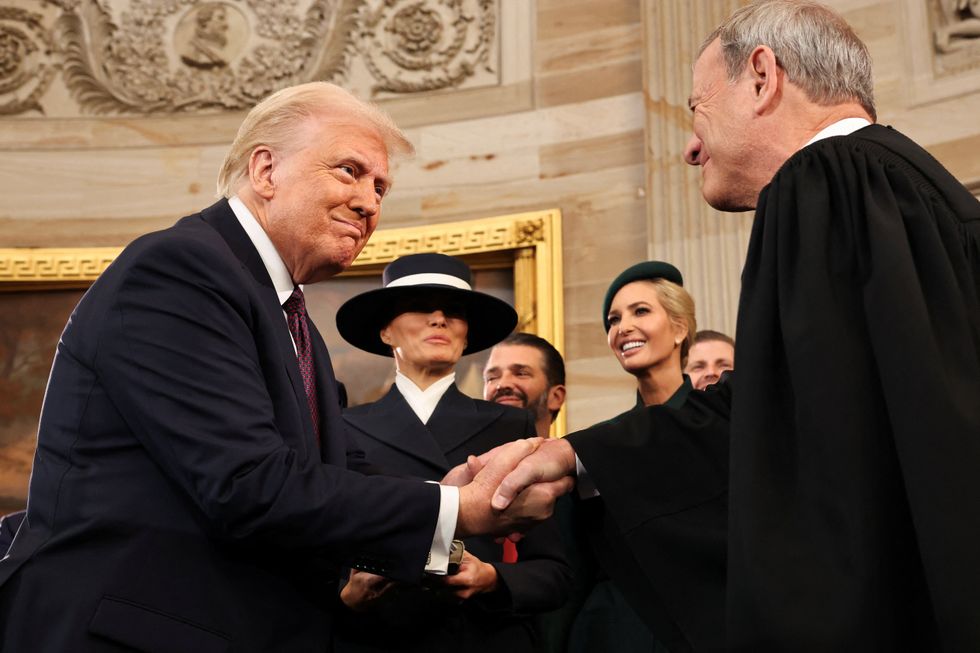
The New York Times reports that on Wednesday, the Supreme Court will “consider for the first time whether to say ‘no’” to President Donald Trump “in a lasting way” as they weigh in on the president’s use of emergency powers to impose sweeping tariffs on nearly every U.S. trading partner.

According to the Times, the case is a difficult one, made even more complex by Trump’s efforts to personalize the dispute. Observers of the court noted that the justices would be keenly aware that Mr. Trump would perceive a legal defeat as a personal blow.

Donald B. Verrilli Jr., who served as solicitor general during the Obama administration, agrees, saying, “You can’t help but think that that’s going to be hovering over the decision-making process in this case.”

So far, the Supreme Court’s six conservative justices have been receptive to Mr. Trump’s claims of presidential authority, the Times says. However, the tariffs case marks the first time the justices will weigh in on the underlying legal merits of Trump’s actions.

“At the end of this term, we’ll see wins and losses for Trump on presidential power,” said Jack Goldsmith, a Harvard Law School professor and former top Justice Department lawyer under George W. Bush. “This is the case I think is the closest, so I don’t know which way it will cut.”

The Times notes that this case has divided the conservative legal community. Trump’s lawyers argue that an obscure 1977 statute gives him broad authority to impose tariffs when he believes an emergency exists. However, that law does not specifically mention tariffs, taxes, or duties.

“Emergency powers are meant to be used in emergencies,” said Michael W. McConnell, a former federal appeals court judge nominated by President George W. Bush, who is leading a coalition of small businesses challenging the tariffs. “No Supreme Court would want to provoke a confrontation with a president of the United States unnecessarily, but on the other hand, the law is the law.”

University of Texas at Austin law professor Tara Lee Grove believes it may be “a stretch” to characterize trade deficits as an emergency. Still, she says the 1977 statute “is broad and appears to give the president a lot of discretion.”

“The justices will be struggling with whether they want to second-guess any presidential decision about an emergency,” Grove added.

Court observers have pointed to a dissenting opinion from Judge Richard G. Taranto, appointed by President Barack Obama, as a possible guidepost for the Supreme Court’s conservatives should they decide to back Trump. Taranto argued that Congress intentionally used broad language to give presidents flexibility, embodying “an eyes-open congressional grant of broad emergency authority in this foreign affairs realm.”

D. John Sauer, the solicitor general, stated that Trump’s use of the 1977 statute to impose tariffs was not an unlimited delegation of power and referenced Judge Taranto’s dissent ten times in his filing.

Grove notes that the court will face a “legitimacy dilemma” as they weigh the implications of their decision for the president’s legacy and the economy. “No matter what they do in this case, it will be painted as political,” she says.

Goldsmith believes the Supreme Court still maintains some integrity, but if Trump attends oral arguments as he has indicated, it could make the situation “awkward.”

“I doubt the court wants to be perceived as bowing down to him,” Goldsmith said, “but if Trump does show up, it’s just going to make it harder for them to rule for him.”
https://www.alternet.org/trump-tariffs-supreme-court-2674259628/

Stock futures climb as investors await Supreme Court showdown on Trump tariffs and shareholder vote on Musk’s $1 trillion pay package

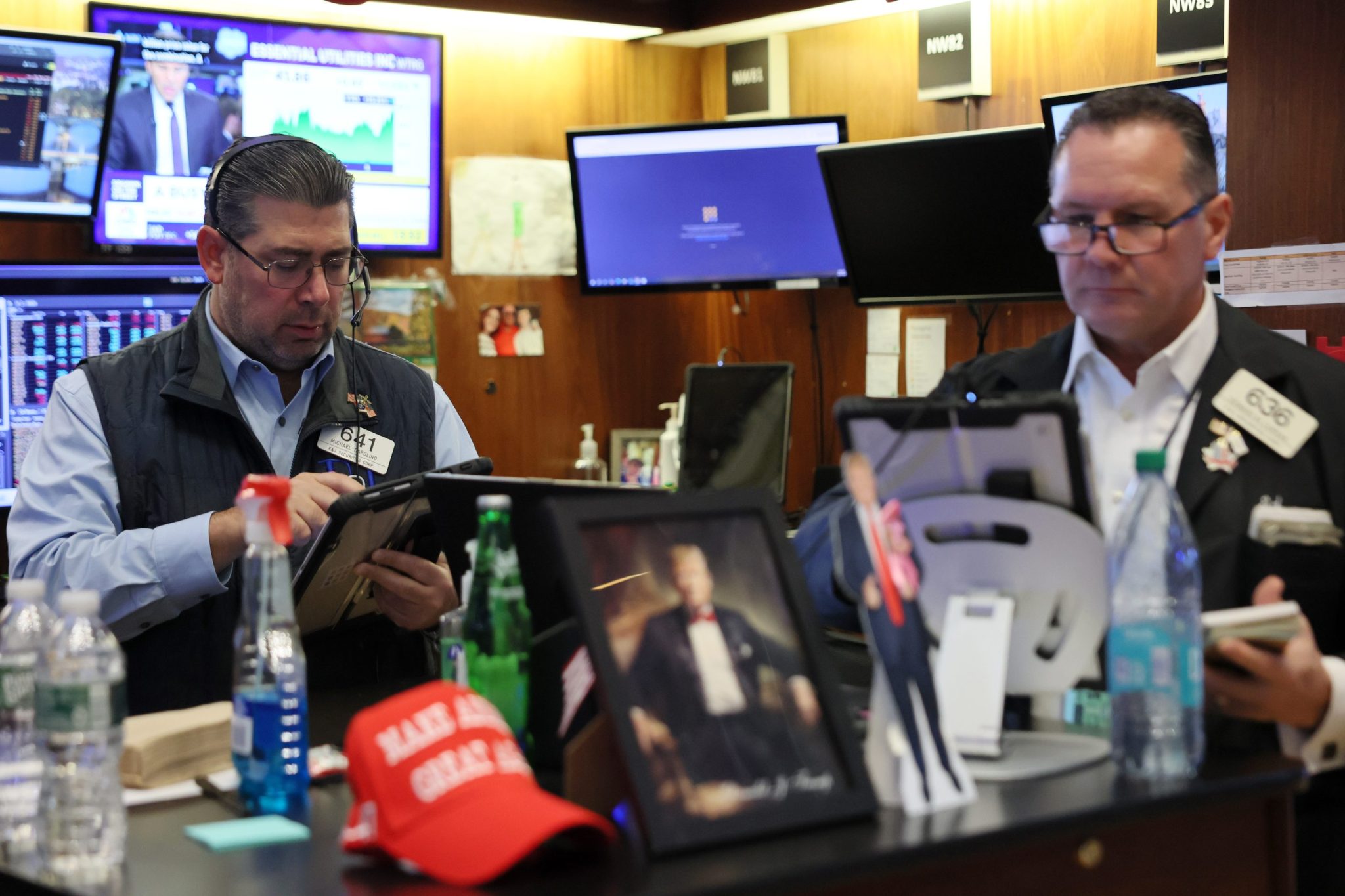
Futures tied to the Dow Jones Industrial Average rose 107 points, or 0.22%. S&P 500 futures were up 0.28%, and Nasdaq futures added 0.30%. These gains would extend Friday’s rally.

The yield on the 10-year Treasury fell 1.8 basis points to 4.083%. Meanwhile, the U.S. dollar inched up 0.06% against the euro and 0.16% against the yen. Gold dipped 0.11% to $3,992 per ounce.

In commodity markets, U.S. oil futures rose 0.64% to $61.37 a barrel, while Brent crude climbed 0.62% to $65.17. The gains came as OPEC+ signaled it will pause its production increases next year.

Looking ahead, the Supreme Court is set to hear arguments on Wednesday in a case challenging former President Trump’s authority under the International Emergency Economic Powers Act (IEEPA) to impose so-called reciprocal tariffs related to the fentanyl trade. Lower courts have ruled against Trump, but some trade experts believe there is still a chance the high court could decide in his favor.

On Sunday, Treasury Secretary Scott Bessent expressed optimism about the Supreme Court’s decision, citing China’s strict rare earths export restrictions that threatened various industries and critical technologies. “The president was able to push back using his IEEPA powers,” Bessent told Fox News Sunday. “If that’s not use of an emergency power at an emergency time, I don’t know what it is.”

In corporate news, Tesla shareholders will gather on Thursday for the company’s annual meeting to vote on Elon Musk’s $1 trillion compensation package. Chairwoman Robyn Denholm urged shareholders to support the deal, warning in a letter on Monday that the company risks losing significant value if the deal fails and Musk chooses to step down as CEO.

Denholm emphasized that the historic compensation package is needed to motivate Musk as Tesla pushes further into artificial intelligence, robotics, and autonomous driving. If approved, Musk will gradually receive more than 420 million Tesla shares, contingent upon meeting aggressive growth targets, including delivering 20 million Tesla vehicles and having 1 million robotaxis in commercial operation.

Musk himself told analysts during Tesla’s earnings call last month that the proposal is designed to ensure he cannot be sidelined. “It’s called compensation, but it’s not like I’m going to go spend the money,” he said. “It’s just, if we build this robot army, do I have at least a strong influence over that robot army, not current control, but a strong influence? That’s what it comes down to in a nutshell. I don’t feel comfortable wielding that robot army if I don’t have at least a strong influence.”

Meanwhile, elections in New York City, New Jersey, and Virginia could shift the political narrative in Washington, D.C., where lawmakers remain deadlocked over the government shutdown. The election outcomes could motivate one party to reach a deal sooner rather than later, paving the way for federal employees to be paid and benefits to resume.

Reopening the government would also restart the flow of vital economic data. Until then, only private-sector sources will be available, including the Institute for Supply Management’s manufacturing index on Monday, ADP’s monthly payroll report on Wednesday, and ISM’s services index later that same day.
https://fortune.com/2025/11/02/stock-market-today-dow-futures-trump-tariffs-supreme-court-elon-musk-pay-package-tesla-shareholder-vote/

Bessent: High U.S. interest rates may have caused housing recession

Parts of the U.S. economy, particularly housing, may already be in recession because of high interest rates, U.S. Treasury Secretary Scott Bessent said Sunday. He repeated his call for the Federal Reserve to accelerate rate cuts.

“I think that we are in good shape, but I think that there are sectors of the economy that are in recession,” Bessent said on CNN’s “State of the Union” program. “And the Fed has caused a lot of distributional problems with their policies.”

Bessent acknowledged that although the overall U.S. economy remains solid, high mortgage rates continue to hinder the real estate market. Housing, he explained, is effectively in a recession that is hitting low-end consumers the hardest because they tend to have debts rather than assets.

Pending home sales in the United States were flat in September, according to the National Association of Realtors. The treasury secretary characterized the overall economic environment as being in a transition period.

Fed Chair Jerome Powell last week signaled that the central bank may not cut rates further at its December meeting. This stance prompted sharp criticism from Bessent and other officials from the Trump administration.

Federal Reserve Governor Stephen Miran, who is on leave from his post as chairman of the White House Council of Economic Advisers, said in an interview with the New York Times published on Saturday that the Fed risks inducing a recession if it does not swiftly lower interest rates.

Miran, who is due to return to his White House job in January, was one of two central bank governors who dissented from last week’s Fed decision to lower interest rates by 25 basis points, instead advocating for a 50 basis points cut (0.5 percentage points).

“If you keep policy this tight for a long period of time, then you run the risk that monetary policy itself is inducing a recession,” Miran said in the interview, conducted on Friday. “I don’t see a reason to run that risk if I’m not concerned about inflation on the upside.”

Bessent echoed this view, noting that the Trump administration’s cuts in government spending have helped lower the deficit-to-gross-domestic-product ratio to 5.9% from 6.4%, which in turn should help reduce inflation.

The Federal Reserve can also assist by continuing to bring down interest rates, he added.

“If we are contracting spending, then I would think inflation would be dropping. If inflation is dropping, then the Fed should be cutting rates,” Bessent said.
https://www.staradvertiser.com/2025/11/02/breaking-news/bessent-high-u-s-interest-rates-may-have-caused-housing-recession/

JONATHAN TURLEY: Why blue states’ new anti-ICE laws are unconstitutional virtue signaling

Illinois has joined California and Connecticut in barring federal immigration agents from conducting “civil arrests” of undocumented immigrants in or around state courthouses. This new sanctuary law appears largely symbolic and raises serious constitutional questions.

At the core of the issue is whether a state can restrict federal jurisdiction, especially after the Civil War. Illinois Governor JB Pritzker has intensified rhetoric against ICE and the Trump administration for months, making comparisons to Nazis and warning that democracy is at risk. However, the new law crosses a constitutional line by not only limiting Immigration and Customs Enforcement (ICE) operations but also establishing a 1,000-foot “buffer zone” around courthouses.

This law treats courthouses like churches, creating sanctuary zones where suspects can claim protection from civil arrest not only inside the building but also within 1,000 feet—unless ICE chooses to ignore the law altogether. Recently, the chief judge in Cook County issued a similar order, and some judges in other states have done the same.

### Legal Challenges and Constitutional Issues

The authority for these sanctuary orders is highly questionable. The federal government enforces laws mandating the arrest of certain individuals for immigration violations. These include mandatory detention of aliens removable due to criminal convictions or terrorism-related activities, as well as detention and removal of those with final deportation orders.

Illinois’ sanctuary law conflicts with the Supremacy Clause of the U.S. Constitution, which states:

> “This Constitution, and the Laws of the United States which shall be made in Pursuance thereof… shall be the supreme Law of the Land; any Thing in the Constitution or Laws of any State to the Contrary notwithstanding.”

Additionally, the U.S. Supreme Court has consistently rejected efforts by states to interfere with federal immigration enforcement. In the 1952 case *Harisiades v. Shaughnessy*, the Court affirmed that the federal government has “exclusive” control over immigration policy.

Interestingly, former President Barack Obama once successfully challenged state laws that interfered with federal immigration enforcement. In the 2012 case *Arizona v. United States*, the Supreme Court ruled that:

> “[t]he Government of the United States has broad, undoubted power over the subject of immigration and the status of aliens.”

This federal authority dates back to the 19th century. In the 1893 case *Fong Yue Ting v. United States*, the Court held that Congress has the right to expel aliens of a particular class or allow them to remain, using all proper means to enforce the system.

### Additional Provisions and Implications

Illinois’ new law also creates the ability to sue federal authorities for false imprisonment under state law. Furthermore, the 1,000-foot buffer zone extends around any state court, effectively creating safe zones for undocumented immigrants.

This raises practical questions. For instance, could someone renting an apartment within such a zone claim effective immunity from civil arrest simply by residing there? Could suspects use public sidewalks or spaces within these zones to avoid federal enforcement?

Moreover, with states like Illinois pushing apps that track ICE operations, individuals might evade arrest by stepping into designated safe zones. It remains to be seen whether landlords will increase rents in these areas given the new “immunity” amenity.

If deemed constitutional, states could expand these safe zones beyond courthouses to include city services, clinics, and more, creating a patchwork of sanctuary areas that complicate federal enforcement.

Notably, similar tactics have been attempted by blue states to challenge Second Amendment rights, resulting in ongoing legal battles.

### Conclusion

Despite serious constitutional concerns, these sanctuary laws serve political purposes, allowing lawmakers to signal opposition to federal immigration policies. However, the legal weaknesses of the laws may lead to unintended consequences for individuals who mistakenly believe they are fully protected within these safe zones.

As legal challenges unfold, it remains uncertain how these laws will be enforced or whether courts will uphold them against federal authority.

*For more information, click here.*
https://www.foxnews.com/opinion/jonathan-turley-why-blue-states-new-anti-ice-laws-unconstitutional-virtue-signaling

Defense of Kamehameha admissions policy tied to history

With a new lawsuit against Kamehameha Schools, many Native Hawaiians see the challenge to its admissions policies as a matter of history and sovereignty.

Established with a bequest from a Hawaiian princess in 1887, Kamehameha is among the most elite private educational institutions in Hawaii. Its central mission—to serve Native Hawaiians—has remained intact for decades. That vision has long been realized through its admissions policy. While anyone can apply to attend Kamehameha’s elementary, middle, and high schools, preference is given to students who can prove some Hawaiian ancestry. As a result, almost all students attending Kamehameha are Native Hawaiians.

Students for Fair Admissions, the group that successfully sued to end affirmative action in college admissions, last month filed a lawsuit in federal court arguing that the admissions policy violates a federal civil rights law prohibiting discrimination in contracts— in this case, admission contracts at a private school.

Kamehameha said it was prepared for the challenge. “We are resolved to vigorously defend our admissions policy,” the school said in a statement after the suit was filed. “The facts and the law are on our side, and we are confident that we will prevail.”

The lawsuit, they say, is a frontal assault on the bequest of Princess Bernice Pauahi Bishop and yet another attempt by outsiders to snatch away resources devoted to uplifting the Hawaiian people. They also point out that the school, with a $15 billion endowment larger than some Ivy League universities, takes no federal funding.

“It’s not a question of denial of opportunities; it’s a question of sovereignty over our own resources,” said Jon Osorio, dean of the Hawai‘inui‘kea School of Hawaiian Knowledge at the University of Hawaii and a Kamehameha alumnus.

Kamehameha is so distinct in its history, admissions policy, and funding structure that any court decision invalidating its policy is unlikely to directly affect other schools, some legal experts say. But the challenge reflects a broader shift in much of the country’s view of racial minorities, especially as the Trump administration tries to choke off immigration and dismantle diversity programs across public life.

“We are in the midst of what I would regard as an era of racial revanchism,” said Justin Driver, a law professor at Yale University and the author of “The Fall of Affirmative Action.”

Kamehameha’s founder, Pauahi, was the last direct descendant of Kamehameha I, the 18th-century king who unified the Hawaiian Islands. When she died in 1884, her will bequeathed some 375,000 acres to establish the schools. At the time, Hawaii was an independent kingdom, but diseases from the West were devastating its population.

A few years later, the monarchy was overthrown by Western businesspeople, and for generations onward, Hawaiian culture and language were actively suppressed. Today, Native Hawaiians still face significant health, economic, and educational disparities. Many have moved to the mainland because of soaring living costs.

Census data released in 2024 showed that for the first time, more Native Hawaiians were living outside Hawaii than in the state.

Concerns about a lawsuit had been growing in Hawaii since Students for Fair Admissions started a website before filing the lawsuit, seeking plaintiffs to challenge Kamehameha’s admissions policy. A petition had gathered more than 30,000 signatures. Politicians, including some of the state’s Republican lawmakers, had also criticized the group.

“At the college level, we agree with what they’re going after,” Brenton Awa, a Republican state senator, said in an interview before the lawsuit was filed. “But we’re talking about a princess’s will, and this will was set up to restore something that had been taken away from Native Hawaiians.”

Even among Native Hawaiians, admission to Kamehameha is competitive. The school, with 5,400 students across its campuses on Oahu, Maui, and the Big Island, accepts only 1 in 5 high school applicants. More than 60% of its students receive financial aid or come from “orphaned or indigent circumstances,” according to the school.

Michelle Kamali‘i-Ligsay, the daughter of a retail store manager and a public school aide, attended the Oahu school in the late 1990s. She received opportunities, scholarships, and alumni networks unavailable at her public school. But more importantly, she said, by the time she graduated, she was nearly fluent in Hawaiian — a rare accomplishment at a time when Hawaiian language classes were not widely available.

Now the principal of Kamehameha’s elementary program on Maui, she personally believes these benefits should be preserved for her people.

“Giving other people those opportunities,” she said, “is going to lessen that opportunity” for Native Hawaiians.

Applicants claiming Native Hawaiian status must undergo a rigorous verification process to prove their ancestry. Even so, Kamehameha’s student body — like Hawaii more broadly — is remarkably racially diverse. While the school does not release official demographic figures, an IRS review found that in 1998, 78% of the students were part Caucasian; 74% were part Chinese; 28% were part Japanese; and 23% were of other ancestries, including African American, Arab, Brazilian, Indian, Native Alaskan, and Native American.

What binds students together is their Hawaiian ancestry, however distant.

Eassie Miller, 43, who identifies as Hawaiian but also has Japanese, Filipino, English, German, and Spanish ancestry, still remembers the day he learned he was accepted to Kamehameha as the best moment in his life.

“Knowing that Princess Pauahi Bishop set up this trust and had this vision in mind for her people, you just wanted to be there as a Hawaiian kid,” said Miller, who now works in construction management on Maui.

Kamehameha had tried to inoculate itself from legal challenges. In the early 2000s, it severed all remaining ties to federally supported programs like JROTC. (Concerns remain that Kamehameha could lose its tax-exempt status, which happened to Bob Jones University in the 1970s because of its ban on interracial dating.)

It also enrolled at least a few non-Native Hawaiian students despite protests. It is unclear, though, whether non-Native Hawaiians are regularly accepted. When asked to clarify, Sterling Wong, a spokesperson for Kamehameha, reiterated the school’s preferential policy.

In its complaint, Students for Fair Admissions said it represented two anonymous non-Native Hawaiian families in Hawaii—Family A and Family B—who say they would apply to Kamehameha if the school did not restrict admission.

Before the Supreme Court’s 2023 decision banning affirmative action, lower courts had upheld Kamehameha’s admissions policy.

In 2006, a federal appeals court ruled that Kamehameha could maintain its preferential policy because of what it said were unique factors, including the history of Hawaii, the plight of Native Hawaiians, and the schools’ distinctively remedial mission.

Lawyers for Kamehameha had also argued that Native Hawaiians, as an Indigenous people with a political relationship with the U.S. government similar to Native Americans, constituted a political classification, not just a racial one.

In the complaint, Students for Fair Admissions argues that Kamehameha’s policy is not a valid remedial plan because it does not try to remedy a specific instance of past illegal discrimination. The group also argues that the policy is unconstitutional because Kamehameha has not suggested a logical end point, nor has it demonstrated a direct link between its racial preference and improved educational outcomes for Native Hawaiians as a whole.

The lawsuit could take years to wind its way through the courts and still not reach the Supreme Court.

© 2025 The New York Times Company
https://www.staradvertiser.com/2025/11/01/hawaii-news/defense-of-kamehameha-admissions-policy-tied-to-history/


Jake Paul discusses legitimacy of Tank Davis fight, legal threats to critics, and fiancée’s Olympic hopes

Jake Paul is just two weeks away from stepping back into the ring, but once again, there’s not exactly a typical opponent waiting on the other side. On November 14, Paul is set to face Gervonta “Tank” Davis in Miami. The matchup has caught plenty of attention because Davis normally fights seven weight classes below Paul, who competes as a cruiserweight.

Although this fight is not officially sanctioned, Paul emphasized in a recent interview with Fox News Digital that “it’s the same deal. Everyone remembers that there’s a winner.”

Paul has faced criticism before for his choice of opponents, such as Mike Tyson—who is 31 years older than him—and Anderson Silva, a former UFC star nearly 22 years his senior. Additionally, some of his previous boxing opponents like Andre August and Ryan Bourland have not been widely recognized names. Now, similar skepticism has arisen regarding Davis due to the weight-class disparity.

However, Paul, who has repeatedly expressed his ambitions to become a world champion and is eligible for a WBA title fight, argued that this upcoming matchup further validates his legitimacy as a boxer.

“I think people have said, ‘Fight someone your age, fight one of the best in the world.’ This is answering both of those things in one,” he said. “And being the underdog with half the internet thinking I’m going to get killed and blah, blah, blah, and proving to people that I can box better than someone who’s been doing it their whole life. I think people will be shocked after fight night as to my skills and how I strategically came in with a game plan and I executed it.”

Paul explained that his game plan for this fight is very different from those in the past. “A lot of it’s focusing on speed, but also just high-level thinking in the sport, ring IQ, not making any mistakes. Not getting countered, not getting lazy at any moment, alertness, all of these things. The list goes on,” he said. “But I have to be the sharpest I’ve ever been for 39 minutes straight, and that’s not easy to do against someone who’s one of the pound-for-pound best.”

The unsanctioned nature of the fight has led to accusations—similar to those surrounding many of Paul’s previous bouts—that the fights are staged, fixed, or rigged in some way. Such claims escalated to the point where Paul and his business partner, Nakisa Bidarian, threatened legal action, notably against commentator Piers Morgan.

Morgan later “clarified” his comments after Paul and Bidarian announced potential lawsuits, and since then, Paul has noticed a quiet from critics.

“People haven’t been talking. And rightfully so, right?” Paul said. “Like, stop lying on my name. People can say a lot of things, but when they’re blatant lies that actually defame my brand—people saying fights are rigged, steroids, whatever it is—that’s where it goes too far.”

He continued, “So, you know, hate on the fights, don’t watch the fights, whatever, but as soon as people start lying, they’re going to get sued.”

After the fight, Paul plans to focus on his fiancée, Jutta Leerdam, who will be competing for her first Olympic gold medal in speedskating. Leerdam, 26, won a silver medal in the women’s 1,000 meters at the 2022 Beijing Olympics. The couple got engaged earlier this year, but their intense training schedules have complicated wedding planning.

Paul has even found that his own training commitments have impacted his ability to support Leerdam fully during this important time.

[Click here for more sports coverage on FoxNews.com.]
https://www.foxnews.com/sports/jake-paul-discusses-legitimacy-fight-vs-tank-davis-legal-threats-critics-fiancees-olympic-hopes

‘What Happens In Nevada’: Democrats Can’t Stop Ranting About Trump’s Nuclear Weapons Move While Shutdown Rages

As the government shutdown surges toward becoming the longest in U.S. history, Senate Democrats are condemning President Donald Trump’s Wednesday evening declaration that his administration will resume nuclear weapons testing.

Trump posted on Truth Social on Wednesday that he had “instructed the Department of War to start testing our Nuclear Weapons on an equal basis,” arguing that Russia and China were conducting their own tests and that America must match their efforts. The president stated that the U.S. already possesses the world’s largest nuclear arsenal, noting that this, and the modernization of the weapons, had occurred during his first term.

Democratic Nevada Sen. Jacky Rosen issued an emotional rebuke, arguing that nuclear testing could possibly bring radioactive “contamination” beyond the desert.

“Trump’s going to start nuclear testing. Explosive nuclear testing. What happens in Nevada ain’t gonna’ stay there,” Rosen told reporters on Thursday after criticizing Senate Majority Leader John Thune. “The ground, the air, the water, all across this country, places like Utah, Nebraska, Idaho, keep going. Because the rain falls everywhere, the wind blows everywhere. And that contamination won’t stay isolated.”

Democratic Arizona Sen. Mark Kelly, a former astronaut and Navy pilot, said the U.S. has no need to test its nuclear weapons, and claimed the idea “benefits the Chinese.”

“We can model this stuff; we have enough data from hundreds, maybe up to a thousand tests,” Kelly told reporters. “This benefits the Chinese.”

*RELATED: [Trump Orders Department Of War To Restart Nuclear Weapons Tests]*

*Note: This article republished from The Daily Caller News Foundation. For any questions about their guidelines or partnering opportunities, please contact licensing@dailycallernewsfoundation.org.*
https://dailycaller.com/2025/10/30/democrats-trump-nuclear-testing-jacky-rosen-mark-kelly-richard-blumenthal/

Mike Selig Appointed as New CFTC Chair Amid Crypto Focus

In a significant development for the U.S. financial regulatory landscape, Mike Selig has been appointed as the new Chair of the Commodity Futures Trading Commission (CFTC) Crypto Task Force, where he previously served as chief counsel.

### Mike Selig Speaks Amid CFTC Chair News

Selig took to social media to express his gratitude and share his vision for his new role. He stated that he was “honored” to take on the role of CFTC Chair and emphasized the potential for a “Great Golden Age for America’s Financial Markets,” attributing this optimism to the President’s leadership.

Selig pledged to enhance the functioning of commodity markets and bolster the U.S. position as a leader in the crypto space. His appointment is widely seen as a strategic move to align the CFTC’s policies with the growing influence of digital assets in financial markets.

With a background serving at the Securities and Exchange Commission (SEC) focusing on crypto regulations, Selig’s previous experience is expected to heavily influence his approach at the CFTC.

### Brian Quintenz Nomination Withdrawn After Winklevoss Concerns

Selig’s nomination follows a tumultuous period involving the initial nominee, Brian Quintenz. Quintenz faced opposition from prominent figures in the crypto industry, including the Winklevoss twins. Concerns were raised about Quintenz’s alignment with the administration’s crypto policies, ultimately leading to the withdrawal of his nomination.

Quintenz’s candidacy was marred by controversy, especially after private communications with Tyler Winklevoss surfaced discussing past litigation with the CFTC. This incident highlighted the complexities and political sensitivities involved in crypto regulation.

### Administration’s Continued Commitment to Digital Economy Leadership

President Trump, a vocal supporter of blockchain technology, continues to shape his administration with figures aligned with his vision for the digital economy. This includes the appointment of David Sacks as the White House A.I. and Crypto Czar, reflecting the administration’s commitment to advancing America’s position in the digital asset sector.

David Sacks has praised Selig’s expertise and commitment to modernizing regulatory frameworks, underscoring the administration’s goal to establish the U.S. as a global crypto leader.

As the new CFTC Chair, Mike Selig is expected to play a crucial role in navigating the evolving landscape of crypto regulations, positioning the United States at the forefront of this rapidly changing market.
https://bitcoinethereumnews.com/crypto/mike-selig-appointed-as-new-cftc-chair-amid-crypto-focus/?utm_source=rss&utm_medium=rss&utm_campaign=mike-selig-appointed-as-new-cftc-chair-amid-crypto-focus

Exit mobile version
Sitemap Index