Dark matter obeys gravity just like ordinary matter, scientists discover

For decades, scientists have been trying to understand dark matter—the mysterious, invisible substance that makes up about 85% of all matter in the universe. It doesn’t emit or reflect light, making it impossible to see directly, and its nature remains one of the biggest puzzles in physics.

Now, a new study from researchers at the University of Geneva (UNIGE) and their international collaborators suggests that dark matter behaves much like ordinary matter when it comes to gravity.

The findings, published in *Nature Communications*, indicate that dark matter falls into gravitational wells—the regions of space distorted by the pull of massive objects—just as normal matter does. This discovery supports the idea that dark matter follows Einstein’s general theory of relativity and is not influenced by a mysterious “fifth force.”

However, the results still leave open the possibility that an undiscovered force could exist, albeit one much weaker than gravity.

Ordinary matter—the kind that makes up stars, planets, and humans—responds to four known forces: gravity, electromagnetism, and the strong and weak nuclear forces that operate inside atoms. But dark matter, which interacts very little with anything other than gravity, has long been suspected of possibly obeying an additional, unknown force.

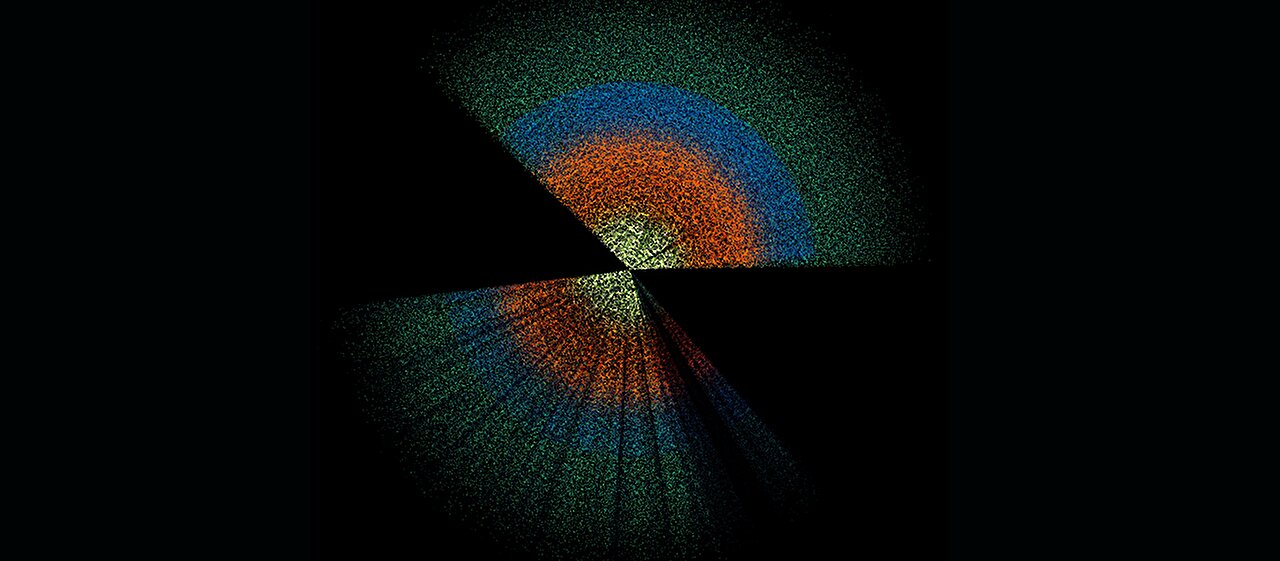
To test this, the UNIGE-led team examined the motion of galaxies across the universe. Because galaxies are mostly made of dark matter, their movements should reveal how dark matter behaves under the influence of gravity.

“We compared the velocities of galaxies with the depths of the gravitational wells they fall into,” explained Camille Bonvin, a theoretical physicist at UNIGE and co-author of the study.

If dark matter followed different rules than ordinary matter, galaxies would move in unexpected ways—falling faster or slower into these wells depending on whether another force was acting on them.

“Our results suggest that dark matter obeys the same equations that describe ordinary matter,” Bonvin said. Specifically, the researchers found that Euler’s equations, which describe how matter moves under gravity, still hold true for dark matter.

However, they caution that this does not fully eliminate the possibility of a new, extremely weak force. According to Nastassia Grimm, the study’s lead author, if such a fifth force exists, it would have to be less than 7% as strong as gravity, or it would have already been detected.

The team’s next goal is to push these limits even further. Future astronomical surveys—such as the Legacy Survey of Space and Time (LSST) and the Dark Energy Spectroscopic Instrument (DESI)—will collect even more precise data on galaxy motion. These new observations could detect forces as faint as 2% of gravity’s strength, offering deeper insight into dark matter’s true nature.

“This study marks an important step forward,” said Isaac Tutusaus, co-author and researcher at the University of Toulouse. “We now know dark matter doesn’t blatantly defy gravity—but the universe may still be hiding subtle forces we’ve yet to uncover.”
https://knowridge.com/2025/11/dark-matter-obeys-gravity-just-like-ordinary-matter-scientists-discover/


Mike Selig Appointed as New CFTC Chair Amid Crypto Focus

In a significant development for the U.S. financial regulatory landscape, Mike Selig has been appointed as the new Chair of the Commodity Futures Trading Commission (CFTC) Crypto Task Force, where he previously served as chief counsel.

### Mike Selig Speaks Amid CFTC Chair News

Selig took to social media to express his gratitude and share his vision for his new role. He stated that he was “honored” to take on the role of CFTC Chair and emphasized the potential for a “Great Golden Age for America’s Financial Markets,” attributing this optimism to the President’s leadership.

Selig pledged to enhance the functioning of commodity markets and bolster the U.S. position as a leader in the crypto space. His appointment is widely seen as a strategic move to align the CFTC’s policies with the growing influence of digital assets in financial markets.

With a background serving at the Securities and Exchange Commission (SEC) focusing on crypto regulations, Selig’s previous experience is expected to heavily influence his approach at the CFTC.

### Brian Quintenz Nomination Withdrawn After Winklevoss Concerns

Selig’s nomination follows a tumultuous period involving the initial nominee, Brian Quintenz. Quintenz faced opposition from prominent figures in the crypto industry, including the Winklevoss twins. Concerns were raised about Quintenz’s alignment with the administration’s crypto policies, ultimately leading to the withdrawal of his nomination.

Quintenz’s candidacy was marred by controversy, especially after private communications with Tyler Winklevoss surfaced discussing past litigation with the CFTC. This incident highlighted the complexities and political sensitivities involved in crypto regulation.

### Administration’s Continued Commitment to Digital Economy Leadership

President Trump, a vocal supporter of blockchain technology, continues to shape his administration with figures aligned with his vision for the digital economy. This includes the appointment of David Sacks as the White House A.I. and Crypto Czar, reflecting the administration’s commitment to advancing America’s position in the digital asset sector.

David Sacks has praised Selig’s expertise and commitment to modernizing regulatory frameworks, underscoring the administration’s goal to establish the U.S. as a global crypto leader.

As the new CFTC Chair, Mike Selig is expected to play a crucial role in navigating the evolving landscape of crypto regulations, positioning the United States at the forefront of this rapidly changing market.
https://bitcoinethereumnews.com/crypto/mike-selig-appointed-as-new-cftc-chair-amid-crypto-focus/?utm_source=rss&utm_medium=rss&utm_campaign=mike-selig-appointed-as-new-cftc-chair-amid-crypto-focus

3 Reasons WhatsApp’s New Storage Management Feature Is a Big Deal

**WhatsApp Is Tackling the Storage Nightmare**

If you’ve ever frantically deleted photos to make room for a new app, you know the pain of managing phone storage. WhatsApp is testing a solution that could make those cleanup sessions way less painful.

According to WABetaInfo, the messaging app is rolling out a new storage management feature directly within individual chat info screens. This means users can now handle space-hogging files without bouncing through multiple menus.

### 1. Saves Time With One-Stop Storage Management

No more digging through multiple app menus to free up space. The new WhatsApp storage management shortcut lives right in the chat info screen. You can manage the space consumed by chats and individual media files without leaving your conversation. This eliminates extra steps and makes routine cleanups much faster.

The feature is especially helpful in busy group chats where photos and videos pile up quickly. Anyone who’s dealt with WhatsApp automatically saving photos and videos knows how rapidly storage can disappear.

### 2. Empowers Custom Cleanups, Not Accidental Deletions

The new tool provides a complete overview of every file exchanged with a specific contact. Files are organized by size, giving users better visibility and control. You can quickly spot and remove large, unwanted files while saving those that matter.

Thanks to its cleaner layout, it’s easier to avoid accidentally deleting important photos or documents. This improvement is a welcome change for users who’ve struggled with managing WhatsApp chat history or dealing with compressed media files taking up unnecessary space.

### 3. Helps Keep Phones Running Smoothly

For users with limited device storage, the ability to bulk delete large files straight from a chat helps prevent slowdowns. Full devices often cause app crashes, especially on older phones.

Managing WhatsApp storage directly while conversing ensures the app remains fast and responsive. This is important not just for personal users but also for business communications.

With WhatsApp backups now counting toward Google Drive storage limits, local storage management has become more critical than ever.

The feature is currently available to some beta testers running WhatsApp beta for Android version 2.25.31.13 and is expected to roll out to all users in the coming weeks. Stay tuned for this handy upgrade that promises to make managing WhatsApp storage much easier!
https://phandroid.com/2025/10/24/3-reasons-whatsapps-new-storage-management-feature-is-a-big-deal/

DOJ tells California officials to back off ‘apparent criminal conspiracy’ to arrest ICE agents: ‘Stand down or face prosecution’

The Justice Department on Thursday warned California officials, including Rep. Nancy Pelosi, issuing a joint statement claiming that California law “prevents federal agents from taking certain actions.”

“While the President may enjoy absolute immunity courtesy of his rogue Supreme Court, those who operate under his orders do not,” the lawmakers wrote.

“Our state and local authorities may arrest federal agents if they break California law and if they are convicted, the President cannot pardon them.”

Pelosi’s office did not immediately respond to The Post’s request for comment.
https://nypost.com/2025/10/24/us-news/doj-tells-california-officials-to-back-off-apparent-criminal-conspiracy-to-arrest-ice-agents/

Report warns reforms are fueling rise in Colorado violent crime

As part of efforts to lower its prison population, a recent report found that both incarceration rates and arrests in Colorado have declined sharply over the past decade. The state’s rate of recidivism—when a convicted criminal reoffends—has also decreased. However, this does not necessarily mean that crime is decreasing.

Instead, the report attributes these declines to a prioritization by lawmakers on leniency. This approach has largely led to reductions in recidivism, arrests, and the overall prison population.

“Over the past two decades, Colorado has pursued a steady course of criminal justice reform aimed at reducing the footprint of the state’s correctional system,” the report stated. “Lawmakers have prioritized leniency: lower sentences for drug offenses, expanded parole and probation opportunities, and restrictions on law enforcement discretion.”

This tension between enforcement and leniency is reflected in the state’s crime trends over the past decade. From 2014 to 2024, the number of arrests declined by nearly 30%. Similarly, Colorado’s recidivism rate fell by 40% between 2008 and 2019—ranking as the third-highest decline of any state nationwide.

“In 2008, Colorado had the country’s fifth highest recidivism rate,” said DJ Summers, the institute’s director of communications and research operations, during a press conference about the report on Tuesday. “Now the state’s recidivism has dropped to a more average rate.”

The decline in arrests has played a significant role in this progress. Between 2016 and 2024, the total number of inmates in Colorado’s prisons and jails decreased by 12%. This drop was largely due to a significant reduction in the prison population in 2020, when many inmates were released early amid public health concerns related to the COVID-19 pandemic. Since 2020, the prison population has been slowly increasing again—though it remains below levels seen in the 2010s.

Despite these positive trends in incarceration and recidivism, the report warns that the overall picture is more complex. From 2014 to 2024, Colorado’s violent crime rate increased by more than 55%.

Looking more closely between December 2019 and December 2021, the report found that while the number of inmates in state prisons fell by over 20%, the violent crime rate rose nearly 25%.

“Arrest counts and violent crime have been shifting at inversely proportional rates, meaning that as arrests decrease, violent crime increases,” the report noted.

Summers added that Common Sense Institute conducted an analysis showing a “strong correlation” between decreases in arrests and prison population and increases in crime.

Furthermore, even with the decline in the recidivism rate, 31% of inmates released by the Colorado Department of Corrections still return to prison within three years.

The report argues that it is time to refocus the state’s priorities away from leniency and toward deterrence, accountability, and public safety.

“The state’s challenge is no longer to reduce its correctional footprint; it is to restore accountability and deterrence without abandoning compassion,” the report stated. “Colorado must find a middle ground between punitive excess and permissive neglect.”
https://www.washingtonexaminer.com/news/crime/3862533/report-warns-reforms-fuel-rise-colorado-violent-crime/

Signal President Spars With Elon Musk Over Trust in Private Messengers

On Monday, a major outage at Amazon Web Services disrupted a large number of websites and apps, including the end-to-end encrypted messenger Signal. In response, X Executive Chairman and Chief Technical Officer Elon Musk declared that he no longer trusts Signal. “I don’t trust Signal anymore,” Musk stated plainly.

Signal President Meredith Whittaker responded to Musk’s post on X, emphasizing the app’s reputation: “Signal is trusted by the security and hacker community, and hundreds of millions of others, BECAUSE they can examine it, and because on examination, it has shown to be robust, private, and secure—for over a decade.”

### Musk’s Promotion of X Chat

In recent months, Musk has been promoting the use of X Chat as a secure, encrypted communication method between users. However, security experts argue that any encrypted messaging app should be open source to be truly trusted with secure communications. After all, how can users be sure what the app is doing if they cannot review the code themselves?

X labels X Chat—intended to eventually replace the traditional direct messaging system—as beta software on their platform. While there were reports in 2018 that X (then known as Twitter) was testing end-to-end encryption, the feature did not receive an official support announcement until 2023. The company has also stated plans to make it easier for users to verify the safety and security of their chat features.

Jack Dorsey, co-founder of X (originally Twitter) and former CEO, was supportive of moving towards end-to-end encryption during his tenure. More recently, Dorsey developed a geographically-focused messaging app called Bitchat over a weekend. Bitchat gained attention during the recent overthrow of the Nepalese government because of its mesh networking features, which allow it to function locally without internet access. An app with similar capabilities, FireChat, was used during the Hong Kong protests as early as 2014.

### Signal Is Not Perfect Either

Of course, Signal itself is not without flaws and has faced criticism over the years. One common concern raised by security researchers was Signal’s reliance on phone numbers, which many viewed as a privacy risk. The app has recently addressed this issue by allowing users to sign up with just a username.

Notably, Whittaker’s comments about Signal’s openness and verifiability faced pushback from multiple developers in the Bitcoin community. Peter Todd, known for contributing to Bitcoin Core and for being suggested as the alleged Bitcoin creator Satoshi Nakamoto in a recent HBO documentary, pointed out that app stores on Android and iOS hinder users’ ability to confirm that the open-source code published by Signal matches the app installed on their devices.

Todd’s work with Bitcoin Core emphasizes reproducible builds, a process that allows end users to verify that the software they run is built from the exact open-source code released to the public. Similarly, Steve Lee, who leads Bitcoin open-source development grant provider Spiral, highlighted an open issue related to reproducible builds for Signal on Android.

Bitcoin purists also criticize Signal for relying on centralized infrastructure, which contributed to the AWS-related downtime experienced recently. This reliance is seen as a drawback compared to decentralized networks like Bitcoin.

### Striking a Balance

Whether discussing Bitcoin or private messaging, there are often trade-offs between achieving perfect privacy and security versus creating a user-friendly app that people will actually use. Signal remains the gold standard for encrypted messaging, but encouraging more competition in this space is beneficial—so long as such alternatives offer privacy that is truly verifiable and trustworthy.
https://gizmodo.com/signal-president-spars-with-elon-musk-over-trust-in-private-messengers-2000674571

Fmr Nat’l Security Advisor John Bolton indicted on 18 counts, accused of mishandling and sharing classified docs

OAN Staff Blake Wolf, Brooke Mallory and Sophia Flores UPDATE: 2: 05 PM Thursday, October 16, 2025: Former National Security Advisor John Bolton has been indicted on 18 counts of illegally hoarding or sending sensitive national security information by a federal grand jury. The indictment in a Greenbelt, Maryland federal court, alleges that Bolton knowingly transmitted materials related to foreign policy matters after President Trump fired Bolton from the White House in 2019. These sensitive national security documents were shared through a personal email. If found guilty, Bolton faces up to 10 years behind bars on each count of the indictment. 12: 56 PM Wednesday, October 15, 2025: Former National Security Advisor John Bolton is expected to face a federal indictment after being accused of mishandling and transmitting classified government documents using his private AOL email account. While he has not been formally charged, multiple sources suggest that a grand jury in Maryland is expected to issue an indictment soon. The development follows FBI raids on Bolton’s Maryland home and Washington, D. C., office, where agents seized documents labeled “classified,” “confidential,” and “secret” including materials related to weapons of mass destruction and strategic communications. The indictment is anticipated to detail Bolton’s mishandling of classified information during his time as President Donald Trump’s national security advisor, stemming from Trump’s first administration. Bolton allegedly used his personal AOL email account to share and store classified information through daily notes and summaries of his White House activities from 2018 to 2019. These documents reportedly contained sensitive national security details, prompting federal authorities to raid his Bethesda, Maryland, home in August 2025 seeking the “highly sensitive national security” information. The indictment is expected to hit as soon as Wednesday or Thursday. One Justice Department official told the New York Post that the case against Bolton is “airtight.” During the recent raid, FBI agents were able to remove a white binder from Bolton’s home labeled “statement and reflections to allied strikes,” which included folders labeled “Trump I-IV.” The FBI was also able to remove four boxes labeled “printed daily activities,” in addition to “two iPhones, four computers and hard drives, and two USB drives,” according to a Department of Justice filing. The probe into Bolton’s alleged mishandling of classified documents was first introduced in 2020 through a “very specific intelligence capacity,” which exposed Bolton’s decision to allegedly transfer classified documents to his home before Trump fired him in 2019. However, the probe was ultimately dismissed under the prior Biden administration due to “political reasons,” officials at the time stated, although it has since been reopened under FBI Director Kash Patel. Bolton has been a vocal critic of President Trump’s foreign policy following his departure from the administration. Bolton’s tenure under Trump was also marked by significant policy disagreements, particularly regarding approaches to Iran, North Korea, and Afghanistan. These differences led to Bolton’s dismissal in September 2019 with Trump citing “strong disagreements” over foreign policy as the primary reason. His conduct has also attracted bipartisan scrutiny for aggressive tactics, hawkish policies, and potential legal infractions, spanning his tenures in the Bush and Trump administrations, his published works, and current investigations. Notably, as Under Secretary of State for Arms Control, Bolton pressured intelligence analysts to exaggerate evidence of Iraq’s weapons of mass destruction (WMDs) to justify the U. S. invasion. He targeted analysts like Christian Westerman, who disputed the claims. Stay informed! Receive breaking news alerts directly to your inbox for free. Subscribe here. What do YOU think? Click here to jump to the comments! Sponsored Content Below Share this post!.
https://www.oann.com/newsroom/fmr-natl-security-advisor-john-bolton-indicted-on-18-counts-accused-of-mishandling-and-sharing-classified-docs/

Bombay HC blocks Shilpa Shetty and Raj Kundra’s international travel amid Rs 60 crores fraud case

**Bombay High Court Blocks Shilpa Shetty and Raj Kundra’s International Travel Amid Rs 60 Crores Fraud Case**

In a significant development in the ongoing Rs 60 crores fraud case involving Bollywood actress Shilpa Shetty and her husband, businessman Raj Kundra, the Bombay High Court has raised serious questions about their request to travel abroad.

The couple had approached the court seeking permission to travel to Colombo and other destinations for a business trip. However, the court, led by Chief Justice Shree Chandrashekhar and Justice Gautam Ankhad, expressed scepticism over the nature of the trip.

Their counsel, Niranjan Mundargi, was directed to submit an affidavit detailing the purpose of the trip. This affidavit must include formal communications and evidence supporting the claim that it was indeed for business purposes. The court granted time until October 14 for the submission of these details.

During the proceedings, when Mundargi reiterated that the trip was for business, Chief Justice Shree Chandrashekhar remarked with a smile, “You can first deposit Rs 60 crores if you wish to travel abroad.” This comment underscores the court’s serious approach to the case and its scrutiny of the couple’s actions.

The Economic Offences Wing (EOW) of the Mumbai Police is investigating the case, which alleges that Shetty and Kundra diverted investment funds for personal use. In light of the ongoing investigation, the court has not issued any immediate orders regarding the Look Out Circular (LOC) issued against them. The matter is scheduled for further hearing on October 14.

This development adds to the mounting legal challenges faced by the couple, who are under intense scrutiny over their financial dealings. As the investigation progresses, the court’s forthcoming decisions will be crucial in determining the future course of action.

**Related Investigation Involving Businessman Deepak Kothari**

In a related matter, the Economic Offences Wing (EOW) of the Mumbai Police is investigating a case involving businessman Deepak Kothari. Kothari has accused Shetty and Kundra of diverting Rs 60 crores of his investment for personal use.

The EOW has found that Kothari’s funds were misused and has filed a case against Shetty, Kundra, and an unidentified associate under sections 403 (dishonest misappropriation of property), 406 (criminal breach of trust), and 34 (common intention) of the Indian Penal Code.

**Also Read:**
Shilpa Shetty questioned for 4.5 hours by Mumbai Police in Rs 60 crores fraud case: Reports

Stay tuned for more Bollywood news live updates.
https://www.bollywoodhungama.com/news/bollywood/bombay-hc-blocks-shilpa-shetty-raj-kundras-international-travel-amid-rs-60-crores-fraud-case/

Exit mobile version
Sitemap Index