Florida House rolls out sweeping slate of property tax proposals for 2026 ballot

TALLAHASSEE, Fla. — After months of waiting and several committee meetings, the Florida House is set to offer a slate of ideas for sweeping property tax reform in the next legislative session. The proposed constitutional amendments could significantly reshape how homeowners pay property taxes and how local governments fund essential services.

In a memo released Thursday, House Speaker Danny Perez criticized the Republican plans, labeling them politically motivated and potentially harmful to local communities.

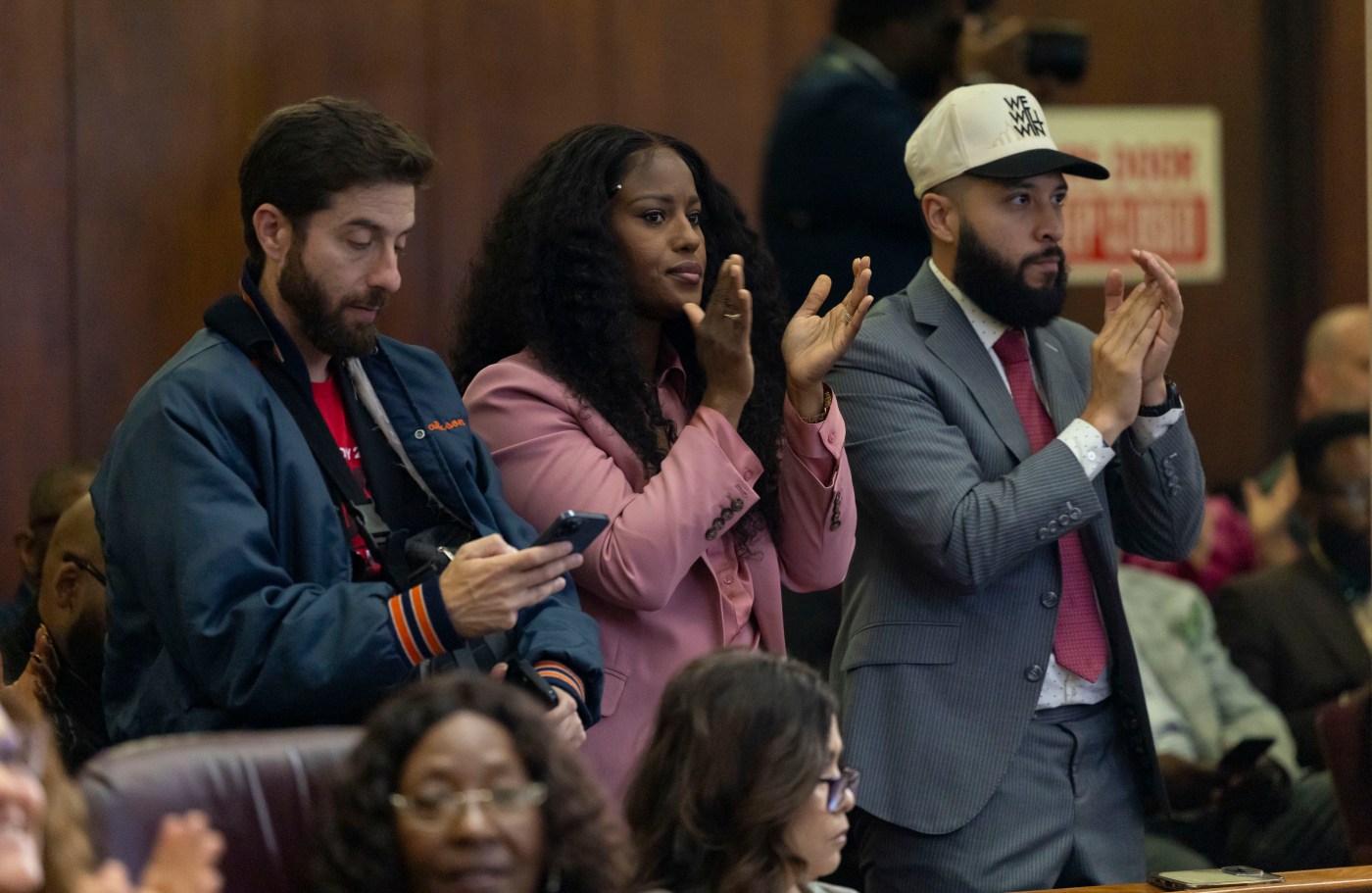
Representative Driskell, speaking earlier this month, echoed these concerns. “The harm that these proposals would cause would not outweigh any potential benefits,” she said. She questioned the practical impact of the reforms, asking, “What firehouse would [Governor DeSantis] close in Tampa? What police station would he close in Orlando? What garbage collection would he stop in South Florida?”

Driskell warned that the proposals could leave small, rural counties struggling to fund basic services. “We’d basically be putting them in a situation where they would be living in a welfare state,” she said. “They would be funded by larger counties.”

Democrats argue that genuine affordability relief should focus on property insurance, healthcare, and overall living costs—not just property taxes. Driskell added, “This all seems to be a distraction. We need to focus on real solutions.”

### What’s Next

The House’s property tax reform proposals will be assigned to committees in the coming weeks, with debates expected to begin early in the 2026 session.
https://www.wptv.com/news/state/florida-house-rolls-out-sweeping-slate-of-property-tax-proposals-for-2026-ballot

Healthcare Triangle files to sell 1.46M shares of common stock for holders

Healthcare Triangle files to sell 1. 46M shares of common stock for holders Oct. 16, 2025 4: 16 PM ETHealthcare Triangle, Inc. filed to sell 1. 46M shares of common stock for holders. This prospectus is not an offer to sell. Filing Recommended For You More Trending News About HCTI Stock SymbolLast Price% Chg 1D 5D 1M 6M 1Y 5Y 10Y Market Cap PE Yield Rev Growth (YoY) Short Interest Prev. Close Related Stocks SymbolLast Price% ChgHCTI–Healthcare Triangle, Inc. Trending Analysis Trending News.
https://seekingalpha.com/news/4504997-healthcare-triangle-files-to-sell-146m-shares-of-common-stock-for-holders?utm_source=feed_news_all&utm_medium=referral&feed_item_type=news

No One Should Be Forced to Conform to the Views of the State

Should You Think Twice Before Posting a Protest Flyer on Your Instagram Story?

Or feel pressure to delete that bold JD Vance meme you shared? Now imagine that you could get kicked out of the country—potentially losing your job or education—based on the Trump administration’s dislike of your views on social media.

That threat to free expression and dissent is happening right now, but we won’t let it stand.

“…they’re not just targeting individuals—they’re targeting the very idea of freedom itself.”

Lawsuit Against Viewpoint-Based Surveillance and Suppression

The Electronic Frontier Foundation (EFF) and co-counsel are representing the United Automobile Workers (UAW), Communications Workers of America (CWA), and American Federation of Teachers (AFT) in a lawsuit against the U.S. State Department and Department of Homeland Security. The suit challenges their viewpoint-based surveillance and suppression of noncitizens’ First Amendment-protected speech online.

The lawsuit asks a federal court to stop the government’s unconstitutional surveillance program, which has silenced both citizens and noncitizens. It has even hindered unions’ ability to associate and communicate with their members.

Press Release | Full Complaint in UAW v. State Department

Targeting the Idea of Freedom

“When they spy on, silence, and fire union members for speaking out, they’re not just targeting individuals—they’re targeting the very idea of freedom itself,” said UAW President Shawn Fain.

The Trump administration built this mass surveillance program to monitor the constitutionally protected online speech of noncitizens lawfully present in the U.S. The program uses AI and automated technologies to scour social media and other online platforms to identify and punish individuals who express viewpoints the government considers “hostile” to “our culture” and “our civilization.”

But make no mistake: no one should be forced to conform to the views of the state.

The Foundation of Democracy

Your free expression and privacy are fundamental human rights, and democracy crumbles without them. We have an opportunity to fight back, but we need you.

EFF’s team of lawyers, activists, researchers, and technologists have been on a mission to protect your freedom online since 1990—and we’re just getting started.

Donate and become a member of EFF today. Your support helps protect crucial rights, online and offline, for everyone.

https://www.eff.org/deeplinks/2025/10/no-one-should-be-forced-conform-views-state

Jake Haro, father to missing baby Emmanuel, pleads guilty to murder in child’s death

The father of missing baby Emmanuel Haro has pled guilty to murder in Riverside County.

Jake Haro entered a guilty plea to second-degree murder in the death of his 7-month-old son, Emmanuel. This development comes several weeks after the boy’s parents falsely reported him missing in Riverside County.

Haro appeared in a Riverside courtroom on Thursday, where he changed his plea from not guilty to guilty. In addition to the murder charge, he also pled guilty to filing a false police report and assault of a child under 8, according to the Riverside County District Attorney’s Office.

The 32-year-old Haro was arrested alongside Emmanuel’s mother, Rebecca Haro, 41, in connection with the boy’s death in August. Initially, the couple claimed that Emmanuel had been kidnapped after an assailant attacked Rebecca Haro. However, that story was later proven false.
https://www.latimes.com/california/story/2025-10-16/jake-haro-father-to-baby-emmanuel-pleads-guilty

Chris Hansen Joins ICE in Capture of Transgender Illegal Accused of Assaulting Two Boys [WATCH]

Journalist and “Takedown” host Chris Hansen recently joined Immigration and Customs Enforcement (ICE) agents during an enforcement operation, as featured on Jesse Watters Primetime. The collaboration between Hansen’s investigative team and ICE’s Enforcement and Removal Operations (ERO) targets illegal aliens who have committed crimes against minors.

During one such operation in San Diego, agents arrested a transgender illegal alien identified as Diana Devon-Richardson. Devon-Richardson is accused of sexually assaulting two teenage boys while babysitting. Video footage from the ride-along shows Hansen asking the suspect, “Do you know why they decided to pick you up today?” Devon-Richardson responded, “I don’t know. I was on my way to an appointment for a new apartment, and they jumped out of nowhere. I wasn’t even paying attention. I was on my way to get to Starbucks.”

Watters played the clip during his show and said, “Chris Hansen did a ride-along and caught a wild one, a trans illegal. Meet Diana Devon-Richardson. He allegedly sexually assaulted two young boys while he was babysitting. Hansen nabbed him getting a pumpkin spice at Starbucks.”

When questioned about the allegations, Devon-Richardson’s dismissive reply was, “Nothing. They were rich.” Hansen later corrected these claims during his Fox News interview.

“First of all, it wasn’t 32 years ago. It was 20 years ago when Deanna was Devon, living in Maryland, and was convicted of sexually assaulting two teen boys. He was babysitting, convicted, did time, had some other trouble with the law, transitioned into his current identity, and was living in San Diego without registering as a sex offender. I’m sorry. You’re here illegally. It’s time to go,” Hansen stated.

Devon-Richardson was taken into ICE custody for violating federal law by failing to register as a sex offender and for remaining in the United States illegally.

Hansen shared with Watters that ICE has recently intensified efforts to arrest convicted predators through these operations. “In the last month, we have caught 45 predators seeking to exploit children. Seven of those were part of a new investigative series with ICE-E-R-O. They go out after these people who are here illegally but have also been convicted of crimes against children,” he explained.

He recounted a case involving a convicted sex offender from Mexico living next to a daycare center and only three blocks from a school. “As we’re doing this, anti-ICE protesters are rallying outside ICE headquarters with no idea what we just did,” Hansen remarked.

Watters pointed out the irony of the protests, saying, “So they don’t like ICE next to schools.” Hansen responded, “But it’s okay to have a registered sex offender next door to a daycare facility.”

Hansen praised ICE officers for their dedication and professionalism. “They are very happy to have their hard work shown. These are dedicated men and women who are trying to get criminals out of this country,” he said.

Closing the segment, Watters emphasized the seriousness of such offenses. “If you’re accused of having sex with a kid and you’re in this country illegally, you’re going home,” he concluded.
https://www.lifezette.com/2025/10/chris-hansen-joins-ice-in-capture-of-transgender-illegal-accused-of-assaulting-two-boys-watch/

Douglas County commissioners approve land swap for Zebulon Regional Sports Complex

DOUGLAS COUNTY, Colo. — The Douglas County Board of County Commissioners unanimously approved a crucial land exchange on Tuesday, bringing Zebulon, a mega sports complex planned for northwest Douglas County, one step closer to reality.

The approval allows the county to acquire 46.5 acres from Sterling Ranch developers. In exchange, Sterling Ranch will receive 23.8 acres of county-owned land designated for commercial development.

The project’s first phase will transform vacant land near Moore and Waterton roads into a regional sports facility featuring hockey rinks, gyms, soccer fields, and baseball fields. Notably, the site previously housed a DuPont dynamite factory.

In 2022, the Colorado Department of Public Health and Environment (CDPHE) approved prior remediation efforts and confirmed that the site poses no environmental risks.

Currently, the county is in discussions with more than 50 private entities interested in participating in the project.

Read the full story from our partner at denver7.com.

For more Colorado news, sign up for our daily Your Morning Dozen email newsletter.
https://www.denverpost.com/2025/10/16/douglas-county-commissioners-approve-land-swap-for-zebulon-regional-sports-complex/

Graham Platner dismisses old Reddit posts as ‘stupid joke comments’

U.S. Senate candidate Graham Platner is disavowing a series of now-deleted social media posts in which he criticized police and said that white rural Americans “actually are” racist and stupid.

Platner, a veteran and oyster farmer from Hancock County, is running to challenge Sen. Susan Collins. His Reddit posts from 2020 and 2021 were resurfaced this week by CNN, which reported that they were deleted prior to Platner’s campaign launch in August.

In an interview with the Press Herald Thursday, Platner said the posts came from a time when he was disillusioned and angry, and expressed those sentiments online. He said the comments don’t reflect who he is today.

“A lot of it isn’t even things I believed then,” Platner said. “A lot of them are just stupid joke comments. I look back now and I don’t mean to be flippant, but it was just dumb stuff on the internet and when I stopped being lonely and isolated I didn’t use that as an outlet anymore.”

In one since-removed post from 2020, Platner responded to a thread titled “White people aren’t as racist or stupid as Trump thinks” by writing, “Living in white rural America, I’m afraid to tell you they actually are.”

In another comment from 2021, Platner responded in a thread about a Black army lieutenant who was held at gunpoint and pepper-sprayed by police during a traffic stop. One Reddit user wrote, “Bastards. Cops are bastards,” to which Platner replied, “All of them, in fact.”

Other posts addressed Platner’s political views and how his military service reshaped his perspective. Platner served three deployments to Iraq with the Marine Corps and was deployed to Afghanistan with the Army National Guard before settling in Sullivan, where he grew up.

In one post, he reflected on his life after the military, saying he was “a vegetable growing, psychedelics taking socialist these days. After the war, I’ve pretty much stopped believing in any of the patriotic nonsense that got me there in the first place, and am a firm believer that the best thing a person can do is help their neighbors and live a loving life.”

Platner is a leading contender for the Democratic nomination to challenge Collins. Governor Janet Mills, who is finishing up her second term, announced Tuesday that she is also running.

This story will be updated.
https://www.pressherald.com/2025/10/16/graham-platner-dismisses-old-reddit-posts-as-stupid-joke-comments/

CPS gets $522 million boost from Mayor Brandon Johnson’s budget proposal

Mayor Brandon Johnson’s new budget proposal recommends that the city declare a historic surplus of funds from special taxing districts, shoring up the finances of Chicago Public Schools (CPS) for the academic year.

The draft budget, unveiled Thursday, calls for the city to draw $1 billion from its Tax Increment Financing districts, or TIFs. More than half of that money is slated for CPS, covering the $379 million the district already anticipated and a controversial $175 million municipal pension payment.

This move marks a rare victory for CPS, allowing school officials to maintain their August spending plan—which relied heavily on TIF money—and spare classrooms from deeper cuts.

### Understanding TIF Funds and Surplus

The pooled funds from TIF districts—taxing areas drawn around the city—are intended for local development projects. However, when the TIFs expire or are declared to have a surplus, meaning there is an excess of funds not obligated to specific projects, the money is disbursed across local government bodies. CPS receives roughly 52% of the cut, while the city receives 23%. This year, that amounts to a potential $522 million for the district.

Before the Chicago Board of Education passed the district’s $10.25 billion budget in late August, school officials said they had received assurances from City Council that a declared TIF surplus would allocate at least $379 million to CPS. But questions remained over whether that record surplus would actually materialize, and the district lacked a clear backup plan.

CPS had also pledged to help the city cover the $175 million municipal pension payment for nonteaching employees—but only “contingent on additional revenue.” This payment had become a major point of contention. More than half of the recipients of the Municipal Employees’ Annuity and Benefit Fund are district staff. Up until 2020, the city footed the bill as required by state law. However, Johnson and his predecessor, former Mayor Lori Lightfoot, shifted the responsibility to CPS.

### Political Fallout and Budget Impact

The political back-and-forth over the pension payment contributed to the resignation of the entire school board last year and the subsequent firing of former CPS CEO Pedro Martinez. Johnson’s Thursday budget proposal offers some closure to this protracted debate—at least for now. It remains unclear who will assume liability in future budget seasons.

Chicago Board of Education member Michilla Blaise lauded the move at a Thursday morning press conference, noting it came from direct negotiations between some board members and the mayor’s office.

“The CPS budget passed in August was built on hope and balanced on paper, but not in reality,” Blaise said. “This commitment prevents any mid-year cuts and allows us to maintain stability in our classrooms. It also provides essential support for the pensions of CPS non-teaching personnel—the front line staff who clean our buildings, who feed our children and support our students who have the greatest needs.”

### Covering Additional Funding Gaps

The potential TIF revenue would also cover a canceled $8 million federal grant. Last month, the U.S. Department of Education’s Office for Civil Rights announced it would withhold the funds after CPS refused to end its Black Student Success Program, which Trump administration officials claimed violates federal antidiscrimination laws.

Blaise said the extra revenue helps maintain those inclusivity programs facing government criticism. “Despite pressure from the White House, this agreement is essentially Trump-proofing the CPS budget,” she said.

### Next Steps and Reactions

City Council must approve Johnson’s budget by December 31. Aldermen could still object to declaring such a large TIF surplus, as the funds are intended to drive redevelopment in their wards. However, in August, the majority signed a letter committing to a substantial surplus to help CPS.

Educational nonprofit Kids First Chicago applauded the city yesterday for the potential bump in funding but also advocated that the district not sign any intergovernmental agreement committing funds to Chicago before the TIF surplus amount is decided on or a budget is passed.

Though the prospective funds are a win, the city’s final budget is not yet set in stone, Kids First Chicago’s Chief of Policy Hal Woods told the Tribune ahead of Thursday’s meeting. “It’s going to take negotiations to see how much TIF surplus is ultimately swept. But certainly, we’re celebrating today,” Woods said Wednesday afternoon.

Some budget watchdogs, such as the Civic Federation, argue that relying on TIF surplus money is an unsustainable solution that could exacerbate the city’s structural deficit. Still, recent Chicago mayors have declared increasingly large surpluses to plug budget gaps.

In 2014, the city declared a TIF surplus of $65 million, with CPS receiving a $36 million cut. By 2025, the total surplus amount topped a record $712 million. CPS received $379 million of those funds, which accounted for 4% of its budget.

### CPS’s Continuing Fiscal Challenges

The district continues to grapple with fiscal woes after years of borrowing to cover current expenses and outstanding debt. CPS has about $9.1 billion in long-term debt and $450 million of short-term debt to be paid down over time. Its bond rating is considered “junk” by three of four rating agencies, making borrowing more expensive.

Expenses will only grow as CPS funds the Chicago Teachers Union’s new contract, set to cost $1.5 billion over four years.

Chicago Tribune’s A.D. Quig contributed to this report.
https://www.chicagotribune.com/2025/10/16/proposed-mayor-johnson-budget-cps/

Branching in a Sapling Monorepo

Sapling: Solving Branching Challenges for Meta’s Monorepo

Sapling is a scalable, user-friendly, and open-source source control system that powers Meta’s monorepo. At the GitMerge 2024 conference, we discussed the complexities of designing and implementing branching workflows for large monorepos. These workflows involve challenging tradeoffs between scalability and the developer experience.

Following the conference, we designed, implemented, and open sourced our monorepo branching solution within Sapling. While the code is already open source, this article shares valuable learnings on:

– How we resolved scalability and developer experience tradeoffs in the design and implementation.
– The problems this solution addresses.
– Feedback we received from other developers at Meta.

The key technical insight is that two workflows — non-mergeable full-repo branching and mergeable directory branching — solved all branching-related problems for the wide and diverse set of products built at Meta. We hope Sapling’s open-source code and the insights shared here will benefit the wider industry and open source communities.

### How Source Control Is Handled at Meta

At Meta, engineering teams work within a large monorepo with a single main branch. This approach enables:

– Unified dependency management
– Large-scale refactoring
– Easier collaboration
– Code reuse across projects

However, managing multiple versions of code within this setup presents challenges.

In multi-repo environments, teams typically rely on repository branches to manage different versions. Source control tools like cherry-pick and merge help manage differences between versions effectively.

In contrast, in a monorepo, repository branches are less effective. Branches affect the whole repository, so creating a branch means unrelated projects and dependencies remain frozen and quickly become stale. We refer to this approach as *full-repo branching.*

For workflows that do not require merging back to the main branch — such as product releases where the branch ceases to exist after release — full-repo branching works well. Sapling supports this workflow with the `sl bookmark` family of commands.

However, for product development workflows that require merging back to the main branch, full-repo branching is not scalable. This is because full-repo merges create merge commits with multiple parents, producing a wide (high branching factor) and non-linear commit graph.

In large monorepos, this non-linear history causes performance problems for operations like `sl log` and `sl blame`. Maintaining a mostly linear commit graph, where most commits have a single parent, is crucial for keeping these operations fast for all monorepo users, including those not using branches.

The core limitation is that full-repo branches are all-or-nothing. You cannot create a branch limited to the part of the codebase you own. If you need to patch legacy code or maintain a custom variant for a project, branching forks the entire repository, which is inefficient and cumbersome.

A common workaround was for teams to copy their code into multiple directories. However, this causes loss of standard developer tooling for branch management, resulting in duplicated effort and error-prone manual patching between directories.

### Directory Branching: Sapling’s Monorepo Branching Solution

To address these challenges, we introduced a new set of source control tools in Sapling to implement *directory branching*. This approach bridges the gap between multiple repository branches and maintaining code copies in separate directories.

With directory branching, you can treat directories within the monorepo much like traditional repository branches. You:

– Create branches by copying the code
– Maintain the code by cherry-picking and merging changes between directories
– View history for each directory, including all copies and merges

Crucially, while directory branches support merging between directories, at the repository commit graph level they appear as linear commits. This resolves scalability challenges associated with repo-level merge commits while still providing merging workflows at the directory level.

### How Directory Branching Is Implemented in Sapling

Directory branching in Sapling relies on a series of operations centered around the `sl subtree` command.

– To branch a directory, you use `sl subtree copy` to copy a directory or file — either at the current version or from any historical revision — to a new location in the repository.
– Sapling records metadata in the commit to track the source directory, source revision, and copy relationship, allowing complete recovery of the file histories in the new branch.
– If the code you want to branch is not yet in the monorepo, you can use `sl subtree import` to create a directory branch from an external repository.

Once you have a directory branch, you can use:

– `sl subtree graft` and
– `sl subtree merge`

to cherry-pick or merge changes between directory branches. These commands use the stored metadata to reconstruct directory relationships and perform three-way merges scoped to specific directory content.

The merge algorithm locates the common ancestor of the two directory branches (using the copy metadata) and applies a standard three-way merge as done for traditional repository merges, but limited to the directory content.

### Build System and Developer Tooling Integration

One major advantage of directory branching is that the latest versions of all directory branches are visible simultaneously. This means continuous integration (CI) can test against multiple branches with a single checkout, and teams can be confident no hidden old branches are unexpectedly still in use.

At Meta, we use Buck2 as our build system. When a component depends on another component using directory branching, we use Buck config modifiers (i.e., running `buck build` with the `-m` flag) to select the branch being built.

A downside of directory branching is that code searches may return multiple hits across branches. While it is important to recognize the searched-for code appears in multiple places, this can complicate browsing if results from multiple branches intermix. Advanced code search systems capable of ranking results can mitigate this issue.

### User Feedback on Directory Branching

Directory branching has been widely adopted within Meta by diverse engineering teams to help manage multiple versions of code effectively.

Some teams even combine full-repo branching and directory branching by freezing most of the monorepo on an old commit for stability, while using directory branching to merge changes for specific projects.

We identified three common reasons teams choose directory branching:

1. **Reducing CI costs or avoiding disruption:** Teams separate development and production versions of code, enabling better control over when changes deploy to production.

2. **Collaborative experimental changes:** Large groups collaborate over months on changes that might disrupt production. Directory branching offers better scalability than handling many stacked diffs to simulate a branch.

3. **Migrating from Git:** During migration, teams need equivalents of Git branches within the monorepo to complete consolidation. Directory branching provides this functionality without needing to consolidate all Git branches pre-migration.

Despite these exceptions, having a single version of code remains the monorepo’s default assumption. However, when one of the above scenarios applies, directory branching offers extensive branching workflows without sacrificing monorepo benefits.

### Future Work with Directory Branching

We are exploring leveraging directory branching to improve integration of Git repositories into the Sapling monorepo. Specifically, we plan a lightweight repository migration mechanism:

– Instead of committing all Git repository commits irreversibly into the monorepo history, we create a *soft link* to the external Git repository.
– Sapling can then load Git history on demand, lowering the barrier to entry for Git repositories joining the monorepo.
– This approach facilitates preliminary integrations without committing to migrating full history upfront.

This functionality will be available as an option with the `sl subtree import` command when working with external Git repositories.

Stay tuned — we will publish a dedicated article once we have more insights to share on this exciting advancement.

### Acknowledgements

Many contributors across Meta’s Source Control, Developer Experience, and Open Source teams helped design and implement directory branching in Sapling. We would like to thank:

Chris Cooper, George Giorgidze, Mark Juggurnauth-Thomas, Jon Janzen, Pingchuan Liu, Muir Manders, Mark Mendoza, Jun Wu, and Zhaolong Zhu.

To learn more about Meta Open Source, please visit our [website](https://opensource.fb.com).
https://engineering.fb.com/2025/10/16/developer-tools/branching-in-a-sapling-monorepo/


Exit mobile version
Sitemap Index