No One Should Be Forced to Conform to the Views of the State

Should You Think Twice Before Posting a Protest Flyer on Your Instagram Story?

Or feel pressure to delete that bold JD Vance meme you shared? Now imagine that you could get kicked out of the country—potentially losing your job or education—based on the Trump administration’s dislike of your views on social media.

That threat to free expression and dissent is happening right now, but we won’t let it stand.

“…they’re not just targeting individuals—they’re targeting the very idea of freedom itself.”

Lawsuit Against Viewpoint-Based Surveillance and Suppression

The Electronic Frontier Foundation (EFF) and co-counsel are representing the United Automobile Workers (UAW), Communications Workers of America (CWA), and American Federation of Teachers (AFT) in a lawsuit against the U.S. State Department and Department of Homeland Security. The suit challenges their viewpoint-based surveillance and suppression of noncitizens’ First Amendment-protected speech online.

The lawsuit asks a federal court to stop the government’s unconstitutional surveillance program, which has silenced both citizens and noncitizens. It has even hindered unions’ ability to associate and communicate with their members.

Press Release | Full Complaint in UAW v. State Department

Targeting the Idea of Freedom

“When they spy on, silence, and fire union members for speaking out, they’re not just targeting individuals—they’re targeting the very idea of freedom itself,” said UAW President Shawn Fain.

The Trump administration built this mass surveillance program to monitor the constitutionally protected online speech of noncitizens lawfully present in the U.S. The program uses AI and automated technologies to scour social media and other online platforms to identify and punish individuals who express viewpoints the government considers “hostile” to “our culture” and “our civilization.”

But make no mistake: no one should be forced to conform to the views of the state.

The Foundation of Democracy

Your free expression and privacy are fundamental human rights, and democracy crumbles without them. We have an opportunity to fight back, but we need you.

EFF’s team of lawyers, activists, researchers, and technologists have been on a mission to protect your freedom online since 1990—and we’re just getting started.

Donate and become a member of EFF today. Your support helps protect crucial rights, online and offline, for everyone.

https://www.eff.org/deeplinks/2025/10/no-one-should-be-forced-conform-views-state

Branching in a Sapling Monorepo

Sapling: Solving Branching Challenges for Meta’s Monorepo

Sapling is a scalable, user-friendly, and open-source source control system that powers Meta’s monorepo. At the GitMerge 2024 conference, we discussed the complexities of designing and implementing branching workflows for large monorepos. These workflows involve challenging tradeoffs between scalability and the developer experience.

Following the conference, we designed, implemented, and open sourced our monorepo branching solution within Sapling. While the code is already open source, this article shares valuable learnings on:

– How we resolved scalability and developer experience tradeoffs in the design and implementation.
– The problems this solution addresses.
– Feedback we received from other developers at Meta.

The key technical insight is that two workflows — non-mergeable full-repo branching and mergeable directory branching — solved all branching-related problems for the wide and diverse set of products built at Meta. We hope Sapling’s open-source code and the insights shared here will benefit the wider industry and open source communities.

### How Source Control Is Handled at Meta

At Meta, engineering teams work within a large monorepo with a single main branch. This approach enables:

– Unified dependency management
– Large-scale refactoring
– Easier collaboration
– Code reuse across projects

However, managing multiple versions of code within this setup presents challenges.

In multi-repo environments, teams typically rely on repository branches to manage different versions. Source control tools like cherry-pick and merge help manage differences between versions effectively.

In contrast, in a monorepo, repository branches are less effective. Branches affect the whole repository, so creating a branch means unrelated projects and dependencies remain frozen and quickly become stale. We refer to this approach as *full-repo branching.*

For workflows that do not require merging back to the main branch — such as product releases where the branch ceases to exist after release — full-repo branching works well. Sapling supports this workflow with the `sl bookmark` family of commands.

However, for product development workflows that require merging back to the main branch, full-repo branching is not scalable. This is because full-repo merges create merge commits with multiple parents, producing a wide (high branching factor) and non-linear commit graph.

In large monorepos, this non-linear history causes performance problems for operations like `sl log` and `sl blame`. Maintaining a mostly linear commit graph, where most commits have a single parent, is crucial for keeping these operations fast for all monorepo users, including those not using branches.

The core limitation is that full-repo branches are all-or-nothing. You cannot create a branch limited to the part of the codebase you own. If you need to patch legacy code or maintain a custom variant for a project, branching forks the entire repository, which is inefficient and cumbersome.

A common workaround was for teams to copy their code into multiple directories. However, this causes loss of standard developer tooling for branch management, resulting in duplicated effort and error-prone manual patching between directories.

### Directory Branching: Sapling’s Monorepo Branching Solution

To address these challenges, we introduced a new set of source control tools in Sapling to implement *directory branching*. This approach bridges the gap between multiple repository branches and maintaining code copies in separate directories.

With directory branching, you can treat directories within the monorepo much like traditional repository branches. You:

– Create branches by copying the code
– Maintain the code by cherry-picking and merging changes between directories
– View history for each directory, including all copies and merges

Crucially, while directory branches support merging between directories, at the repository commit graph level they appear as linear commits. This resolves scalability challenges associated with repo-level merge commits while still providing merging workflows at the directory level.

### How Directory Branching Is Implemented in Sapling

Directory branching in Sapling relies on a series of operations centered around the `sl subtree` command.

– To branch a directory, you use `sl subtree copy` to copy a directory or file — either at the current version or from any historical revision — to a new location in the repository.
– Sapling records metadata in the commit to track the source directory, source revision, and copy relationship, allowing complete recovery of the file histories in the new branch.
– If the code you want to branch is not yet in the monorepo, you can use `sl subtree import` to create a directory branch from an external repository.

Once you have a directory branch, you can use:

– `sl subtree graft` and
– `sl subtree merge`

to cherry-pick or merge changes between directory branches. These commands use the stored metadata to reconstruct directory relationships and perform three-way merges scoped to specific directory content.

The merge algorithm locates the common ancestor of the two directory branches (using the copy metadata) and applies a standard three-way merge as done for traditional repository merges, but limited to the directory content.

### Build System and Developer Tooling Integration

One major advantage of directory branching is that the latest versions of all directory branches are visible simultaneously. This means continuous integration (CI) can test against multiple branches with a single checkout, and teams can be confident no hidden old branches are unexpectedly still in use.

At Meta, we use Buck2 as our build system. When a component depends on another component using directory branching, we use Buck config modifiers (i.e., running `buck build` with the `-m` flag) to select the branch being built.

A downside of directory branching is that code searches may return multiple hits across branches. While it is important to recognize the searched-for code appears in multiple places, this can complicate browsing if results from multiple branches intermix. Advanced code search systems capable of ranking results can mitigate this issue.

### User Feedback on Directory Branching

Directory branching has been widely adopted within Meta by diverse engineering teams to help manage multiple versions of code effectively.

Some teams even combine full-repo branching and directory branching by freezing most of the monorepo on an old commit for stability, while using directory branching to merge changes for specific projects.

We identified three common reasons teams choose directory branching:

1. **Reducing CI costs or avoiding disruption:** Teams separate development and production versions of code, enabling better control over when changes deploy to production.

2. **Collaborative experimental changes:** Large groups collaborate over months on changes that might disrupt production. Directory branching offers better scalability than handling many stacked diffs to simulate a branch.

3. **Migrating from Git:** During migration, teams need equivalents of Git branches within the monorepo to complete consolidation. Directory branching provides this functionality without needing to consolidate all Git branches pre-migration.

Despite these exceptions, having a single version of code remains the monorepo’s default assumption. However, when one of the above scenarios applies, directory branching offers extensive branching workflows without sacrificing monorepo benefits.

### Future Work with Directory Branching

We are exploring leveraging directory branching to improve integration of Git repositories into the Sapling monorepo. Specifically, we plan a lightweight repository migration mechanism:

– Instead of committing all Git repository commits irreversibly into the monorepo history, we create a *soft link* to the external Git repository.
– Sapling can then load Git history on demand, lowering the barrier to entry for Git repositories joining the monorepo.
– This approach facilitates preliminary integrations without committing to migrating full history upfront.

This functionality will be available as an option with the `sl subtree import` command when working with external Git repositories.

Stay tuned — we will publish a dedicated article once we have more insights to share on this exciting advancement.

### Acknowledgements

Many contributors across Meta’s Source Control, Developer Experience, and Open Source teams helped design and implement directory branching in Sapling. We would like to thank:

Chris Cooper, George Giorgidze, Mark Juggurnauth-Thomas, Jon Janzen, Pingchuan Liu, Muir Manders, Mark Mendoza, Jun Wu, and Zhaolong Zhu.

To learn more about Meta Open Source, please visit our [website](https://opensource.fb.com).
https://engineering.fb.com/2025/10/16/developer-tools/branching-in-a-sapling-monorepo/

Another “free” phone deal proves too good to be true

**Verizon vs. AT&T: The Truth Behind the “Free” Google Pixel 10 Pro Ad**

A recent dispute between telecom giants Verizon and AT&T shines a light on the confusing tactics often used in carrier advertising. Verizon faced criticism from AT&T over a “free” Google Pixel 10 Pro commercial that wasn’t entirely accurate. In response, Verizon quietly pulled the ad before any formal ruling was made, effectively ending the controversy.

### What’s the Deal with This “Free” Phone Ad?

Anyone who’s shopped for a new phone knows that carrier deals can be complicated—especially when they throw around the word “free.” This time, Verizon found itself caught in the crossfire.

AT&T filed a challenge with the National Advertising Division (NAD) over Verizon’s commercial for the Google Pixel 10 Pro. According to AT&T, the ad implied you could get the latest Pixel for free on any Verizon plan. The catch? That wasn’t true. The offer was actually only available to customers signing up for Verizon’s most expensive plan—the Unlimited Ultimate tier.

Before the NAD, an advertising watchdog, could evaluate the complaint, Verizon notified them that the commercial was permanently discontinued. As a result, the NAD closed the case, which, for compliance purposes, carries the same weight as a ruling against Verizon.

Although the ad is now officially pulled, for now, you can still watch the commercial [here](#).

### Why This Carrier Spat Matters to You

This isn’t just about two telecom behemoths bickering; it’s a prime example of why you need to be cautious with carrier promotions.

The word “free” almost always comes with a hefty asterisk.

While AT&T stepped in as the “hero” calling out a competitor, the truth is—they run very similar promotions themselves. These “free phone” deals usually work by applying monthly bill credits over a 24 or 36-month contract. You’re required to remain on a specific, often premium, unlimited plan throughout the entire period.

If you switch carriers or downgrade your plan early, you will owe the remaining balance on the “free” phone. It’s a classic lock-in strategy used by all major carriers to keep customers on their most profitable plans.

So, while Verizon’s ad may have been misleading in its vagueness, the practice itself is standard across the industry.

### Do Wireless Carriers Need a Watchdog Like the NAD?

– Yes, otherwise they’d go rogue taking advantage of consumers
– No, it should be up to consumers to catch false claims

### Always Read the Fine Print

This kind of situation is just another typical day in the wireless industry. Carrier advertising is often designed to be just enticing enough to reel you in, leaving critical details buried in the fine print.

Verizon pulling the ad was the right move, but it’s unfortunate it took a legal challenge from a direct competitor to push it through.

### Our Take

My personal advice? Treat every “free” phone offer with a healthy dose of skepticism. Before signing any contract, calculate the total cost over the entire period—including the expensive monthly plan you’re committing to.

Many times, buying the phone outright (unlocked) and finding a more affordable plan actually saves you money long-term.

This incident serves as a reminder: when it comes to carrier deals, you have to be your own best advocate.

### Related Stories

– **“Iconic Phones” is Coming This Fall!**
Relive the most iconic and unforgettable phones from the past 20 years! *Iconic Phones: Revolution at Your Fingertips* is a beautifully illustrated coffee table book set to launch in just a couple of months. Featuring the stories of more than 20 beloved devices, it takes you on a nostalgic journey through the mobile revolution that transformed our world. Don’t miss out—[sign up today](#) to lock in your early-bird discount!

– **Buy 3 Months, Get 3 Free with Visible+ Pro**
Save up to $135 on Verizon’s fastest 5G plan. We may earn a commission if you make a purchase. [Check Out The Offer](#)

– **FCC Approves Cingular’s Purchase of AT&T Wireless**
Stay tuned for updates on this significant industry development.

Stay informed with the latest Verizon news by subscribing to our newsletter. By subscribing, you agree to our terms and conditions and privacy policy.
https://www.phonearena.com/news/another-free-phone-deal-proves-too-good-to-be-true_id174935

How ByteDance Made China’s Most Popular AI Chatbot

Your Kindle Can Speak Multiple Languages

Every Kindle works in multiple languages and can download books in just about any tongue. Here’s how to take advantage of this versatile feature and expand your reading horizons.

How China Is Hoping to Attract Tech Talent

In this episode of Uncanny Valley, we uncover how America’s new $100,000 H-1B golden visa has thrown tech workers and their employers into chaos. The shifting landscape for foreign tech talent in the US is prompting reactions worldwide.

China Rolls Out Its First Talent Visa as the US Retreats on H-1Bs

The Chinese government unveiled a program to woo foreign talent just as the US cracked down on H-1Bs with a $100,000 fee. However, this move immediately provoked a xenophobic backlash, stirring debate about globalization and talent migration.

China Is Leading the World in the Clean Energy Transition. Here’s What That Looks Like

China spends like no one else on renewables and has reshaped the global market. We explore what this massive investment means for the future of clean energy and whether it will be enough to secure a sustainable global transition.

Save With Our KitchenAid Promo Codes for October 2025

Save on every purchase with top KitchenAid coupons, including 20% off stand mixers and attachments. Check out our latest deals and get the best prices on your favorite kitchen appliances this October.

The City That Made the World Fall for a Monster

Discover how Hong Kong gave rise to Labubu and a designer toy movement that is now shaping global culture. Dive into the fascinating story behind this plushie monster phenomenon.

Europe Pledges $600 Million for Clean Energy Projects in Africa

The EU’s Global Gateway plan is challenging China’s Belt and Road Initiative by providing funding that will expand access to electricity across Africa. This ambitious effort aims to influence development and foster sustainable energy growth on the continent.

10% Off Dell Coupon Code for October 2025

Get 10% off with a verified Dell promo code, plus take advantage of today’s coupons offering up to $650 off desktops, laptops, monitors, and all things tech. Upgrade your gear without breaking the bank.

What Is Google One, and Should You Subscribe?

If you use Google’s apps and AI frequently, it’s worth looking at Google One—an all-inclusive service offering expanded storage and other benefits. We break down the plans and pricing to help you decide if it’s right for you.

A Journey Into the Heart of Labubu

I made an epic trek across four countries to answer one question: Why is the world going mad for a plushie monster? Join me as I explore the cultural impact and the fanfare surrounding Labubu.

Chewy Promo Codes: $20 Off in October 2025

Explore Chewy coupon codes for great discounts this October, including a $20 gift card with a purchase of $49 or more. Take advantage of these offers to treat your pets while saving money.

https://www.wired.com/story/bytedance-doubao-chatbot-popularity/

2025 Worldwide Sales Comparison Charts Through August – Switch 2 vs PS5 vs Xbox Series X|S vs Switch

**2025 Worldwide Sales Comparison Charts Through August: Switch 2 vs PS5 vs Xbox Series X|S vs Switch 1**
*Sales by William D’Angelo | Posted 59 minutes ago | 716 Views*

This article presents data representing the sales through to consumers and changes in sales performance of four current gaming platforms: Nintendo Switch 2, PlayStation 5, Xbox Series X|S, and the original Nintendo Switch. The comparison covers comparable periods from 2022 through 2025, offering insight into market trends and platform performance over the years.

**Year-to-Date Sales Comparison (Same Periods Covered):**
– 2022 (January to August 2022)
– 2023 (January to August 2023)
– 2024 (January to August 2024)
– 2025 (January to August 2025)

The data includes both total sales and market share for each console during these periods. Year-to-date sales for 2022, 2023, 2024, and 2025 are presented at the top of the table, followed by comparisons of 2025 sales versus 2024 and 2025 sales versus 2023. This layout provides an easy-to-view summary of all the key figures.

### Total Sales and Market Share for Each Year (Year-to-Date)

**Nintendo**
– *Nintendo Switch 2*: 8.16 million units sold year-to-date
– *Nintendo Switch 1*: 2.99 million units sold year-to-date, down year-on-year by 3.11 million units (-50.9%)

**Sony**
– *PlayStation 5*: 7.06 million units sold year-to-date, down year-on-year by 1.81 million units (-20.4%)

**Microsoft**
– *Xbox Series X|S*: 1.54 million units sold year-to-date, down year-on-year by 0.98 million units (-38.9%)

**Note:**
VGChartz estimates for 2025, 2023, and 2022 include 34 weeks through August, while estimates for 2024 include 35 weeks.

### About the Author

William D’Angelo is a lifelong and avid gamer who was first introduced to VGChartz in 2007. After years of supporting the site, he joined as a junior analyst in 2010. He progressed to lead analyst by 2012 and took over hardware estimates in 2017. William has also expanded his involvement in the gaming community by producing content on his own YouTube and Twitch channels.

You can follow William on Bluesky for more insights and updates.

*For more articles and detailed charts, stay tuned.*
https://www.vgchartz.com/article/465965/2025-worldwide-sales-comparison-charts-through-august-switch-2-vs-ps5-vs-xbox-series-xs-vs-switch/

Ancient underground freezer unearthed at South Korean castle

The 1,400-Year-Old ‘Bingo’ is the Oldest Known Facility of Its Kind

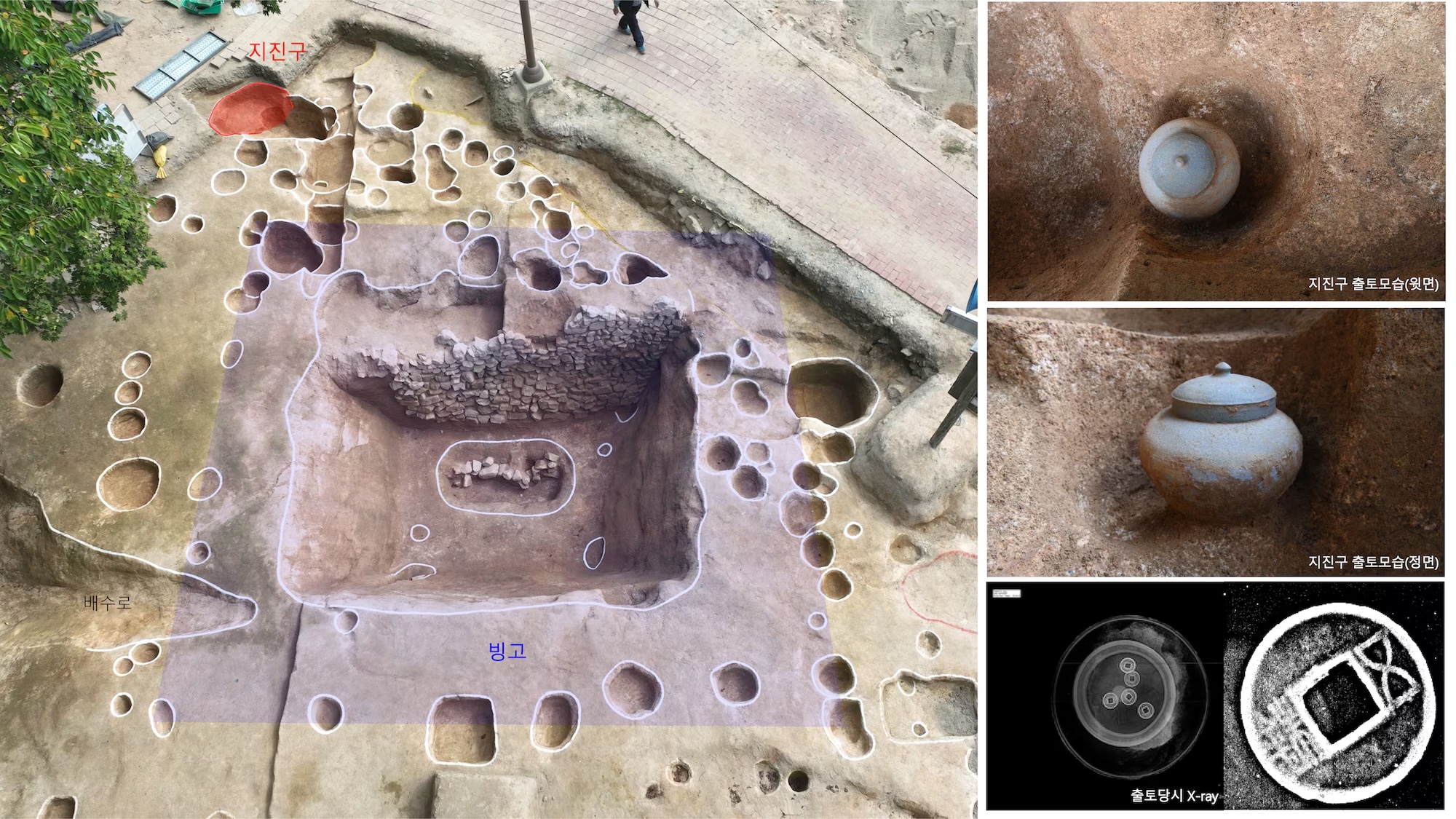
Archaeologists have unearthed an ancient underground freezer, known as a ‘bingo,’ at a historic castle site in South Korea. This remarkable discovery dates back approximately 1,400 years, making it the oldest known facility of its kind.

The bingo was used to store perishable food items, utilizing natural cooling from underground temperatures to preserve them long before the advent of modern refrigeration. This finding offers valuable insight into early preservation techniques and the ingenuity of past civilizations.

Located within the castle grounds, the structure highlights the advanced engineering and practical knowledge that existed during that period in Korean history.

The post Ancient underground freezer unearthed at South Korean castle appeared first on Popular Science.

https://www.popsci.com/science/ancient-freezer-south-korea/

Bitcoin Treasury Inflows Drop to Lowest Levels Since Mid-June 2023

TLDR Bitcoin treasury inflows fell to just 140 BTC per day, the lowest since June 2023. Institutional demand for Bitcoin slowed significantly after the October 6 price peak. About 25% of public Bitcoin treasury firms trade below their net asset value. Bitcoin’s price stabilization around $110,000 may be impacting institutional buying. Bitcoin treasuries, once seen as a major driver for Bitcoin’s market growth, have sharply reduced their purchases of the cryptocurrency in recent months. The sharp decline in daily inflows of Bitcoin to these firms indicates that the momentum seen earlier this year is waning, with many now questioning the sustainability of the digital asset treasury model. Institutional Demand for Bitcoin Drops Bitcoin digital asset treasuries (DATs) have seen a notable reduction in inflows, reflecting a significant cooling in institutional interest. The seven-day moving average of net daily inflows has dropped to 140 BTC, the lowest since mid-June. This marks a drastic decline from the peak in July, when inflows were as high as 8, 249 BTC, according to data from BitcoinTreasuries. net. In fact, recent daily activity has shown even weaker performance. Out of 15 days in October, 12 days recorded inflows of under 500 BTC, with several days experiencing no inflows at all. This trend suggests that the once-aggressive buying activity from institutional investors has significantly slowed down, possibly due to the current market conditions and uncertainty about Bitcoin’s future price movements. Price Stabilization and Market Consolidation Bitcoin’s price has also cooled after reaching an all-time high of over $126,000 on October 6. Currently, it has stabilized above the $110,000 mark, showing signs of market consolidation. According to market analysts, Bitcoin’s price has been range-bound since June, reflecting a balance between bullish optimism and profit-taking among investors. The stabilization of Bitcoin’s price could be playing a role in the decreased appetite for further acquisitions from firms holding digital asset treasuries. As the market experiences this phase of consolidation, the likelihood of significant price jumps in the short term appears to be decreasing, which may reduce the urgency for institutions to increase their holdings. Challenges Faced by Bitcoin Treasury Firms The business model behind Bitcoin treasuries relies heavily on borrowing fiat to acquire Bitcoin, betting that its price will continue to rise. However, this model faces several challenges, particularly the lack of inherent yield from Bitcoin itself. Unlike stocks or bonds, Bitcoin does not generate any regular income for its holders. Therefore, for companies that have borrowed funds to buy Bitcoin, the value of their holdings needs to appreciate significantly to justify the cost of the debt. For many digital asset treasury firms, this has resulted in a dilemma. They are exposed to potential market downturns and may face difficulties if Bitcoin’s price fails to continue rising. As a result, firms that once issued stock or debt to fund Bitcoin purchases now risk seeing their market valuations drop, especially as Bitcoin prices have shown signs of stabilizing or even declining. As NYDIG points out, the relationship between a firm’s net asset value (NAV) and its stock price is closely tied to Bitcoin’s price. A downtrend in Bitcoin could see firms’ market value fall below the value of the Bitcoin they hold. Market Sentiment and the Future of Digital Asset Treasuries While Bitcoin’s price recovery earlier in the year spurred a wave of institutional interest, the recent slowdown in treasury inflows may signal a shift in market sentiment. Moreover, some publicly traded Bitcoin treasury firms are now facing a situation where they trade below their NAV, meaning the value of their stock is less than the Bitcoin they hold. According to NYDIG, this development is concerning, as the premiums tied to Bitcoin’s price may evaporate in a market downturn. Approximately one in four of these publicly traded DATs now trade below their NAV, further highlighting the potential risks these firms face as Bitcoin’s market outlook remains uncertain. In the face of these challenges, it remains to be seen whether Bitcoin treasuries can continue to grow or if institutional interest in them will decline further. The recent reduction in inflows is a sign that firms may be reevaluating their strategies and waiting for clearer market signals before making further Bitcoin purchases.
https://coincentral.com/bitcoin-treasury-inflows-drop-to-lowest-levels-since-mid-june-2023/

Ethereum Adds 16K Developers in 2025, Yet Solana Steals All the Hype

Ethereum added 16,181 new developers from January to September 2025, bringing the total number of active developers on the platform to 31,869. Despite this significant growth, Solana managed to capture the industry narrative by adding 11,534 developers and achieving an impressive 83% year-over-year growth.

Meanwhile, Ethereum core developers earn a median salary of $140,000, which is reportedly 50-60% below current market rates.

The rapid expansion of both platforms highlights the competitive and evolving nature of the blockchain development landscape, with Solana gaining momentum even as Ethereum continues to grow steadily.

The post Ethereum Adds 16K Developers in 2025, Yet Solana Steals All the Hype appeared first on Cryptonews.
https://cryptonews.com/news/ethereum-adds-16k-developers-in-2025-yet-solana-steals-all-the-hype/

FMG mixes earth’s natural nuances into full-body porcelain stoneware project terrapura

FMG Creates Dialogue with Earth through TerraPura

FMG Fabbrica Marmi e Graniti introduces TerraPura, a full-body porcelain stoneware project that merges the ancient wisdom of the earth with contemporary technological precision. Launched for Cersaie 2025, TerraPura was conceived in Italy as part of FMG’s ongoing exploration of material authenticity and design performance.

Created using Full Body³ technology, TerraPura celebrates natural imperfection and timeless beauty through surfaces that are as durable as they are evocative. Whether applied in highly trafficked environments like restaurants, boutiques, or even outdoor spaces, TerraPura is designed to meet the demands of modern architecture while remaining deeply rooted in the earth’s original essence.

FMG’s Full Body³ Technology

Each TerraPura surface tells a geological story through fine veins, subtle variations, and sculptural grain. For the Italian ceramics company, these visual traces are not seen as flaws but as reflections and marks of nature’s own narrative. The result is a ceramic material that feels both ancient and new, familiar yet sophisticated, capable of stirring emotion while offering superior functional performance.

Made using FMG’s Full Body³ technology, TerraPura ensures total homogeneity between the surface and its inner body. This makes the material extremely resistant to wear, ideal for high-traffic areas such as public buildings, hospitality venues, and urban spaces.

Moreover, its consistent depth allows for creative edge treatments, adding versatility to both architectural and interior design applications.

TerraPura’s Modular Palette and Finishes

TerraPura offers a range of ten colors inspired by natural minerals and landscapes: Pura Bianco, Pura Antracite, Pura Rosa, Pura Avio, Pura Marrone, Pura Beige, Pura Grigio, Pura Greige, Pura Celeste, and Pura Argento. These tones give designers the freedom to compose harmonious environments or create bold contrasts, lending each project a distinct identity.

The palette’s subtle warmth and balance bring elegance to both minimalist and richly layered interiors.

To enhance versatility, FMG offers three primary finishes, each tailored to specific uses:

  • Top Lapped: Provides tactile depth with a smooth, expressive sheen, perfect for refined interiors.
  • Natural Plus: Combines adaptability and restraint, suitable for any context.
  • Antislip: Ensures safety and comfort in wet or outdoor settings, ideal for spas, terraces, and wellness spaces.

Dimensions and Decorative Solutions

TerraPura’s modular dimensions range from 120×120 cm to 30×30 cm, supporting a variety of compositional approaches. Decorative options include:

  • Righe Structured surface: For architectural accents.
  • Italian herringbone mosaic (60×25 cm): A reinterpreted classic that enriches any space.
  • Strip tile mosaic (30×30 cm): Perfect for creating continuity or highlighting specific details.

Each element is carefully designed and manufactured to interact seamlessly, creating visual rhythms that flow between order and spontaneity—from floor to wall and from room to room.

Every detail carries a memory that is etched into its layers.

TerraPura by FMG Fabbrica Marmi e Graniti—bringing the earth’s timeless beauty into the heart of contemporary design.

https://www.designboom.com/design/fmg-earth-natural-full-body-porcelain-stoneware-collection-terrapura-10-16-2025/

Dogecoin (DOGE) Price: Climbs Following Elon Musk Comment and Thumzup Integration News

**Dogecoin Price Rises 3% Amid Market Recovery; Elon Musk Sparks Renewed Interest**

Dogecoin (DOGE) price increased by approximately 3% on Wednesday, trading near $0.20 following a recent recovery in the broader cryptocurrency market. The overall crypto market capitalization climbed nearly 2%, reaching $3.81 trillion.

During the 24-hour period, Dogecoin’s price touched a high of $0.208, rising from a low of $0.1956. However, trading volume for DOGE fell by 37%, reaching $3.19 billion.

**Elon Musk’s Comments Boost Trader Sentiment**

The price uptick followed comments from Tesla CEO Elon Musk on social media platform X. Musk responded to a post describing Bitcoin’s energy-based model as resistant to government manipulation. When the Dogecoin community account “Sir Doge of the Coin” noted that Dogecoin also operates on an energy-based system, Musk agreed, sparking renewed trader interest.

Musk has been a long-time supporter of Dogecoin since 2019, often referring to himself as the “DOGE FATHER” and calling Dogecoin “the people’s crypto.” His past endorsements, including a notable appearance on *Saturday Night Live* in 2021, have significantly influenced DOGE price movements.

**Thumzup Media Plans to Integrate Dogecoin Payments**

Digital advertising technology company Thumzup Media announced it will explore adding Dogecoin as a payment option within its rewards app. The company aims to use DOGE to pay users who share promotional content from advertisers, potentially reducing transaction costs and enabling faster cross-border payments.

Thumzup CEO Robert Steele stated, “Exploring Dogecoin integration is an important next step in our journey to create a scalable, low-friction rewards engine.” The rollout will be phased, pending technical testing and regulatory approvals.

As of September 30, Thumzup holds approximately 7.5 million DOGE in its treasury. The company also maintains a crypto portfolio including around 19 Bitcoin (BTC), and recently issued a $2.5 million loan to DogeHash to expand Dogecoin mining operations.

Since launching its crypto treasury in January with a $1 million Bitcoin investment, Thumzup’s board has authorized expansion into other cryptocurrencies such as Litecoin, Solana, Ripple, Ether, and USD Coin.

**Price Analysis and Market Outlook**

Despite the recent daily gains, Dogecoin remains down more than 20% over the past week and approximately 24% over the last 30 days, mirroring a broader market selloff.

Data from CoinGlass indicates that Dogecoin futures open interest increased by 1.5% to around $2 billion. The Relative Strength Index (RSI) stood at 43, suggesting that DOGE is nearing oversold territory.

Analyst Ali Martinez emphasized the importance of maintaining support at $0.16, stating that if this level holds, Dogecoin could potentially reach $0.48. Meanwhile, trader Tardigrade offered a more optimistic view, projecting a possible rally up to $0.90, contingent on maintaining the $0.20 support level.

**Market Reaction**

Following the announcement of integrating Dogecoin payments, Thumzup Media’s stock price declined by 5.3%, closing at $5 per share. At the time of the press release, Dogecoin was trading around $0.20.

*Stay tuned for further updates on Dogecoin and other cryptocurrency developments.*
https://coincentral.com/dogecoin-doge-price-climbs-following-elon-musk-comment-and-thumzup-integration-news/

Exit mobile version
Sitemap Index